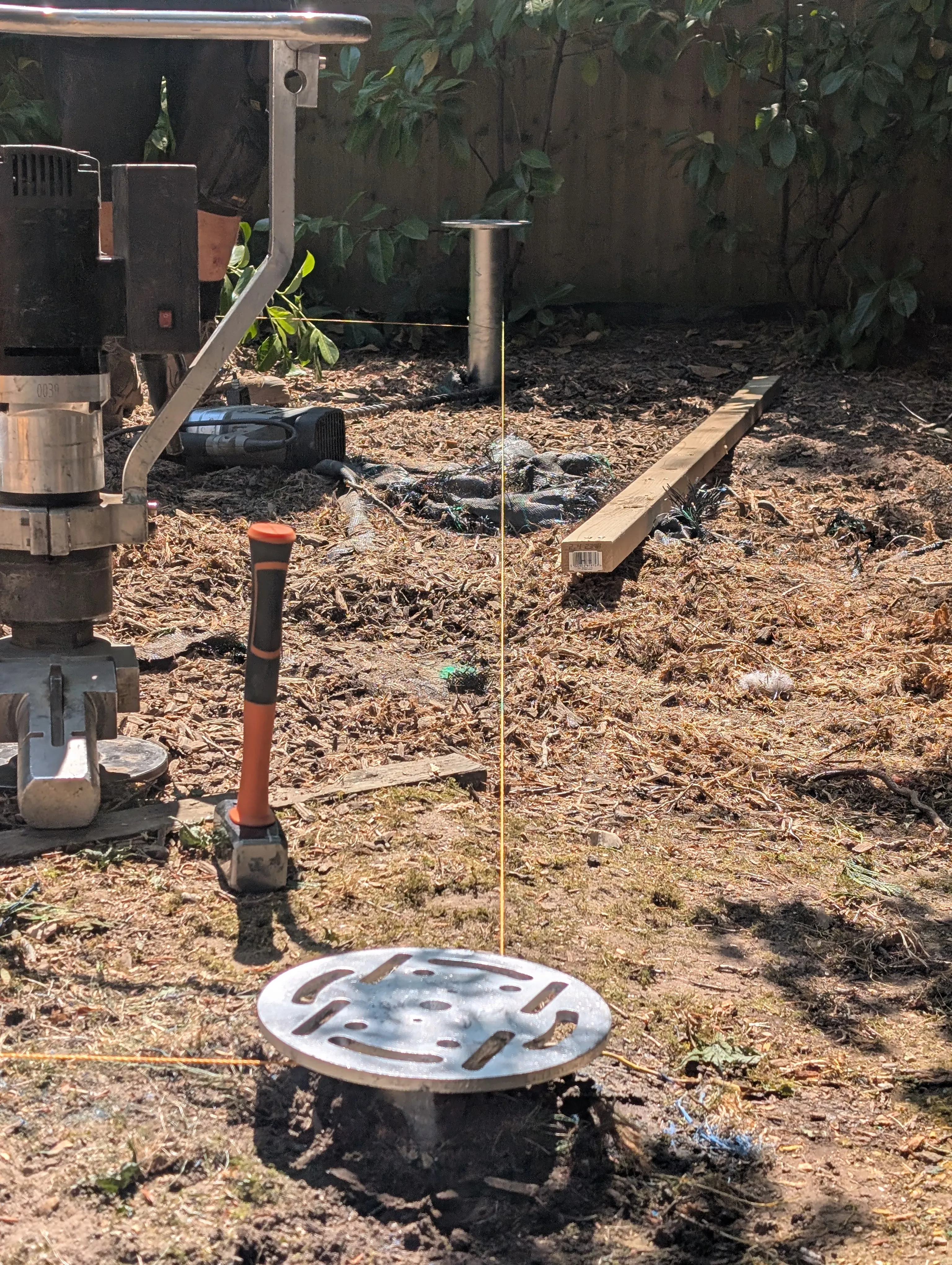
Ground screw testing in Arundel
JustBases provides ground screw testing in Arundel for homeowners, installers and project teams. Book pull, compression or lateral testing on suitable trial supports or existing screws, including another company's installation. It is available as a standalone service, with the test programme and written evidence agreed for the foundation assessment.
Pull, compression and lateral tests
A test applies a defined force to an installed screw and records how it responds. Choose the direction needed for the assessment, then agree the loading programme and what will be measured. This is useful evidence for the foundation decision when the test is planned for that purpose.
The designer or other responsible assessor establishes the loads and criteria. We review the practical way to carry out the requested work, including the connection and safe means of applying and resisting the force.
Pull testing
An upward force examines resistance to uplift. The test record relates the applied loading to the screw's response at the selected position, giving the assessor information for the specified lifting action.
Learn more: Pull testingCompression testing
Direct downward loading measures the screw's compression response. Where an applicable method instead derives compression evidence from pull-test data, the calculation and its assumptions are agreed and identified separately from a direct compression measurement.
Learn more: Compression testingLateral testing
Sideways loading examines horizontal response. The direction, height and connection through which that force is applied must represent the required check. These details form part of agreeing the method and interpreting the recorded behaviour.
Learn more: Lateral testingTesting prices and the agreed programme
The guide below gives the main testing rates. Your quotation identifies the programme being commissioned: its methods and quantity, the attendance and setup, and the written results and calculations included. Preparation by others and particular reporting requirements are agreed with that scope.
Installation torque monitoring and specialist torsional testing are both price on application. Monitoring measures resistance while the screw is driven into the ground; the specialist torsional test applies a twisting action separately. Neither is automatically included with a physical load test, and the two services have different purposes.
Local guide prices start with our Ringwood prices, adding 0.1% for each one-way road mile to the town, then rounding up to a whole pound. Your written quotation confirms the price for your site and agreed work.
- Pull test (tensile or uplift test)
- From £511
- Load test (compression test)
- From £1,022
- Lateral test (sideways load)
- From £500
- Installation torque monitoring
- Price on application
- Specialist torsional load test
- Price on application
Each additional test
Each extra charge applies to an additional test of the same type, at the same location on the same day. The first test of each type is priced separately.
- Pull test (tensile or uplift test)
- £160 extra
- Load test (compression test)
- £320 extra
- Lateral test (sideways load)
- £155 extra
No VAT is added to the guide prices shown. Guide prices are subject to site conditions, access and the written quotation.
Explain the foundation check you need
If a supplier or designer has asked for testing, describe the request or share it when convenient. If the reason is less defined, explain what you need to find out and where the foundation is. A postcode and purpose are enough to begin a discussion.
Use this form, WhatsApp Craig or call 01202 039753. Available photos, product details and plans can be added as the scope develops. We confirm the work and written price before arranging attendance.
Request your free quote
Give us your contact details and a short description of the testing you need. You can ask before the technical requirements are complete.
Your enquiry
Ground screw testing in Arundel
Agreeing the test and recording the result
We establish a test that can be carried out safely and produces the evidence the assessment calls for. The agreed programme connects the project's requirement with the site work and written findings.
Define what is to be measured
Confirm the relevant support positions and screw information, then agree the method against the assessor's loads and criteria. Identify the measurements, loading stages and stopping requirements before the visit.
Make the test area ready
Assess the connection and working arrangement for the selected force. Agree necessary access, exposure or competent temporary support work, with responsibilities and readiness confirmed for any attached structure.
Apply the agreed loading
Carry out the defined loading programme and record the screw's response. Keep the measurements related to the tested point and relevant setup so they can be understood in the assessment.
Supply the written findings
Provide recorded results, the written test report and the project calculations within the commissioned scope. The responsible assessor uses those findings for the required foundation decision.
Choosing the testing stage
Discuss trial work while the foundation proposal can still respond to the findings. The designer selects the trial screw and position for the question being investigated, with its supply and installation coordinated before the test. Allow the results to be considered before the remaining foundation work depends on them.
Testing an existing foundation needs a practical assessment of the selected supports, including third-party screws. Explain what is already built and keep structural connections intact while the work is planned. The people responsible agree any preparation, unloading or temporary support needed to test safely; a customer should not dismantle a loaded frame to make a head accessible.
Records help when they identify the actual screws and installation, but you can enquire with incomplete information. We establish what further product or site detail is necessary for the proposed test and its use. That decision is part of settling the work before it is booked.
Using the test findings
Use the report with the original testing requirement. The recorded loads and response show what happened during the commissioned work; the assessor compares those findings with the project's acceptance criteria. If a particular document or calculation is needed for that review, identify it before the quotation is final so it can be included in the deliverables.
Results need to remain traceable to the tested supports and arrangements. A layout reference and the method used help the recipient understand which evidence belongs to each point. Calculated values are labelled with their basis rather than presented as measurements from a test that was not performed.
The foundation assessment and any building approval have their own responsibilities beyond carrying out the test. The written report supplies evidence within its scope, not whole-building certification. Any resulting design change or additional work is decided by the responsible project team and separately agreed.
Arranging a visit in the Arundel area
Before attendance is confirmed, bring together the person requesting the evidence and whoever controls the working area. Agree how the selected positions will be made available and who completes any enabling work. This is especially useful where the testing is one part of another contractor's programme.
The booking should identify the actual address, the agreed work and the state in which the test area will be ready. Tell us about a change to the structure, access or requested programme before the visit so we can review whether the arrangement still suits the test.
For supports yet to be fitted, our Arundel installation service explains the separate foundation and frame work. The Arundel base options cover other building foundations, and you can check West Sussex service locations. Testing can be ordered on its own.
Arundel-area testing locations
Testing enquiries are welcome from Arundel and the surrounding communities below. Send the site postcode with the purpose so the required programme and attendance can be considered together.
BN18 is the main local reference; nearby BN17, BN16, BN14, PO22, PO20, PO18 and RH20 addresses can also be discussed. Travel, access and the agreed testing are confirmed for the particular site before booking.
- Arundel: town centre, Tortington, and the Ford Road, Fitzalan Road, London Road, Jarvis Road and Canada Gardens areas.
- Nearby villages: Warningcamp, Burpham, Wepham, South Stoke, Houghton, Houghton Bridge, Madehurst, Amberley, North Stoke and Rackham.
- Walberton and Slindon area: Binsted, Walberton, Fontwell, Slindon, Slindon Common and Eartham; adjoining Bury, West Burton, Bignor and Sutton enquiries.
- Ford and the adjoining coastal plain: Ford, Rollaston Park, Yapton, Bilsham, Flansham, Climping, Atherington, Barnham, Eastergate, Westergate, Aldingbourne, Norton, Nyton, Woodgate and Lidsey.
- Lyminster and Littlehampton area: Crossbush, Lyminster, Poling, Wick, Wickbourne, Courtwick, Toddington, Littlehampton, Rustington and East Preston.
- Angmering and nearby villages: Angmering, Patching, Clapham and Findon.
Feedback on Craig’s earlier work
Feedback on Craig’s earlier groundwork and customer service.
"Craig and the team are absolutely fantastic. From courtesy, to standard of work, to tidiness — everything exceeded expectations. The job was arranged, booked and done extremely quickly and we are very happy with the results. Nothing was too much trouble, and communication was easy."
"Craig and his crew were excellent from the first communication, quote, timing of work and quality of work. Highly recommended."
Ground screw testing questions
These answers explain how the test request becomes a defined programme and what its findings can be used for.
Can I ask about testing before appointing a designer?
Yes. Explain the project and the concern or request that led you to consider a test. We can describe the methods and discuss the practical work. The person responsible for the foundation assessment must establish the required loads and criteria before the testing programme is confirmed.
Can an installer book JustBases only to carry out testing?
Yes, testing is available independently of our foundation installations. We can consider suitable products fitted by another installer, with the connection and safe loading arrangement assessed for the requested method. Identify the intended evidence and project contact so the scope and reporting can be agreed.
Why does the test need an agreed loading programme?
A record is most useful when it answers a defined assessment requirement. The programme establishes the forces to apply, their stages and the response to measure, with appropriate stopping criteria. Agreeing these before attendance gives the assessor evidence to judge against the project's needs.
Does one loading direction cover every foundation force?
No. Pull testing examines upward loading, direct compression acts downwards and lateral testing acts sideways. A foundation assessment may require more than one of those responses. The designer identifies the required evidence, including whether an applicable calculation is acceptable for a particular part of the assessment.
Can I ask for a particular support to be checked?
Identify the support and explain why you want it examined. The person assessing the foundation considers that request alongside the evidence needed for the project, including whether other positions should be tested too. Once the selected points and methods are agreed, we assess the practical work and quote the programme.
Can testing be done beneath an attached building?
It may be possible for selected suitable supports, but the existing structural loads and proposed test must be assessed together. Explain what is connected and what can be seen safely. Any opening-up, unloading or temporary support needs an agreed competent arrangement before the test, with structural fixings left undisturbed during the enquiry.
What if I cannot identify the screw product?
Start with what is known, such as the installer, approximate installation date and any safely visible details or records. We discuss whether further identification is needed to plan the loading and make the findings useful. Missing information can affect the agreed work, but it need not prevent the first conversation.
Who supplies a screw for a trial test?
That is established when the trial programme is planned. The responsible designer defines what product and position need investigating, then the supply, installation and testing responsibilities are agreed. Include time for the findings to be reviewed before proceeding with work that relies on them.
What can installation torque monitoring tell the project?
It records the resistance to turning while the screw is driven. That is installation information, obtained at that stage rather than recreated by a later loading test. Its role in any capacity assessment needs an applicable justified method. Monitoring is separately agreed and priced on application.
When would I request specialist torsional testing?
Request it where the project needs the response to a defined twisting load investigated. Share that requirement so its method and safe connection can be assessed. It is separate from insertion-torque monitoring and from sideways loading, and is quoted on application rather than included automatically with the other tests.
How is derived compression evidence different from a direct test?
A derived value comes from a calculation using evidence such as pull-test data, under an agreed method applicable to the project. A direct compression test physically applies downward load and records response. The quoted requirement and report should make that distinction clear so the assessor receives the type of evidence requested.
What will I receive in writing?
The agreed testing service includes recorded findings and a written test report, with the project calculations commissioned in the scope. The document identifies the tested work and response for assessment. Tell us about a required format or particular information before booking so the deliverables can be confirmed.
What happens if the test does not demonstrate the required response?
Keep the findings with the test brief and ask the responsible assessor to explain the consequence for your project. The measured response remains part of the record, including where it falls outside the required criteria. Confirm their decision before the foundation is used for dependent construction.
What needs to be settled before a testing appointment?
We confirm the requested methods and positions, loading and criteria, practical setup, any preparation, reporting and price. The relevant site contact must know what needs to be ready and who is responsible for it. You can make the initial enquiry before those details are complete, then develop them with the project team.
What does each additional ground screw test cost?
At the same location on the same day, each additional compression test costs £320 extra, each additional pull, tensile or uplift test costs £160 extra, and each additional lateral test costs £155 extra. These fixed charges are for further tests of the same type. The first test of each type is priced separately, using the starting price for your location. The extra-test charges stay the same in every location.
Talk to Craig about the test
Send the purpose and site postcode, call 01202 039753 or message Craig on WhatsApp. We can clarify the request with you, identify the next information needed and quote the agreed testing and report.