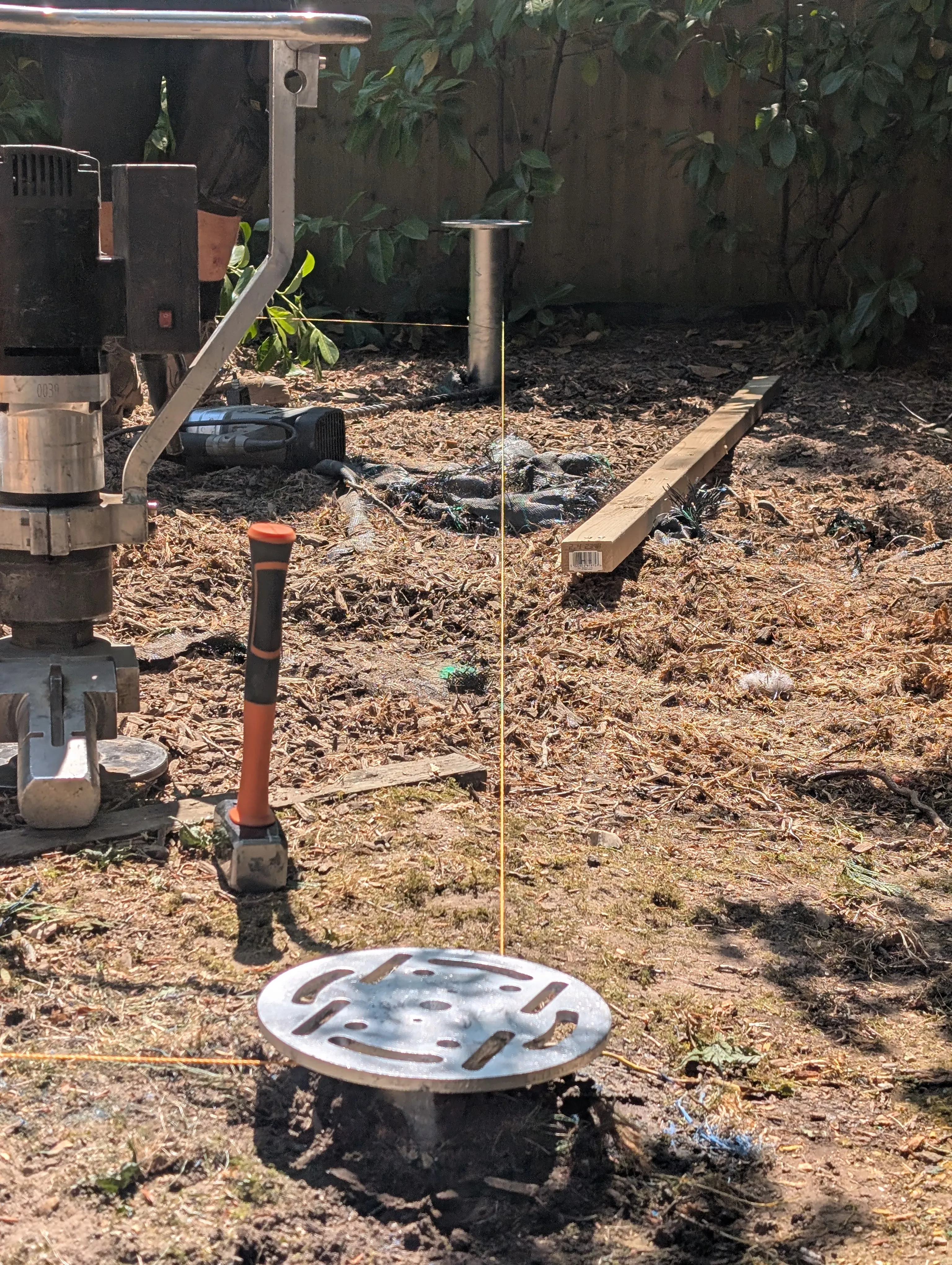
Ground screw testing in Basingstoke
JustBases offers standalone ground screw testing in Basingstoke for trial supports and suitable existing foundations. You can enquire about another supplier's or installer's screws, with the loading, access and reporting agreed for the project.
Ground screw tests we offer
Testing records the behaviour of selected supports under agreed loading. It can provide evidence while a foundation is being designed or help the project team review an existing installation. We establish the question and required measurements before deciding how the work should be arranged.
Tell us who needs the findings and what stage the project has reached. A homeowner's initial question or a designer's prepared instruction can both start an enquiry. The technical programme is confirmed before attendance, with the purpose and reporting clear to everyone involved.
Pull-out testing
The test applies an upward load and records the selected screw's response. It supplies evidence about uplift or pull-out resistance through the specified loading programme.
Learn more: Pull-out testingCompression testing
A physical downward load is applied, with movement measured at the support. The resulting direct compression evidence is identified separately from any agreed calculated assessment.
Learn more: Compression testingLateral testing
An agreed sideways load examines horizontal response. Its direction, connection and recorded measurements are planned around the lateral information required for the foundation.
Learn more: Lateral testingGround screw testing prices in Basingstoke
The starting fees below help you budget for the method being considered. We prepare a written price for the actual programme, including its test points, loads, setup, preparation and reporting. Explain any required calculations or deadline so these are considered with the visit.
Torque services have separate price-on-application scopes. Installation monitoring records resistance to turning while the screw is fitted. Specialist torsional testing applies a defined twisting load and measures the response. Both must be requested and agreed; neither is automatically included with a loading test or foundation installation.
Local guide prices start with our Ringwood prices, adding 0.1% for each one-way road mile to the town, then rounding up to a whole pound. Your written quotation confirms the price for your site and agreed work.
- Pull test (tensile or uplift test)
- From £503
- Load test (compression test)
- From £1,005
- Lateral test (sideways load)
- From £492
- Installation torque monitoring
- Price on application
- Specialist torsional load test
- Price on application
Each additional test
Each extra charge applies to an additional test of the same type, at the same location on the same day. The first test of each type is priced separately.
- Pull test (tensile or uplift test)
- £160 extra
- Load test (compression test)
- £320 extra
- Lateral test (sideways load)
- £155 extra
No VAT is added to the guide prices shown. Guide prices are subject to site conditions, access and the written quotation.
Ask about a ground screw test
Tell us where the site is and what testing needs to establish. You can attach a designer's request, screw details or safely taken photos if available, but an outline is enough to begin. Call 01202 039753 or message Craig on WhatsApp to discuss the test enquiry.
Request your free quote
Start with the postcode and what you need to learn about the foundation. We can discuss the requirements before a full brief is ready.
Your enquiry
Ground screw testing in Basingstoke
How ground screw testing works
The programme brings the project requirement together with a safe way to obtain and record the evidence. We agree the test work and written deliverables, along with any preparation assigned to others, before a visit is booked.
Define the test programme
Identify the supports and directions to test, the required loads and the measurements to record. The responsible designer or project specification establishes the assessment criteria. Agree the report and any load calculations within the quoted work.
Agree safe access and preparation
Review the screw product and head connection, the current foundation arrangement and the space available. Establish a suitable loading setup and safe approach, with any exposure or other preparation planned and responsibilities confirmed beforehand.
Record the results and supply the report
Apply the agreed loading and record the measured response against the identified test points. The written report sets out the evidence and commissioned calculations for the intended recipient to assess within the project design.
Testing existing screws and trial installations
Testing alone can be considered for another company's screws. Product information and existing installation records help establish what is in place, while a layout or photographs can locate the selected points. Send what you hold already and we identify the further detail needed to confirm the proposed work.
When supports are connected to a building or frame, their current loads and accessibility affect the arrangements. Show visible heads and connections without disturbing structural components. Any uncovering, temporary support or alteration required for testing needs a safe agreed plan and an appropriate person responsible for it.
A trial programme can be discussed while the foundation specification is being developed. The designer establishes what the selected supports and locations need to represent. Allow time for the report and its interpretation before committing the following installation or building stage.
For a new foundation package, see ground screw installation in Basingstoke. The two services can be coordinated, with the installation, testing and any requested records each clearly described.
What your test report tells you
The evidence should be traceable to the support and method used. We agree how test points are identified, the loading and response information to record, and the calculations required. Give us any particular reporting request so the document can be scoped for its intended use before testing.
Direct compression results come from physically loading downwards. Where an applicable method is agreed, compression can instead be assessed by calculation from pull-test evidence. That calculated result is identified with its basis, distinct from a direct downward test. Confirm which evidence the designer needs when developing the programme.
The responsible designer interprets the results against the project loads and acceptance criteria. The wider foundation arrangement and its connections remain part of the complete design assessment. Testing supplies evidence for that decision; an engineer-signed report or formal approval is a separate reporting requirement to raise before work is agreed.
An installation torque record describes turning resistance, rather than measured response to an applied upward, downward or sideways load. Its use in assessing performance needs a justified method for the foundation. A specified twisting-load requirement is discussed separately as specialist torsional testing.
Arranging testing in Basingstoke
Provide the full postcode and tell us how the work area is reached. The usable entrance may be through a side gate, shared drive or managed part of a site. Identify who can arrange entry, authorise the testing area and show the selected supports.
Describe the route and the space around the foundation, including any covering, connected frame or nearby work. Photos are useful when convenient. We confirm the room and preparation required for the selected loading method after reviewing the practical arrangement.
If the report is needed for a design decision or another contractor's programme, tell us the proposed timing and recipient. The sequence needs to include safe preparation, testing and review of the findings. Agreeing those responsibilities helps the visit fit with the wider project.
The Basingstoke overview covers our wider services, including concrete base installation. Use the Hampshire guide for other listed towns, or ask about the actual address if the site is in an adjoining village.
Areas we cover around Basingstoke
Enquire from Basingstoke town centre, Fairfields, South View, Brookvale, Kings Furlong, Winklebury, Manydown, Buckskin, Worting, South Ham, West Ham, Brighton Hill, Kempshott, Down Grange, Hatch Warren, Beggarwood, Viables, Cranbourne, Black Dam, Eastrop, Grove, Riverdene, Houndmills, Oakridge, Norden, Popley, Marnel Park, Merton Rise, Rooksdown, Chineham, Daneshill and Little Basing.
Nearby places include Old Basing, Lychpit, Sherfield Park, Sherborne St John, Monk Sherborne, Ramsdell, Charter Alley, Wootton St Lawrence, Oakley, Church Oakley, Newfound, North Oakley, Malshanger, Ibworth and Hannington.
We welcome enquiries from Deane, Steventon, Overton, North Waltham, Popham, Dummer, Farleigh Wallop, Cliddesden, Winslade, Ellisfield, Herriard, Tunworth, Upton Grey, Weston Patrick, Weston Corbett, Axford, Preston Candover, Brown Candover, Chilton Candover and Woodmancott.
Ask about Mapledurwell, Up Nately, Andwell, Newnham, Nately Scures, Scures Hill, Hook, Rotherwick, Greywell, North Warnborough and Odiham, or Bramley, Bramley Green, Sherfield on Loddon, Hartley Wespall, Stratfield Turgis, Turgis Green, Stratfield Saye, Pamber End, Pamber Green, Little London, Pamber Heath, Tadley, Silchester and Baughurst.
RG21, RG22, RG23 and RG24 help locate town enquiries, with surrounding RG25, RG26, RG27, RG29 and SO24 addresses also welcome. Give the full postcode so we can confirm the site, service and access arrangements, including for an unlisted village. See the Hampshire service guide for other towns.
Feedback on Craig’s earlier work
Feedback on Craig’s earlier groundwork and customer service.
"Craig and the team are absolutely fantastic. From courtesy, to standard of work, to tidiness — everything exceeded expectations. The job was arranged, booked and done extremely quickly and we are very happy with the results. Nothing was too much trouble, and communication was easy."
"Craig and his crew were excellent from the first communication, quote, timing of work and quality of work. Highly recommended."
Frequently asked questions
Information about the methods, practical setup and use of the test results.
Can I book testing for another company's screws?
We can consider suitable third-party supports as a standalone commission. Explain what is fitted, what it supports and why a test is needed. Product details and existing records help us assess the connection and loading arrangement before confirming the proposed work.
Which test addresses uplift, weight or sideways forces?
Pull-out testing applies an upward load for uplift evidence. Direct compression applies downward loading, and lateral testing applies sideways loading. The required information and project loads determine the method and measurements. Share the designer's request when available so the testing programme can be agreed.
Can different methods be included in the programme?
Yes, more than one direction or method can be considered where the project requires it. The selected supports and sequence need to suit the loading and evidence requested. We discuss the practical setup for the combined work and identify the tests and reporting included in the quotation.
What should be established for a trial installation?
The designer should identify the purpose, product and positions to be examined, together with the relevant loads and criteria. Tell us when the findings are needed for the main foundation decision. We can then coordinate the trial testing and report with that design programme.
Who defines the loading and acceptance criteria?
They come from the responsible designer or the agreed project specification. The brief establishes what the test needs to demonstrate and the response to record. We use those requirements to agree the loading programme and deliverables before the work is carried out.
Can I start without an engineer's written brief?
Yes. Tell us the location, project and reason for seeking evidence. We can discuss the requirement and identify who will establish the technical details. Documents can follow as the enquiry develops, with the required loads, measurements and reporting agreed before attendance.
What if the supports are covered or carrying a building?
Show what is safely visible and explain the current structure and loads. Access to the head and space for the test need to be assessed. Keep connections intact during the enquiry; any exposure, isolation or temporary support required must be planned safely before testing.
How is the space needed for testing assessed?
The method, loads and available connection influence the setup. Photos of the approach and area around the selected supports help us review the practical options. We confirm the working space, preparation and responsibilities for the agreed arrangement before booking the visit.
What is recorded by installation torque monitoring?
It records the resistance to turning as the screw goes into the ground. Request it before installation so the information and its intended use can be agreed. Monitoring is a separate price-on-application service; any relationship used to assess load performance needs an appropriate justified method.
How does specialist torsional testing differ?
It loads an installed support with a defined twisting action and records the response required by the brief. That differs from observing resistance during insertion and from upward, downward or sideways loading. Torsional testing has its own agreed setup and report and is price on application.
What distinguishes calculated compression from a direct test?
A direct compression test physically applies a downward load and measures movement. A calculated assessment uses evidence such as pull-test results through an applicable agreed method. The report identifies the calculation and its basis clearly, so confirm which evidence is required when specifying the programme.
What influences the quoted testing price?
The selected methods, test points and loading requirements establish the programme. Preparation, access, the loading setup and the report or calculations also form part of the scope. Explain any requested deadline and share available instructions to help us price the required programme. At the same location on the same day, each additional compression test costs £320 extra, each additional pull, tensile or uplift test costs £160 extra, and each additional lateral test costs £155 extra. These fixed charges are for further tests of the same type; the first test of each type is priced separately.
How are the report and calculations used?
The responsible designer considers the recorded evidence against the project requirements, alongside the foundation layout and connections. Agree who will receive and interpret the document, including any particular reporting format or approval request. The testing scope identifies the results and calculations we will supply for that assessment.
What happens after my first testing enquiry?
We discuss what needs to be established and the site arrangements, then identify the information required to confirm the programme. You receive a written scope and price before the visit is arranged. Safe preparation, access and the reporting requirements are agreed as part of that process.
What happens next
Discuss your testing enquiry, call 01202 039753 or message Craig on WhatsApp. We clarify the evidence needed, agree the programme and reporting, and supply a written quotation. The testing visit follows the confirmed scope and safe site arrangements.