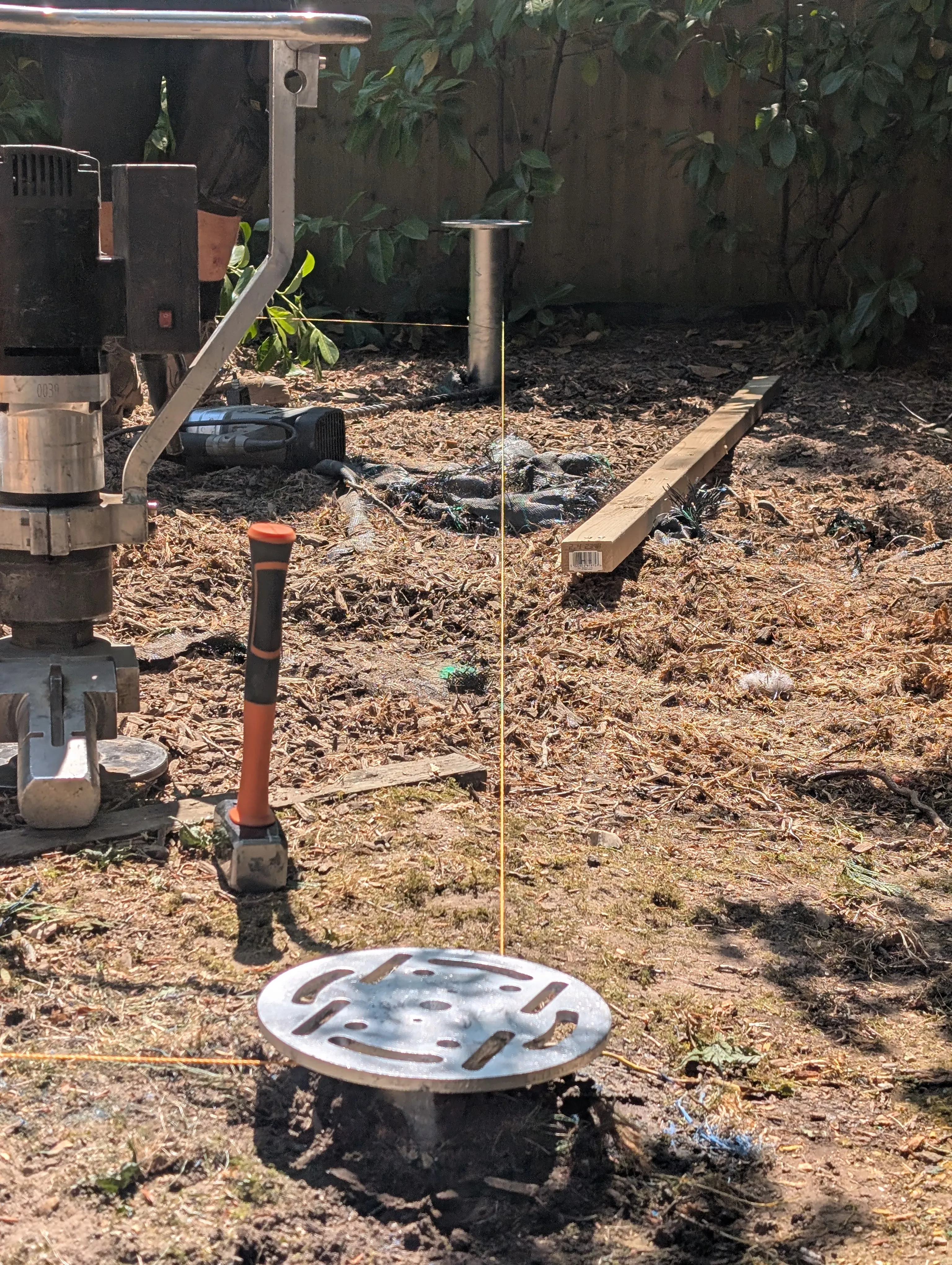
Ground screw testing in Bristol
Get measured evidence for your foundation project with standalone ground screw testing in Bristol. JustBases offers pull-out, direct compression and lateral tests, including assessment of suitable screws supplied or fitted by other companies. Tell us the postcode and the question you need answered; you can request testing without buying an installation.
Ground screw tests we offer
Testing helps establish how an installed screw behaves under a defined load. The result can inform a proposed foundation, provide evidence requested by a designer or assess a suitable existing support. We discuss the purpose first so the test and report provide the information your project needs.
The main methods apply force in different directions. Your building supplier or designer may already have specified the test, loading and criteria; if so, pass that information on. If you are unsure, describe the project and we can explain the options before the detailed testing arrangements are confirmed.
Pull-out testing
A pull, tension or uplift test applies upward force to the screw and records the agreed response. It provides evidence for the upward loading case being investigated, identified to the product and test position. Share any specified method or loading requirement when requesting the quote.
Learn more: Pull-out testingDirect compression testing
The screw is physically loaded downwards and its movement is recorded as required by the brief. This gives a direct compression measurement. Where the project instead uses an agreed compression calculation informed by pull-test results, the calculated assessment is reported separately.
Learn more: Direct compression testingLateral testing
A lateral test applies sideways force through an agreed connection and direction. The arrangement is planned around the screw, equipment and space available. It provides the lateral response required by the project rather than a vertical loading result.
Learn more: Lateral testingGround screw testing prices in Bristol
Use the starting rates below when discussing the testing budget. The final written quotation identifies the method, number of tests, site setup, reporting and travel for the agreed attendance. Tell us about the screw arrangement and any timing or project-team requirements so those can be considered together.
Recorded installation torque and specialist torsional testing are separate services, each priced on application. Monitoring measures turning resistance during screw installation. A specialist torsional test investigates response to an agreed twisting load. We establish which service is required from the actual request and project purpose.
Local guide prices start with our Ringwood prices, adding 0.1% for each one-way road mile to the town, then rounding up to a whole pound. Your written quotation confirms the price for your site and agreed work.
- Pull test (tensile or uplift test)
- From £514
- Load test (compression test)
- From £1,027
- Lateral test (sideways load)
- From £503
- Installation torque monitoring
- Price on application
- Specialist torsional load test
- Price on application
Each additional test
Each extra charge applies to an additional test of the same type, at the same location on the same day. The first test of each type is priced separately.
- Pull test (tensile or uplift test)
- £160 extra
- Load test (compression test)
- £320 extra
- Lateral test (sideways load)
- £155 extra
No VAT is added to the guide prices shown. Guide prices are subject to site conditions, access and the written quotation.
Ask about a ground screw test
Give us the site postcode and explain what you need to establish. Let us know whether the screws are proposed, part of a trial or already fitted, and whether a building or frame is attached. You can begin before the final method and test criteria have been issued.
A designer's email, product details, existing installation records or safe-to-take photos can help if you have them. The first enquiry does not need a full technical pack. Use the form, call 01202 039753 or message Craig on WhatsApp; we will discuss the details needed to agree the test and written price.
Request your free quote
Give us your contact details and a short description of the testing you need. You can ask before the technical requirements are complete.
Your enquiry
Ground screw testing in Bristol
How ground screw testing works
The test programme connects the question being investigated with the screw, position and measured response. We establish the scope with the relevant project team before attendance, including loading, stopping criteria and the records needed for assessment.
Practical setup is considered at the same time. Equipment needs suitable access, a safe connection and sufficient working space to apply the load. Photos and available drawings help us discuss that arrangement, with any further information or preparation identified before the visit.
Define the question and criteria
We confirm the test direction and purpose, available screw information and the proposed positions. The required loading and acceptance criteria are agreed through the responsible design or assessment team, together with the reporting scope.
Plan a safe test setup
We review how the equipment reaches the screw and how the load can be applied and resisted. Existing frames, nearby structures, levels and working room are included in that assessment. Any necessary access work is discussed before it is undertaken.
Test, record and report
The agreed programme is carried out with the required load and movement records. We supply the recorded results, written test report and agreed project load calculations, ready for the relevant project team to review within the complete design.
Testing a proposed or existing foundation
If someone has requested testing, send us their explanation of what needs to be established. It might concern a foundation under development or screws already in place, including another company's installation. That starting question helps define the work; you can contact us before all the product and installation information has been gathered.
With an existing building, the test has to be considered alongside its present support. Tell us what rests on the screws and show the accessible connection details in photographs taken safely. Any work to expose a head or alter a loaded connection must be planned with competent people so the structure remains supported; leave it intact during the enquiry.
For proposed trials, allow time for the person assessing the foundation to use the findings before the next construction decision. They establish which screw specification and positions will give relevant evidence and what the test needs to demonstrate. Trial installation and the subsequent test are coordinated as defined parts of the project.
Using the findings for your project
Keep the test references with the foundation layout so the person reviewing the findings can locate the supports concerned. The evidence belongs to those positions and the arrangement tested. Your assessor decides how it answers the original requirement and whether it can inform decisions about other supports; a screw test alone does not approve the complete building.
The written record sets out the performed tests and measured response, with the project load calculations agreed in the quotation. Read a measured downward-load result differently from a compression value calculated from pull-test evidence: the latter needs an applicable agreed method and its assumptions identified. Share any requested reporting format before commissioning so the document requirements can be included in the scope.
Preparing for a Bristol testing visit
A photograph showing the foundation as a whole can help alongside closer views of the safely visible test positions. Explain how the area is reached and what needs to stay accessible during the visit. Once the required loading method is understood, we can settle the equipment access, working area and preparation for that arrangement.
Where another contractor is preparing the test positions, agree what will be ready for our attendance and who is responsible for it. Include any temporary support and subsequent reinstatement in those discussions. We confirm the visit around that readiness and the agreed programme, with any necessary permissions for entry arranged by the site contact.
You can use this service for a testing-only project. If you also want the supports installed, the separate Bristol installation page explains that work. The Bristol service overview brings the local options together, and the locations directory helps with enquiries elsewhere.
Areas we cover around Bristol
We welcome installation and testing enquiries from Bristol's neighbourhoods and the adjoining places below. Send the full postcode and the service you need so we can confirm the work, travel and visit arrangements for your address.
Useful local postcode districts include BS1 to BS11, BS13 to BS16, BS20, BS30, BS31, BS32, BS34, BS35, BS36, BS41 and BS48. If your address is elsewhere, ask us about it. Neighbouring Somerset service areas have their own town and testing links.
- Bristol city centre, Redcliffe, St Paul's and St Werburghs
- Clifton, Hotwells, Cotham and Redland
- Bishopston, Ashley Down, Horfield and Lockleaze
- Westbury-on-Trym, Henleaze and Stoke Bishop
- Sea Mills, Coombe Dingle, Shirehampton and Avonmouth
- Lawrence Weston, Henbury, Brentry and Southmead
- Easton, Eastville, Fishponds, Hillfields, Frome Vale and St George
- Southville, Bedminster, Windmill Hill, Totterdown and Filwood
- Knowle, Brislington, Stockwood, Hengrove, Whitchurch Park, Bishopsworth, Hartcliffe and Withywood
- Filton, Patchway, Charlton Hayes, Bradley Stoke and Stoke Gifford
- Frenchay, Downend, Bromley Heath, Staple Hill, Mangotsfield and Emersons Green
- Kingswood, Hanham, Warmley, Longwell Green, Oldland Common and Bitton
- Winterbourne, Frampton Cotterell, Coalpit Heath and Almondsbury
- Abbots Leigh, Pill, Easton-in-Gordano and Portishead
- Long Ashton, Dundry, Barrow Gurney, Flax Bourton, Nailsea and Backwell
- Keynsham, Saltford, Whitchurch Village, Queen Charlton and Compton Dando
Feedback on Craig’s earlier work
Feedback on Craig’s earlier groundwork and customer service.
"Craig and the team are absolutely fantastic. From courtesy, to standard of work, to tidiness — everything exceeded expectations. The job was arranged, booked and done extremely quickly and we are very happy with the results. Nothing was too much trouble, and communication was easy."
"Craig and his crew were excellent from the first communication, quote, timing of work and quality of work. Highly recommended."
Frequently asked questions
These answers cover the testing scope, site arrangements and use of the results. You can ask about your project before the technical brief is complete.
Can you test foundations put in by another installer?
Yes, we consider suitable third-party screws as part of the standalone service. Tell us what they support and share any product or installation information available. The screw details, connection, structural situation and equipment access are assessed before the testing arrangement is agreed, so the visit can address the evidence you need.
Can I enquire before the test loads have been specified?
Yes. Start with the location, proposed building and the reason for testing. We can discuss the methods and the information needed to agree the work. The relevant project team establishes the loading and acceptance requirements before testing, and we explain what needs confirming as the enquiry develops.
How do I know whether the project needs pull, compression or lateral testing?
The required force direction follows the question in the foundation design. A pull test investigates upward loading, direct compression loads downwards and lateral testing applies sideways force. Share the designer's or supplier's request, or describe the project, so we can discuss the method and reporting appropriate to that requirement.
What does a direct compression test record?
It physically applies downward load to the agreed screw and records movement as required by the testing brief. The record relates to the identified product, position and arrangement. We establish the loading programme and required evidence before the visit, with the results included in the written report for project-team review.
Can pull-test data be used in a compression calculation?
That can be considered where an agreed assessment method is suitable for the screw and project information. The result is identified as a calculated compression assessment. If a direct physical compression test is required, that is a distinct test and should be included explicitly in the brief and quotation.
When should installation torque monitoring be arranged?
Raise it while the installation is being planned, because the record measures turning resistance as the screw is driven. Tell us what information the project team requires so the monitoring scope can be agreed for that stage. It is a separate, price-on-application service and is included as established in the written scope.
What information is needed for a specialist torsional test?
Share the requested twisting test, any product and connection details and the site location. We discuss the intended load, equipment arrangement and required reporting with the project team. A torsional test investigates response to an applied twisting force and is quoted individually, separately from installation monitoring and the main vertical or lateral tests.
How are the test positions and number of tests agreed?
They are planned around the proposed foundation, available site information and the purpose of the evidence. The responsible design or assessment team considers which locations need investigating and how the findings will be used. We discuss those positions with the safe setup and access arrangements before agreeing the programme and price.
Can testing be carried out on a trial screw?
Yes, a trial can form part of developing the foundation approach. The product, installation details, test location and programme are agreed so the resulting evidence is relevant to the proposal. Tell us what the team needs to establish and any next-stage decisions that depend on receiving the results.
What if the screw heads are underneath a building or deck?
Describe what covers them and share photographs of safely visible details. We assess the possible connection and working space with the structural situation. Keep loaded connections and fixings undisturbed while the arrangement is reviewed; any necessary access work or safety precautions need agreement with the responsible people before testing.
Will the tested screw be suitable to keep using?
If the screw is intended to remain a working support, tell us when the test is planned. The loads applied can affect its condition, so the responsible assessor needs to establish what checks are required before it is relied on afterwards. Any necessary repair, replacement or reinstatement is agreed separately; the assessor decides on continued use from the findings and any required checks.
What does the testing service provide in writing?
We provide the recorded test results, a written report and the project load calculations agreed in the scope. Tell us about any particular records or format needed by your designer or supplier before attendance. The quotation establishes the testing and reporting being supplied, together with the site and travel arrangements.
Does the report include structural approval for the building?
Approval of the building is a separate project decision for the responsible designer and any relevant approval body. The agreed testing provides evidence for that decision; it does not replace a full structural assessment. If an engineer-signed assessment, certification or a particular Building Control submission is required, establish who will provide it and what they need before booking; none is automatically supplied with the test report.
What affects the price of a Bristol testing visit?
The method and number of tests, equipment setup, screw connections, access, reporting and travel all help define the work. Give us the full postcode and explain whether the screws are proposed or fitted. We discuss the practical arrangements and confirm the price in a written quotation before booking the agreed attendance. At the same location on the same day, each additional compression test costs £320 extra, each additional pull, tensile or uplift test costs £160 extra, and each additional lateral test costs £155 extra. These fixed charges are for further tests of the same type; the first test of each type is priced separately.
What happens next
Contact Craig with the postcode and testing purpose. We discuss the appropriate method and arrangements, agree the reporting and written price, then arrange the visit. Standalone testing enquiries are welcome from homeowners, installers, building suppliers and project teams.