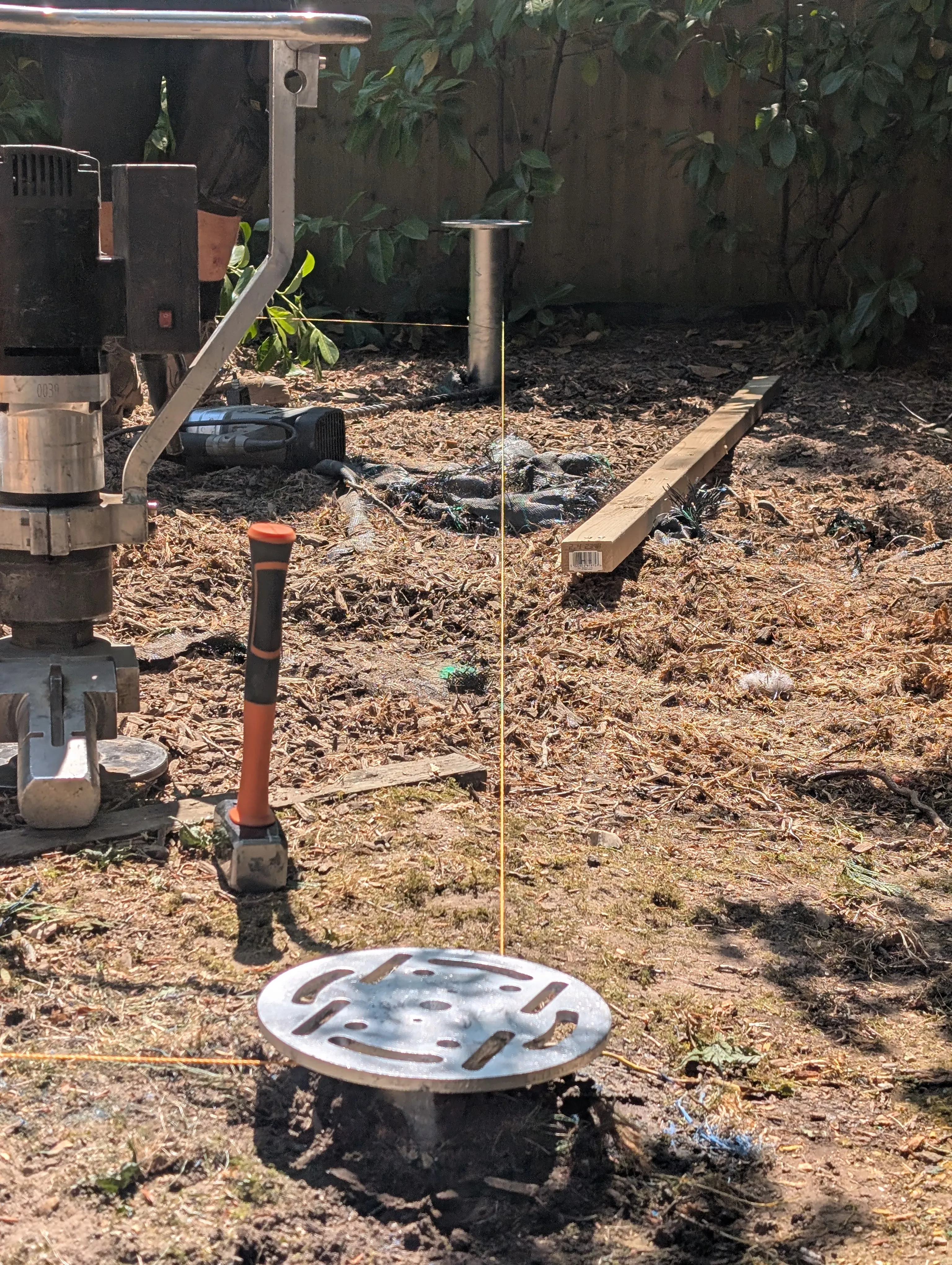
Ground screw testing in Dorchester
JustBases offers standalone ground screw testing in Dorchester and nearby villages. Ask about suitable trial screws, existing foundations or another installer's work. We agree the test purpose, method and reporting scope with you before arranging the visit.
Tests for uplift, downward and sideways loads
Testing gives evidence of how identified screws respond to specified loading. It can help a project assess a proposed foundation or investigate accessible installed supports. We discuss the question to be answered, then agree the relevant directions, test positions and requirements with the people using the results.
A test applies to its recorded screw, arrangement and conditions. The load requirements and acceptance criteria are established for the project so the measurements can be interpreted for their intended purpose. You can enquire before those details are complete.
Pull testing
A controlled upward force measures the screw's resistance to uplift under the agreed test conditions. The load and movement response provides evidence for the tested support and its specified purpose, such as assessing the upward reaction identified by the designer.
Learn more: Pull testingCompression testing
A direct compression test loads the screw downwards and records its response. Compression can also be calculated from suitable pull-test data using an agreed applicable method; that is identified as a calculation in the report, separate from a direct downward test.
Learn more: Compression testingLateral testing
A lateral test applies a sideways force in the agreed direction and arrangement. The measurements help evaluate horizontal response at the tested screw and connection level, with the test set up to address the project's specified requirement.
Learn more: Lateral testingGround screw testing guide prices
Use the testing guides below as a starting point, then ask us to quote the visit you need. The methods, number of test positions, access and reporting requirements establish the work. Where compression is calculated from pull-test evidence, the agreed scope identifies that basis clearly.
Installation torque monitoring and specialist torsional load testing each have a price-on-application scope. Monitoring records turning resistance during driving; torsional testing applies a separate twisting load. Neither is automatically included in a load-testing visit or a screw installation. Share the request you have received so the appropriate service can be discussed.
Local guide prices start with our Ringwood prices, adding 0.1% for each one-way road mile to the town, then rounding up to a whole pound. Your written quotation confirms the price for your site and agreed work.
- Pull test (tensile or uplift test)
- From £498
- Load test (compression test)
- From £995
- Lateral test (sideways load)
- From £487
- Installation torque monitoring
- Price on application
- Specialist torsional load test
- Price on application
Each additional test
Each extra charge applies to an additional test of the same type, at the same location on the same day. The first test of each type is priced separately.
- Pull test (tensile or uplift test)
- £160 extra
- Load test (compression test)
- £320 extra
- Lateral test (sideways load)
- £155 extra
No VAT is added to the guide prices shown. Guide prices are subject to site conditions, access and the written quotation.
Ask about testing at your site
Begin with the site postcode and what you want the testing to establish. You may have a designer's request, be planning a trial or need to understand an existing foundation. Tell us which stage the project has reached; documents are optional for this first discussion.
Craig can help clarify the next information needed and whether the proposed screws and access can be considered. Call 01202 039753, message through WhatsApp or send this form. The written quotation confirms the agreed tests, visit arrangements and report scope.
Request your free quote
Tell us what you need to find out about the screws and the site postcode. We can clarify the testing details with you.
Your enquiry
Ground screw testing in Dorchester
Agreeing and carrying out the testing
Useful testing starts with a defined purpose and finishes with results that can be related to the specified supports. We agree the work before the visit so access, the test arrangement and the intended reporting fit together.
Establish the purpose and acceptance requirements
We discuss what the foundation needs to support and the evidence the designer or other decision-maker requires. Test directions, screw information, positions, loading requirements, movement limits and acceptance criteria are agreed as applicable. Any required witnessing, signed reporting or calculations are addressed in the scope.
Prepare the test positions and safe working space
The selected screw heads and suitable connection points must be accessible for the planned test. We consider the space needed for the test arrangement and safe working, including the effect on nearby structures or occupied areas. Any enabling work and responsibility for it are agreed before attendance.
Apply the agreed tests and record the response
Testing follows the agreed loading arrangement, with load and movement recorded for the identified positions. The results and project-specific load calculations are brought together in the written report. Any qualifications affecting interpretation or the next project decision are made clear.
Trial screws, existing foundations and third-party installations
A trial can be arranged before the main foundation is installed, where an agreed trial position and screw specification will provide useful evidence. The trial needs to be planned with the eventual support requirements so the results can inform the foundation decision. Tell us who will supply and install the trial screws and whether they are intended to remain.
For an existing installation, send any product information, support layout and installation records already available. These help identify the screws and plan the connection and test arrangement. We can consider screws installed by another company; an installation purchase from JustBases is not required.
If a floor or building is already above the supports, describe what is accessible and whether it is in use. Leave connections and structural members in place while we discuss the work. Any exposure, temporary support or other enabling work needs an agreed safe method and responsibility before a test is booked.
For a new foundation as well as testing, the Dorchester installation page explains the screw and frame options. Testing can be coordinated with that programme so the selected positions remain available at the required stage.
Understanding your test report and calculations
The agreed service includes results, a written test report and project-specific load calculations. The report identifies the tested supports and relevant screw information, the loading arrangement and the recorded response. This allows the designer or other project decision-maker to relate the evidence to the agreed criteria and proposed use.
Direct compression evidence comes from applying downward load. Where compression is instead calculated from pull-test data, the report identifies the applicable calculation method and its assumptions. We agree that approach for the screw and site and state the result as derived compression rather than as a direct compression test.
Test evidence forms part of the foundation assessment. The designer considers its relevance to the complete layout, connections and building loads when making the design decision. Tell us about any required report format, witnessing or sign-off when arranging the work so the quotation can distinguish testing and calculations from any additional design or certification service.
Arranging a Dorchester testing visit
Give the full site address and the entrance that leads to the screws, particularly if the working area is reached separately from the house. Let us know about gates, steps, restricted working space or parts of the site that need to remain in use. We can then discuss access and preparation with whoever will be present for the visit.
Where a project has approved foundation details, planning conditions or a specified inspection stage, share the relevant documents when available. Dorset Council planning can help with questions about your property's permissions, and its guidance explains the separate role of building control. Your initial testing enquiry can start with a short outline while the project details are being assembled.
For other foundation options, see Dorchester base installation and poured concrete bases. Our Dorset service areas page lists other towns where you can enquire.
Testing enquiries around Dorchester
Enquiries are welcome from Dorchester town centre, Poundbury and Old Poundbury, Fordington, Fordington Fields, Castle Park, Manor Park, Victoria Park and the Cambridge Road area.
Nearby places include Charminster, Charlton Down, Lower Burton, Forston, Bradford Peverell, Muckleford, Stratton, Grimstone, Ash Hill and Wrackleford. We also welcome enquiries from Frampton, Southover, Notton, Cruxton, Frome Vauchurch, Maiden Newton, Chilfrome, Cattistock and Wynford Eagle.
The surrounding village catchment includes Godmanstone, Nether Cerne, Cerne Abbas, Up Cerne, Sydling St Nicholas, Piddlehinton, White Lackington, Piddletrenthide, Plush and Alton Pancras; and Stinsford, Kingston Maurward, Higher Bockhampton, Lower Bockhampton, Tincleton, Woodsford, West Stafford, Puddletown, Burleston, Athelhampton, Tolpuddle, Affpuddle and Briantspuddle.
Further enquiries are welcome from Broadmayne, West Knighton, Whitcombe, Winterborne Came, Winterborne Herringston, Winterborne Monkton, Martinstown (Winterborne St Martin), Winterbourne Abbas, Winterbourne Steepleton, Warmwell, Owermoigne, Crossways, Moreton, Bincombe, Upwey and Broadwey.
DT1, surrounding DT2 addresses and nearby parts of DT3 are useful postcode starting points. Send the full postcode and site address so we can confirm the visit, access and quoted work. For other towns, see our Dorset service areas.
Feedback on Craig’s earlier work
Feedback on Craig’s earlier groundwork and customer service.
"Craig and the team are absolutely fantastic. From courtesy, to standard of work, to tidiness — everything exceeded expectations. The job was arranged, booked and done extremely quickly and we are very happy with the results. Nothing was too much trouble, and communication was easy."
"Craig and his crew were excellent from the first communication, quote, timing of work and quality of work. Highly recommended."
Ground screw testing questions
Can I arrange testing as a standalone service?
Yes. We can consider suitable trial screws or installed supports without supplying the full foundation. This includes work installed by others. Explain the purpose of the test and the site location so we can discuss suitability, access, the required method and the report needed before agreeing the visit.
How do I decide which test to request?
Start with what the project needs to establish. Your designer may specify an upward, downward or sideways load, together with the required response and acceptance criteria. If you have only been asked for ground screw testing, share that request and we can clarify which loads and criteria need to be agreed before the visit.
What does a pull test measure?
It measures response to an agreed upward load at an identified screw. Load and movement observations provide evidence about uplift resistance under the recorded conditions. The required test level, acceptance criteria and relevance to the proposed building are agreed for the project and considered when the results are interpreted.
What happens in a direct compression test?
A controlled downward load is applied using the agreed test arrangement, and the screw's movement is recorded against loading. This gives direct evidence of compression response at that position. The arrangement, required loads and criteria are established in advance so the result addresses the specified foundation question.
When can compression be calculated from pull-test data?
It can be considered where an agreed calculation method is applicable to the screw and site. The calculation and assumptions are set out with the test evidence. The reported compression result is then identified as calculated from pull data, allowing the designer to distinguish it from a direct downward load test.
What does a lateral test involve?
It loads the screw sideways in the specified direction and arrangement and records the response. The connection height and test setup matter to what is being assessed, so these are agreed with the load and movement requirements. The report relates the measurements to that identified support and test arrangement.
Can you test screws fitted by a different installer?
Yes, subject to the screws and access being suitable for the proposed test. Any product details, support drawings and installation records you have will help us identify the system and plan the work. We discuss what can be established and any further information needed before confirming the scope.
How should trial testing fit into a new foundation project?
Arrange it early enough for the evidence to inform the support specification and layout. The trial screw, its position and intended tests should be agreed for the project requirements. We also clarify who supplies and installs the trial supports and what happens to them after testing.
How many screws need testing?
The number and positions follow the purpose, foundation layout and evidence requirements agreed for the project. Discuss these with the relevant designer or decision-maker before booking. We can quote the resulting test schedule and identify the supports in the report so the extent of the evidence is clear.
Can testing take place with the building already above the screws?
It may be possible if the selected supports and connection points can be accessed safely and a suitable test arrangement established. Describe what is above and around them. Keep the structure intact while we assess the proposal; any access work or temporary support is agreed separately before attendance.
What will the written report cover?
The agreed service includes results, a written test report and project-specific load calculations. It records the tested positions, relevant screw details, arrangement and measured response, with calculated results and qualifications identified. Tell us in advance about required witnessing, signatures or a particular format so those requirements can be addressed in the quotation.
Are torque monitoring and torsional testing the same service?
No. Installation monitoring records resistance to turning while the screw is driven. A specialist torsional test applies an agreed twisting load to assess response. Each is price on application, separately arranged and not automatically included. Share the specification if you have one so the intended service can be confirmed.
What do I need for the first testing enquiry?
A short explanation of the purpose and the site postcode will get the discussion started. Say whether the screws are proposed, exposed or already beneath a building. Technical instructions, drawings and records are useful when available, and can follow once we have explained what is needed for a quotation.
How should the site be prepared for the testing visit?
We agree the accessible positions, working space, entry arrangements and any enabling work before booking. Tell us about restricted routes or areas that must remain occupied, and arrange for a suitable site contact. Leave structural connections in place unless a safe method and responsibility for changes have been agreed.
What does each additional ground screw test cost?
At the same location on the same day, each additional compression test costs £320 extra, each additional pull, tensile or uplift test costs £160 extra, and each additional lateral test costs £155 extra. These fixed charges are for further tests of the same type. The first test of each type is priced separately, using the starting price for your location. The extra-test charges stay the same in every location.
Arrange the testing you need
Tell us the purpose of the test and where the screws are. We can clarify the suitable methods, preparation and reporting, then quote the agreed visit. Call 01202 039753, message Craig on WhatsApp or send a testing enquiry.