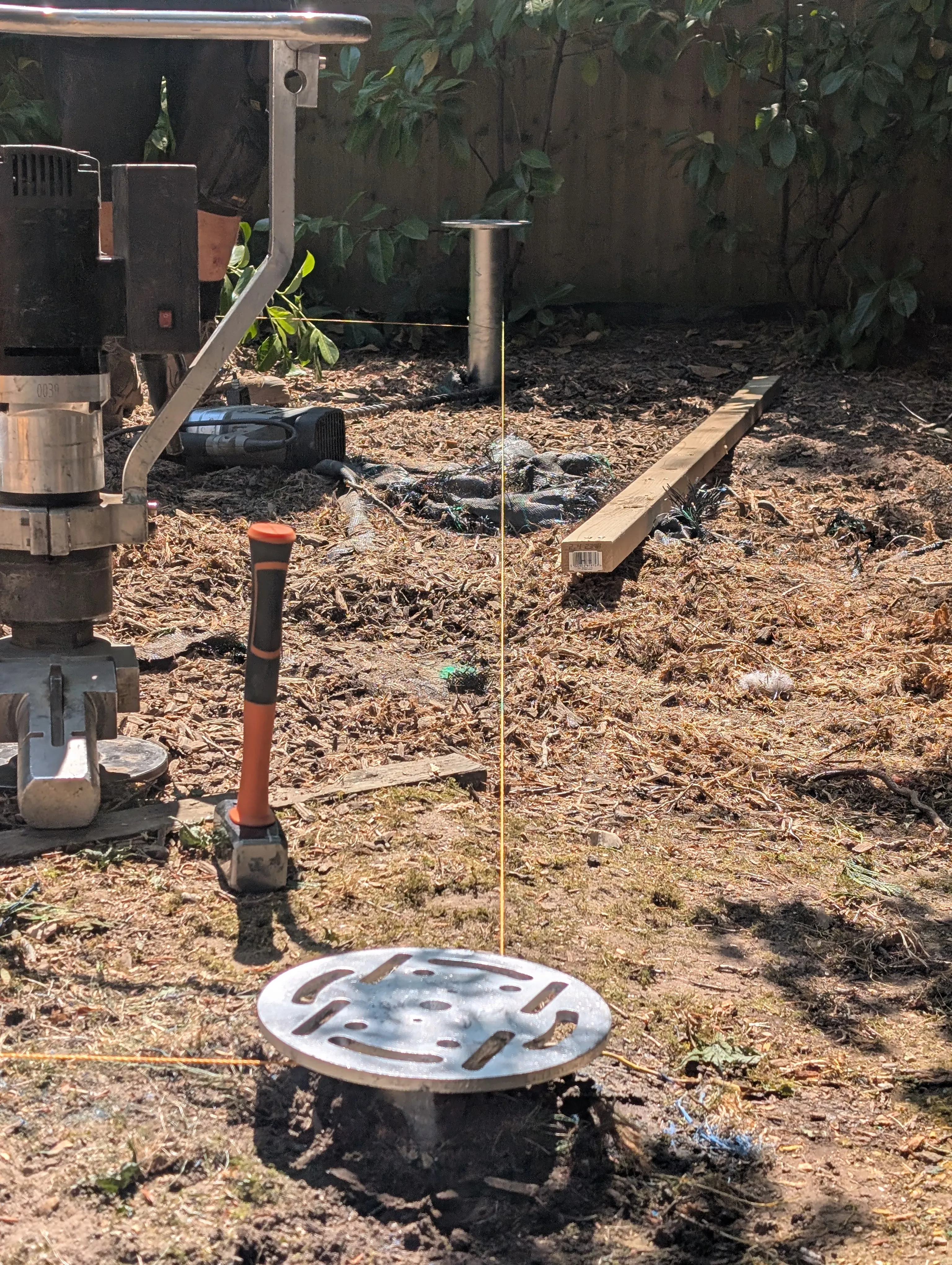
Ground screw testing in Lyndhurst
JustBases offers standalone ground screw testing in Lyndhurst and the surrounding villages. We help owners, contractors and designers arrange appropriate physical load checks on suitable trial or existing screws, with a clear scope and written results for the project.
Tests for uplift, downward and sideways loads
A testing instruction should say which action the foundation needs to resist and what evidence is required. Our separate load-test services address upward pull, downward compression and sideways loading. We agree the procedure and assessment requirements for the requested check before attending.
Be clear when the instruction requires a direct compression test. That involves physically loading the screw downwards. A calculated compression value from pull testing is a different form of evidence, available only where an applicable basis is agreed for the screw and project. We distinguish those approaches when scoping the work and presenting the results.
Pull testing
Use upward loading to investigate tension resistance. The test records the response through agreed load stages, allowing the specified uplift requirement to be considered.
Learn more: Pull testingCompression testing
A physical downward-load test provides observations of compression behaviour. The required loading and space for a suitable reaction arrangement are discussed as part of the booking.
Learn more: Compression testingLateral testing
Apply a horizontal load to investigate sideways restraint. The agreed test direction, application height and movement measurements define what is being examined.
Learn more: Lateral testingTesting prices and the work included
The guide prices below are a starting point for commissioning the tests. A quotation confirms the proposed site work, test positions and reporting scope, with any necessary preparation identified before the date is booked.
If your instruction mentions torque, tell us which service is intended. Insertion torque monitoring records resistance while the screw is installed; a direct torsional test applies a specified twisting load. Each is separately scoped and price on application, and neither comes automatically with the physical load tests. Installation torque alone does not establish a measured pull, compression or lateral capacity.
Local guide prices start with our Ringwood prices, adding 0.1% for each one-way road mile to the town, then rounding up to a whole pound. Your written quotation confirms the price for your site and agreed work.
- Pull test (tensile or uplift test)
- From £487
- Load test (compression test)
- From £974
- Lateral test (sideways load)
- From £477
- Installation torque monitoring
- Price on application
- Specialist torsional load test
- Price on application
Each additional test
Each extra charge applies to an additional test of the same type, at the same location on the same day. The first test of each type is priced separately.
- Pull test (tensile or uplift test)
- £160 extra
- Load test (compression test)
- £320 extra
- Lateral test (sideways load)
- £155 extra
No VAT is added to the guide prices shown. Guide prices are subject to site conditions, access and the written quotation.
Ask about a Lyndhurst test visit
You do not need to assemble a technical pack before contacting us. Give us the postcode and the purpose of the test. If a designer or client has supplied an instruction, you can forward it now or send it when available, and we will help clarify the work to be quoted.
Request your free quote
Let us know where the screws are and why you need a test. You can make an enquiry while the detailed requirements are being developed.
Your enquiry
Ground screw testing in Lyndhurst
Turn a testing request into an agreed schedule
Testing is most useful when its place in the project is clear. Tell us whether the result will inform a new design, check an installed support or answer a particular requirement from someone reviewing the work. We can then arrange the visit around that purpose and the site's readiness.
Understand what must be established
We discuss the test request with you and identify who is responsible for specifying and reviewing it. The structure's intended use, screw information and available instructions help define the evidence needed. Missing records can be identified during this conversation.
Agree the loading and locations
The responsible designer's requirements establish the relevant loads and acceptance criteria. A schedule records the selected test locations and procedure, while the practical arrangements establish a safe working area, suitable loading setup and access. Any work required to make the site ready is allocated before booking.
Carry out the scheduled tests
Loads are applied and the screw response observed according to the agreed procedure. The record identifies the test and the circumstances in which it was carried out. Any issue preventing completion as planned is reported so the next step can be agreed.
Resolve the next action
The written results go to the agreed reviewer for the project decision. That may allow the planned foundation work to proceed or prompt a change or further check. Allow for this review when arranging contractors who depend on the outcome.
Working with an installed foundation
For an existing building, first tell us how the foundation is currently being used. A support carrying the building has a different preparation requirement from an exposed, unloaded screw. We need to establish how the proposed loading can be carried out safely while the structure remains properly supported.
Show which screws can be reached and identify any cladding, decking or floor that obstructs them. The designer and competent contractors should agree any opening-up, unloading or temporary support required. Keep structural connections undisturbed until that method is settled; photographs and available drawings can be shared without taking the structure apart.
You may commission testing of a suitable foundation supplied by another installer. Arrange the owner's permission and ask for the original specification and installation records where available. We will assess the proposed test from the information and access that can be established, then confirm the scope and any outstanding preparation.
Trial screws as part of a new foundation
Trial testing gives the designer evidence while there is still an opportunity to develop the foundation. Tell us which decision the trial is intended to support and when that decision is needed. The trial position, screw choice and loading procedure can then be agreed as part of the investigation.
Make the supply and installation of the trial screw explicit in the scope, along with its treatment after the test. Some investigations affect the screw's suitability for later service. The designer should decide whether it can remain in the completed work, needs replacing or should be removed; the booking should allow for the intended arrangement.
Testing and the main installation can be separate commissions. If you need both, say so at the outset and we can discuss the sequence through the Lyndhurst installation service. That gives time for the result to be considered before the final foundation work is settled.
Written results and the project decision
Before arranging the visit, find out who needs to accept the evidence and when they will review it. Their reporting requirements can be included in the booking, alongside the tests themselves. This helps you coordinate the appointment with a client's decision or a designer's next stage of work.
Use the report to check which scheduled tests were completed and whether anything affected the procedure or interpretation. It should include identifiable loading and movement records and distinguish direct measurements from any calculated assessment, including the applicable calculation basis. Any unfinished investigation can then be followed up against the original requirement.
Testing supplies evidence; the responsibility for accepting the foundation still needs to be clear. Ask the designer or project reviewer to confirm the next action from the findings before arranging work that relies on them. Structural design, inspection and formal approval are separate services to identify in the project, where required.
Areas around Lyndhurst
Testing enquiries are welcome in Lyndhurst, including Pikes Hill, Swan Green, Shrubbs Hill, Clay Hill and the streets near Bolton's Bench, as well as Emery Down, Bank and Allum Green. We also welcome enquiries from Minstead, Newtown and Stoney Cross.
Nearby communities include Ashurst, Colbury, Ashurst Bridge, Foxhills, Woodlands, Netley Marsh and Totton; Bartley, Cadnam, Copythorne, Winsor, Newbridge and Ower; and Bramshaw, Brook, Canterton, Dazel, Furzley, Penn and Fritham. Brockenhurst, Burley and Lymington are other nearby places from which you can contact us about testing.
Lyndhurst and Minstead addresses include SO43 examples, while SO40 includes nearby Ashurst and Bartley addresses and SO42 includes Brockenhurst. Give us the full postcode and site address so we can confirm the arrangements for the actual property, including any separate entrance. These districts are location guides rather than a promise for every address within them.
Feedback on Craig’s earlier work
Feedback on Craig’s earlier groundwork and customer service.
"Craig and the team are absolutely fantastic. From courtesy, to standard of work, to tidiness — everything exceeded expectations. The job was arranged, booked and done extremely quickly and we are very happy with the results. Nothing was too much trouble, and communication was easy."
"Craig and his crew were excellent from the first communication, quote, timing of work and quality of work. Highly recommended."
Ground screw testing explained
What am I commissioning when I book a load test?
You are commissioning a defined check on selected screws, using an agreed loading procedure and a written record of the outcome. The quotation should identify the scope, including site preparation and reporting. We discuss the requirement first so that you and the person reviewing the work know what the visit is intended to establish.
Does the original screw installer have to arrange the testing?
No. An owner, contractor or designer can ask us about a suitable third-party installation. We will need permission to work at the site and enough product and installation information to agree the method. The first conversation can identify which records are available and which practical checks remain necessary.
Can one visit cover more than one loading direction?
It may be possible to agree a programme covering different test directions. Tell us the full requirement before booking so the procedure, test positions and effect of each test can be considered together. Pull, compression and lateral work have different arrangements, so the quotation needs to state the agreed combination.
Who sets the required test load and acceptable movement?
Those requirements come from the project's design and the applicable agreed test method. The person responsible for specifying the foundation should establish the criteria for the question being checked. We then use the agreed instruction to plan and record the test; if that instruction is incomplete, it needs resolving before the work proceeds.
What should I arrange if direct compression testing is specified?
Make that requirement clear in your enquiry and send the instruction when you have it. We will discuss the available space and a suitable means of applying the downward load. The quotation can then identify the actual test and preparation needed, rather than leaving the method to be decided on the day.
Is a compression calculation acceptable to my designer?
Ask the designer what evidence their assessment requires. A pull-derived compression value depends on an applicable relationship for the screw system and project, with its assumptions stated. If the requirement is a physical downward-loading test, commission that explicitly. We can distinguish the proposed evidence in the scope for the designer to consider.
How is sideways movement recorded?
A lateral test observes movement as the scheduled horizontal loading is applied. Its direction and application point need to be known for the observations to be useful. The record allows the reviewer to assess the result against the stated criteria for the support or connection being investigated.
Can trial testing happen before the foundation layout is final?
Yes, where it is commissioned to inform the design. The designer still needs to define the trial's purpose, suitable location and relevant screw and test requirements. Once the evidence is reviewed, the layout or specification can be developed with that information rather than scheduling the trial after the decision it was meant to inform.
What if the old foundation records are incomplete?
Let us know what you can find and what remains unknown. A supplier reference, visible product markings, photographs and drawings may help establish the starting point. We will discuss whether further identification or investigation is needed to scope the requested test, before you commit to a visit.
Should I lift the floor to expose a screw head?
Ask about the proposed access first. A floor or its connections may form part of the structure, and safe access needs to be planned with the person responsible for the building. Any opening-up or support work should be agreed and carried out by competent people as preparation for the test.
Can testing affect the screw being tested?
Yes. The effect depends on the load sequence and how the screw responds, including whether the procedure is intended to explore a limit. Agree in advance whether the screw is a trial item or intended for continued service. Its later use should be decided from the test outcome and the responsible designer's requirements.
Who decides what happens after the report arrives?
The person responsible for the foundation design or project acceptance reviews the evidence and decides the next step. We provide the agreed testing results and explain any recorded limitation. Further installation, remedial work or approval should follow that review, with any additional services commissioned separately.
What does a request for torque testing mean?
It needs clarification because two different services may be intended. Installation monitoring records the torque during insertion, while specialist torsional testing applies a controlled twisting load. Both are separately quoted, price on application and not automatically part of a load-test visit. Send us the request so we can discuss the intended scope.
How can I ask for a quotation while the brief is still being agreed?
Explain who needs the test, why it is being requested and the site's postcode. You can include the project stage and any known timescale in ordinary terms. We can begin discussing the service from that information, then work towards a firm scope as the necessary instructions and access details are confirmed.
What does each additional ground screw test cost?
At the same location on the same day, each additional compression test costs £320 extra, each additional pull, tensile or uplift test costs £160 extra, and each additional lateral test costs £155 extra. These fixed charges are for further tests of the same type. The first test of each type is priced separately, using the starting price for your location. The extra-test charges stay the same in every location.
Arrange testing with JustBases
Call 01202 039753, use WhatsApp or tell us about the project through the form above. The purpose of the check and site postcode will start the conversation; we can establish the remaining requirements with you.
Read about Lyndhurst ground screw installation for new foundation work, or concrete base installation for a poured alternative. The town overview, Hampshire locations and main ground screw testing guide provide further service information.