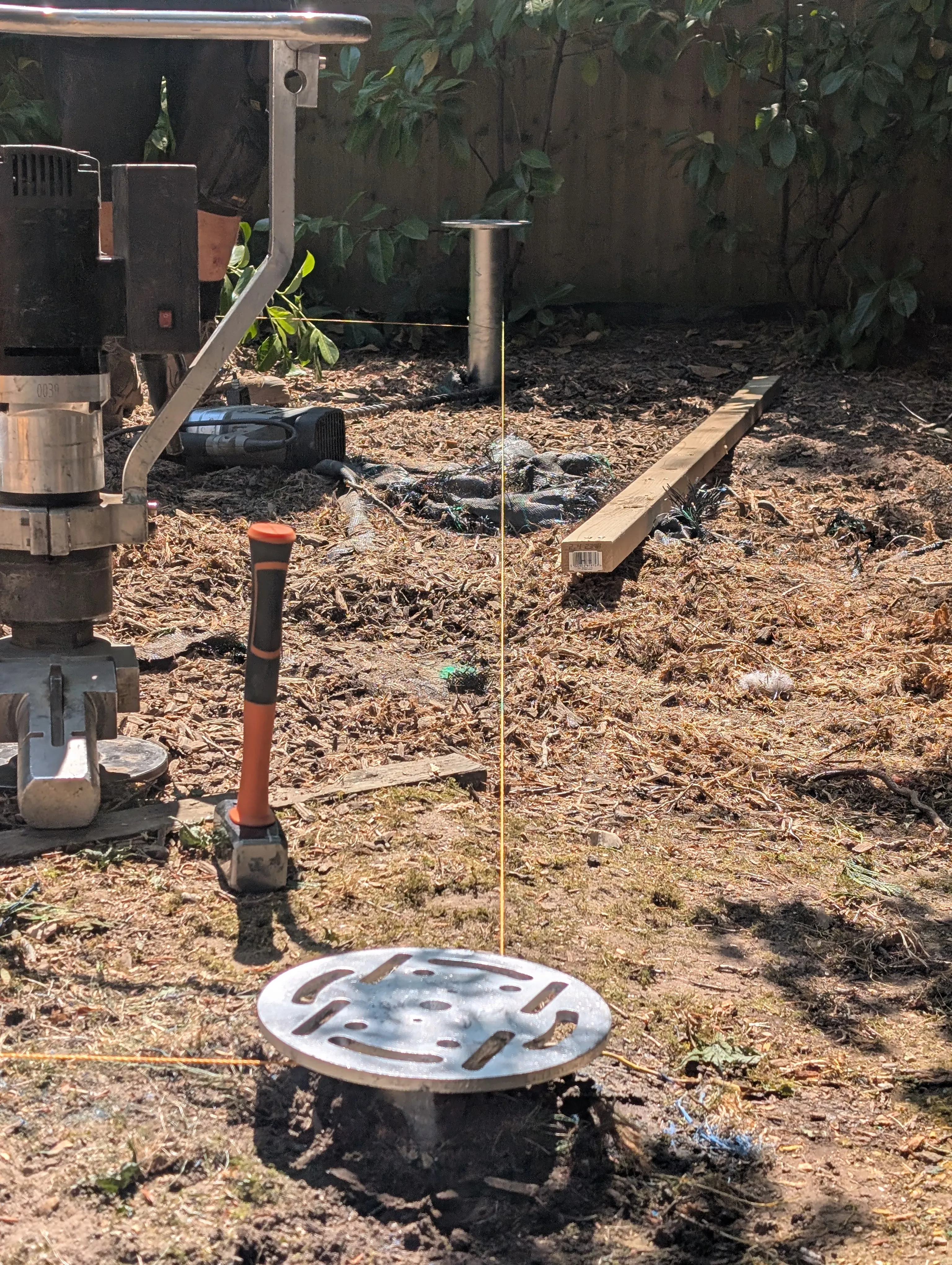
Ground screw testing in Oxford
Get test evidence for the ground screw foundation you are planning or assessing in Oxford. JustBases offers pull-out, direct compression and lateral testing as standalone services, including suitable screws fitted by other installers. We discuss what needs to be established and agree the test programme, practical setup and written reporting.
Ground screw tests and what they measure
Testing applies a defined load and records the response at an identified support. The purpose may be to inform a foundation design, assess a trial product or obtain evidence for an existing installation. The method needs to match the loading case and the information the project team will use.
We can discuss testing with a homeowner, building supplier, installer or designer. Let us know which screws are involved and whether there is already a specified procedure. We agree the required loads, records and assessment criteria before the programme proceeds.
Pull-out testing
An upward pull investigates uplift response. The agreed loading and movement records provide evidence for the screw and position under test. Share the proposed uplift requirements or test brief so the programme can address the relevant design question.
Learn more: Pull-out testingDirect compression testing
A downward load is physically applied to measure compression response. The setup and procedure are arranged for the required test. Where compression is instead assessed by an agreed calculation using other test information, that calculation is identified separately from a direct downward measurement.
Learn more: Direct compression testingLateral testing
A sideways force examines lateral behaviour in an agreed direction and connection arrangement. Working space, connection height and how the load is applied are considered with the test requirements. The resulting evidence concerns that lateral loading case.
Learn more: Lateral testingInstallation torque and torsional testing
Torque monitoring records the turning resistance during screw installation. Specialist torsional testing applies a defined twisting load under a separately agreed procedure. Each service is scoped for its own purpose and priced on application.
Learn more: Installation torque and torsional testingGround screw testing guide prices
The starting rates below cover the three direct-test methods. We provide a written price for the agreed test positions, number of tests, setup, reporting and travel. Installation torque monitoring and specialist torsional testing are quoted separately on application, according to the requested work.
Local guide prices start with our Ringwood prices, adding 0.1% for each one-way road mile to the town, then rounding up to a whole pound. Your written quotation confirms the price for your site and agreed work.
- Pull test (tensile or uplift test)
- From £521
- Load test (compression test)
- From £1,042
- Lateral test (sideways load)
- From £510
- Installation torque monitoring
- Price on application
- Specialist torsional load test
- Price on application
Each additional test
Each extra charge applies to an additional test of the same type, at the same location on the same day. The first test of each type is priced separately.
- Pull test (tensile or uplift test)
- £160 extra
- Load test (compression test)
- £320 extra
- Lateral test (sideways load)
- £155 extra
No VAT is added to the guide prices shown. Guide prices are subject to site conditions, access and the written quotation.
Tell us what you need to establish
Explain what the foundation supports or will support, where it is and why testing is being considered. You can forward a designer's request or provide available screw details later. A short initial enquiry is enough for Craig to discuss the practical next step; drawings are optional.
Request your free quote
Give us your contact details and a short description of the testing you need. You can ask before the technical requirements are complete.
Your enquiry
Ground screw testing in Oxford
Agreeing and carrying out the tests
The test programme brings together the design requirement, the available supports and a safe way to apply the load. We establish those details with the relevant customer or project team before attendance.
Define the test requirement
We confirm the purpose, loading direction and available specification. The proposed load sequence, measurements, stopping criteria and acceptance requirements are agreed with those responsible for assessing the findings.
Check access and connections
The screw details, head arrangement and surrounding space are reviewed for the chosen method. Existing frames and structures are considered, and any preparation or access work needed for the setup is identified.
Apply and record the agreed loads
The programme is carried out using the agreed connection and loading arrangement. The required observations and measurements are recorded against the identified test positions and relevant conditions.
Report results and calculations
The service includes recorded results, a written test report and the agreed project-specific load calculations. The report distinguishes measured behaviour from calculated assessments for the relevant designer or assessor to review.
Testing trial screws and fitted foundations
A trial can be planned before the full foundation is installed. Agreeing a product, position and loading case with the designer helps relate the evidence to the proposed building. We discuss how the results will be used and the test stages needed while the foundation requirements are being developed.
For fitted screws, the available product and installation records help identify what can be tested. Describe the screw heads, any frame connection and the building or loads already present. We review the practical connection and safe working room before confirming the test arrangement. Photographs of safely visible details are useful; structural fixings should remain undisturbed while access is assessed.
Testing is available independently of buying new screws from JustBases. We can consider suitable installations by another supplier or contractor, with the owner's permission and the test scope agreed. If new supports are also needed, the Oxford installation service can be discussed as a separate part of the project.
Using the results in your project
The report identifies what was tested and the relevant loading and response records. Any calculated capacity assessment is described with its agreed method and assumptions. This includes clearly distinguishing direct compression testing from a compression calculation informed by pull-test information, where that approach has been agreed.
Your designer or other responsible assessor uses the findings with the foundation layout, building loads and connection details. The number and location of tests need to reflect the evidence they require. We can establish the reporting brief before the visit so the results are useful to that assessment.
A written test report supplies evidence for the agreed programme. An engineer's design acceptance and any building control approval remain separate processes with their own requirements. Tell us about a requested format, submission date or assessment criterion before the tests are arranged.
Arranging the Oxford testing visit
Give us the full site postcode and the entrance to use, with a contact who can arrange access to the supports. A description of gates, turns, steps and available space helps establish how the testing setup will reach the positions. Tell us about other work taking place and any limits on when the area can be made available.
The applied loads can cause movement or affect a support, particularly when investigating behaviour at higher loads. We agree the intended loading and stopping criteria, along with how the tested screw will be assessed for continued use or further work afterwards. The setup must also provide a safe working area around the screw, its connections and any nearby structures.
You can make the enquiry before every technical detail is settled. Available drawings, product information and a safely taken photo help refine the arrangements, with any further preparation or information identified before the visit is confirmed.
Ground screw testing around Oxford
Enquire about testing at an Oxford or nearby site, including OX1–OX4 and surrounding OX5, OX29, OX33 and OX44 locations. Tell us the full postcode, the test purpose and whether the screws are exposed or beneath a structure. We confirm availability, access, setup and travel in the quotation.
Oxford testing enquiries
City centre, Jericho, Osney, St Thomas, West Oxford, Grandpont, New Hinksey, North Oxford, Walton Manor, Park Town, Norham Manor, Summertown, Sunnymead, Cutteslowe, Wolvercote, Godstow and Binsey.
Other city neighbourhoods
Headington, Old Headington, New Headington, Headington Quarry, Headington Hill, Barton, Sandhills, Risinghurst, Wood Farm, Northway, Old Marston, New Marston, St Clement's, East Oxford, Cowley, Church Cowley, Temple Cowley, Cowley Marsh, Florence Park, Donnington, Iffley, Iffley Fields, Rose Hill, Littlemore, Blackbird Leys and Greater Leys.
Nearby communities
Botley, North Hinksey, South Hinksey, Cumnor, Cumnor Hill, Dean Court, Farmoor, Kennington, Radley, Sunningwell, Bayworth, Boars Hill, Wootton, Kidlington, Gosford, Water Eaton, Yarnton, Begbroke, Thrupp, Shipton-on-Cherwell, Hampton Poyle and Islip.
Village site enquiries
Elsfield, Woodeaton, Beckley, Noke, Stanton St John, Forest Hill, Holton, Wheatley, Horspath, Garsington, Cuddesdon, Denton, Sandford-on-Thames, Nuneham Courtenay, Marsh Baldon, Toot Baldon, Little Baldon, Eynsham and Cassington.
Feedback on Craig’s earlier work
Feedback on Craig’s earlier groundwork and customer service.
"Craig and the team are absolutely fantastic. From courtesy, to standard of work, to tidiness — everything exceeded expectations. The job was arranged, booked and done extremely quickly and we are very happy with the results. Nothing was too much trouble, and communication was easy."
"Craig and his crew were excellent from the first communication, quote, timing of work and quality of work. Highly recommended."
Oxford ground screw testing questions
Can testing be arranged separately from installation?
Yes. You can request a standalone test on suitable trial or existing screws, including another installer's work. We first establish the purpose, available screw information and practical test arrangement. The quotation covers the testing programme and reporting you agree with us, with any installation work treated separately.
Who can send the testing enquiry?
A homeowner, building supplier, installer, designer or another project representative can contact Craig. Explain the foundation and why evidence is needed, and share any brief already issued. We identify who will set and assess the relevant requirements so the method, loading and report can be agreed with the appropriate people.
When is an upward pull test useful?
It is used where the project needs evidence of uplift response. The test applies upward load through an agreed connection and records the required behaviour. The designer or assessor relates that result to the screw, position and loading case under consideration. Tell us the intended purpose so the procedure can be defined for it.
What is measured during a compression test?
A direct compression test applies downward load and records the response required by the agreed procedure, such as movement under the loading stages. The product, position and setup are identified with the result. This is a physical downward test, distinct from a calculated compression assessment using an agreed relationship or other test information.
How is sideways resistance tested?
Lateral testing loads the screw sideways in a specified direction. The connection arrangement and height, available space and method of applying the load are established for that case. We discuss those practical details alongside the requested loads and measurements, then quote for the programme and reporting.
What does installation torque monitoring record?
It records turning resistance while the screw is installed. That information can be used within an appropriate product and design method, with its interpretation agreed for the project. It is a different service from physically applying upward, downward or sideways test loads. Torque monitoring is scoped separately and priced on application.
How does torsional testing differ from torque monitoring?
A specialist torsional test investigates response to an agreed twisting load under a planned test procedure. Monitoring concerns the torque encountered during installation. We confirm which is required, how the load or record will be obtained and the report needed. Specialist torsional testing is available by arrangement and priced on application.
Can a trial test inform the proposed screw design?
Yes, where the trial product, positions and loading are agreed for the design question. The project team decides how the results will be used and whether additional trials or tests are needed. We can discuss the practical programme while those requirements are being developed, before the full foundation installation.
What information helps when the screws are already installed?
Send any product identification, layout, installation records and details of the building or frame above. Photographs of safely visible heads and connections can help establish the available access. We assess the setup for the chosen method and identify any preparation needed, with structural fixings left in place while the arrangements are reviewed.
Who decides the load and acceptable movement?
The relevant designer or responsible assessor establishes the requirements for the purpose of the test. We agree the practical procedure, loading, records and stopping criteria with the appropriate project team. If you have not received those instructions yet, describe the project and we can explain what needs confirming before testing proceeds.
Can testing affect whether a screw remains in use?
Yes. Applied loads can cause movement or affect the support, depending on the programme and response. We discuss the intended loading and limits before the test, together with the way the screw will be assessed afterwards. The purpose, stopping criteria and any continued-use or further-work requirements are agreed with you or your designer.
What will the written report contain?
It presents the recorded results for the agreed methods and identified positions, with relevant observations and the agreed project-specific load calculations. Measured response and calculated assessments are distinguished. Tell us about any reporting format or submission requirement at the start so the document can provide the information the project team needs.
Will the report approve the whole building or foundation?
The report supplies evidence for its defined test scope. The building and foundation designer assesses that evidence with the loads, layout and connections, and any approval body has its own requirements. An engineer's design acceptance or Building Control approval is arranged separately, with their requested evidence established before the programme is confirmed.
Can you price the work before I have a full technical pack?
Start by giving the postcode, testing purpose and whether the screws are trial supports or already fitted. Available records and photos help refine the arrangements, but they are not required to make contact. We explain the details needed to agree the test method, attendance, report and written price.
What does each additional ground screw test cost?
At the same location on the same day, each additional compression test costs £320 extra, each additional pull, tensile or uplift test costs £160 extra, and each additional lateral test costs £155 extra. These fixed charges are for further tests of the same type. The first test of each type is priced separately, using the starting price for your location. The extra-test charges stay the same in every location.
Ask Craig about a testing visit
Explain the project and the evidence you need, or send the request you have been given. We can discuss a suitable testing programme and provide a written quotation for the work and report.