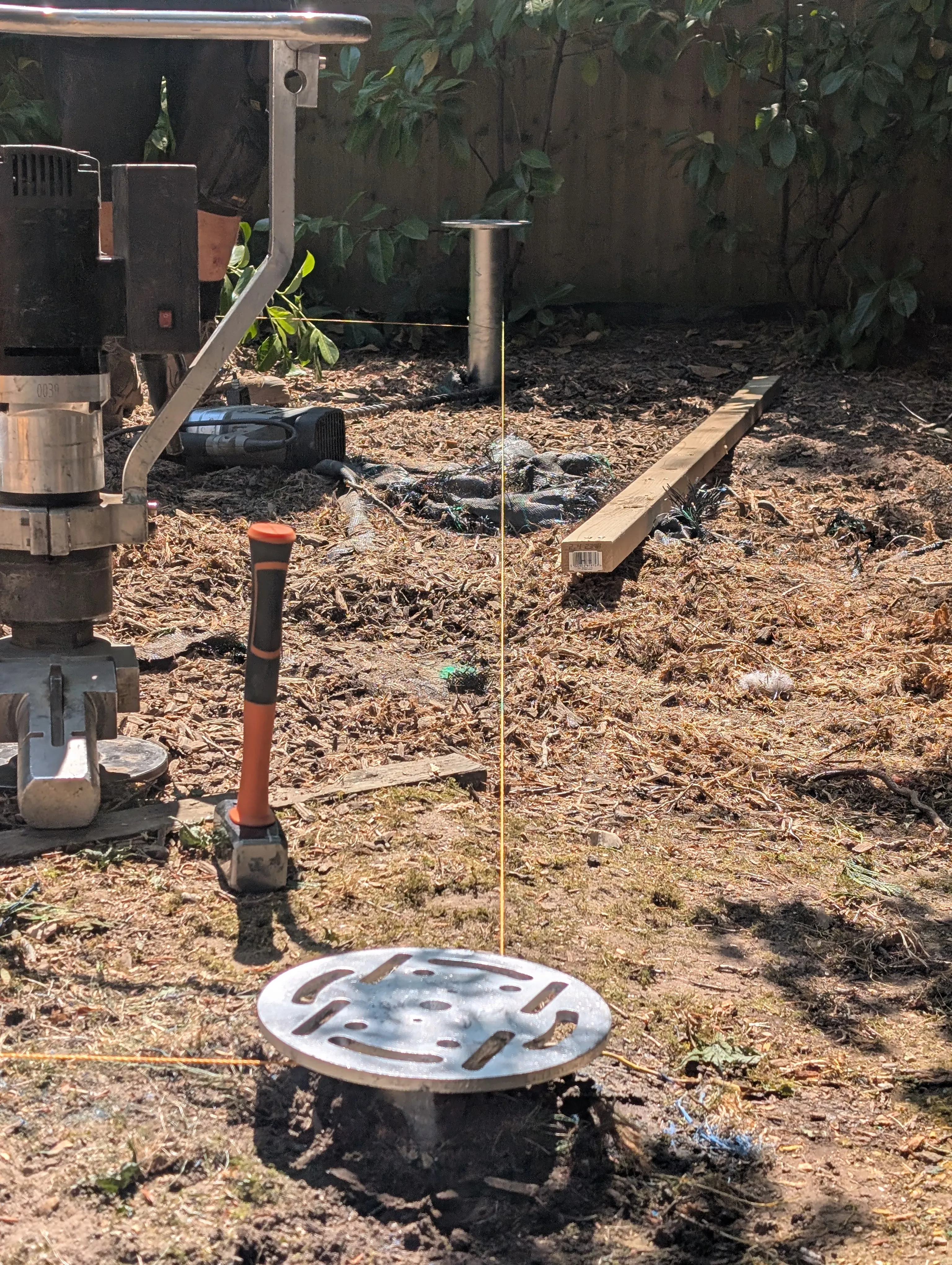
Ground screw testing in Southampton
JustBases carries out ground screw testing in Southampton for new foundation schemes and suitable existing installations. Book testing separately, including for another installer's screws, with the method, site arrangements and written reporting agreed for your project.
Ground screw tests we offer
Test evidence can help a project team select a foundation arrangement or review supports already installed. We offer physical loading in upward, downward and sideways directions, with the particular requirements established from the purpose of the investigation.
The building loads and connection detail influence which tests are relevant. If an engineer, supplier or approving organisation has asked for evidence, share their request when available. If you are at an earlier stage, explain the planned building or existing concern and we can discuss how the testing enquiry should proceed.
Pull-out testing
The test pulls upwards on the selected support. Measured response under the specified force provides information about uplift resistance for that screw and test arrangement.
Learn more: Pull-out testingCompression testing
A controlled force pushes down on the screw, allowing movement under the agreed loading to be recorded. This provides direct compression-test evidence for consideration alongside the proposed downward building loads.
Learn more: Compression testingLateral testing
Loading is applied sideways to investigate lateral response. We establish the required direction, connection and setup before arranging a test that measures the behaviour relevant to that part of the design.
Learn more: Lateral testingGround screw testing prices in Southampton
Starting fees for the direct-load methods appear below. To confirm your price, we discuss the requested test positions, loading and readings, the access and preparation, and the report the project needs. A programme involving several positions or methods is quoted for its agreed scope.
Installation torque monitoring and specialist torsional testing are each price on application. Monitoring captures resistance while the screw is turned into place. Torsional testing applies a defined twisting load as a separate test. These services should be requested by their purpose so the required attendance and evidence can be agreed.
Local guide prices start with our Ringwood prices, adding 0.1% for each one-way road mile to the town, then rounding up to a whole pound. Your written quotation confirms the price for your site and agreed work.
- Pull test (tensile or uplift test)
- From £492
- Load test (compression test)
- From £983
- Lateral test (sideways load)
- From £482
- Installation torque monitoring
- Price on application
- Specialist torsional load test
- Price on application
Each additional test
Each extra charge applies to an additional test of the same type, at the same location on the same day. The first test of each type is priced separately.
- Pull test (tensile or uplift test)
- £160 extra
- Load test (compression test)
- £320 extra
- Lateral test (sideways load)
- £155 extra
No VAT is added to the guide prices shown. Guide prices are subject to site conditions, access and the written quotation.
Ask about a ground screw test
A site postcode and short explanation of the testing purpose are enough to enquire. Mention whether the screws are trials or part of an existing foundation. Send any instructions, drawings or photos you already have, or call 01202 039753 or message Craig on WhatsApp to explain the project first.
Request your free quote
Start with the location and why testing is being considered. We can discuss any further information needed.
Your enquiry
Ground screw testing in Southampton
How ground screw testing works
We bring the technical requirement and site preparation into one agreed plan before attending. That gives you a clear scope for the visit and makes it easier to coordinate the report with the next stage of the building work.
Agree the engineering question
We establish what the test needs to demonstrate, which screws are involved and the relevant loading directions. Required loads, sequence and acceptance criteria are confirmed with the responsible designer where applicable. The intended report recipient and calculation requirements are identified at the same stage.
Arrange safe site attendance
We assess access, the connection to the screw and a suitable arrangement for applying and resisting the test forces. Existing structural loads and surrounding activity need consideration. Any preparation, permissions and on-site responsibilities are confirmed before the appointment.
Record and explain the findings
Testing follows the agreed programme and records the relevant load and response. The commission includes recorded results, a written report and agreed load calculations. The project team then has evidence it can review against its specified requirements.
Testing existing screws and trial installations
An existing foundation may be tested for a planned change, a requested check or information needed before construction continues. Give us whatever you know about the screw product, positions and installation, together with the attached frame or building. Missing paperwork can be discussed as part of establishing a workable scope.
The test needs access to a suitable loading connection. If the supports sit below a finished floor, deck or building, show the safely visible arrangement and explain what is above it. Please leave structural connections intact while enquiring. The responsible parties must agree any opening-up, temporary support and reinstatement required to carry out the work safely.
For a new scheme, selected trial installations can be considered before the whole foundation is ordered or installed. Their positions and purpose need to relate to the designer's information requirements. Discuss the testing programme early so results can be reviewed before the next construction decision is made.
What your test report tells you
The report documents the agreed test and its measured findings at the identified positions. It provides a record the project team can relate to the screw details, applied load and relevant response. Particular reporting formats, calculations or submission requirements should be raised when the test is scoped.
Measurements and derived figures are kept distinct. A compression calculation based on pull-test data requires an applicable agreed method and is described as a calculation; a direct compression test records response under a physically applied downward load. A torque-monitoring record documents the installation process rather than either of those tests.
Your designer evaluates the results against the agreed criteria as part of the complete foundation and building design. Other supports, connections and frame members remain part of that review. The test report supplies evidence within its stated scope, with any engineer's sign-off or approval documentation needing separate confirmation.
Arranging testing in Southampton
Give us the full postcode and directions to the entrance that will be available for the work. Include the on-site contact and any access times or site rules. A view of the route to the screws helps us understand gates, steps, unloading and the space available for the agreed setup.
Where a supplier, installer or main contractor is coordinating the work, tell us when the test positions will be ready and when the findings are needed. Trial installation, access preparation and report review should fit the programme. We agree attendance around that information rather than asking you to prepare technical details before making contact.
If the project also needs new supports, see Southampton ground screw installation. The Southampton base overview and Hampshire town directory provide other local routes. You can continue with a testing-only enquiry here.
Areas we cover around Southampton
Enquiries are welcome from Southampton city centre, Bargate, St Mary's, Bevois Valley, Northam, Banister Park, Polygon, Freemantle and Shirley. We also discuss work in Millbrook, Redbridge, Maybush, Coxford, Aldermoor, Lordshill, Lordswood, Bassett, Highfield, Portswood, Swaythling and St Denys.
Other city neighbourhoods include Bitterne, Bitterne Park, Townhill Park, Harefield, Thornhill, Peartree, Itchen, Woolston, Sholing and Weston. Nearby places include West End, Hedge End, Botley, Bursledon, Netley Abbey, Hamble-le-Rice, Eastleigh, Chandler's Ford, Nursling, Rownhams, Chilworth, North Baddesley, Totton and Eling, Marchwood, Ashurst and Colbury, and Netley Marsh.
SO14, SO15, SO16, SO17, SO18 and SO19 help locate city enquiries, with nearby SO30, SO31, SO40, SO50, SO52 and SO53 also useful. Share the full postcode and address so we can confirm the work location and arrangements. Ask about your site even if its locality is not listed.
Feedback on Craig’s earlier work
Feedback on Craig’s earlier groundwork and customer service.
"Craig and the team are absolutely fantastic. From courtesy, to standard of work, to tidiness — everything exceeded expectations. The job was arranged, booked and done extremely quickly and we are very happy with the results. Nothing was too much trouble, and communication was easy."
"Craig and his crew were excellent from the first communication, quote, timing of work and quality of work. Highly recommended."
Frequently asked questions
Answers about commissioning a test, preparing access and using the results.
Do you accept testing enquiries from other installers?
Yes. Installers, suppliers, owners and project teams can ask about standalone testing, including screws not supplied by JustBases. Explain the product and what needs establishing. We review the available information and site arrangements before confirming the test; there is no requirement to transfer the installation contract to us.
Which test checks the downward weight of the building?
A direct compression test applies downward force and measures the screw's response under the agreed loading. Uplift and sideways behaviour need different tests where those questions are relevant. The designer sets the required loading evidence for the project, so a downward test should be scoped with that purpose in mind.
Can installation torque monitoring be arranged with testing?
Discuss it before installation so the monitoring stage and required records can be organised. Turning resistance is installation information, while a physical load test examines response to an applied force. If both are needed, their scope and timing are agreed together. Torque monitoring has its own price-on-application quotation.
When would a specialist torsional test be considered?
It is relevant where the project needs evidence of response to a specified twisting load. The requirement should define what is being investigated so the connection, force and measurements can be discussed. It is separate from an installation torque log and from pull, compression or lateral testing, with pricing on application.
Can trial testing inform the final foundation specification?
It can provide evidence for the designer to consider before the full scheme proceeds. The trial needs agreed positions and requirements so it produces useful information for that decision. Plan time for the report to be reviewed before ordering or completing the remaining foundation and arranging the frame.
Can screws be tested with a building already above them?
We need to assess the loading connection, existing structural loads and the safe means of reaching the relevant positions. Tell us what the building and floor cover, without dismantling anything. Any preparation or temporary support must be coordinated with the responsible people before testing can be confirmed.
What if I cannot identify the screw manufacturer?
Tell us the information you do have and why testing is required. Photos of visible parts, installation records or the original supplier's details may help later. We assess what can be established and whether the proposed test is practicable; a missing document need not prevent the first conversation.
Should I send the engineer's requested loads?
Yes, if they are already available. Their brief helps define direction, loading sequence, acceptance criteria and reporting. You can also enquire before those details are issued. We confirm the necessary requirements and responsibilities before attending, so the test answers the question the engineer needs to resolve.
What comes with the testing service?
The agreed commission provides recorded results, a written report and the specified load calculations. We establish the detail of those deliverables before work starts, including any information the report recipient needs. If your project requires an engineer-signed document or particular approval paperwork, raise that separately when discussing the scope.
How is a calculated compression value shown?
It should be identified as a derived figure using the applicable agreed method and test information. It is not described as a direct physical compression result. That distinction lets the project team see how the evidence was obtained and decide whether it meets the requirement for the proposed foundation.
Will the report be enough for Building Control?
That depends on what the authority and responsible designer require for the complete project. Testing can contribute evidence, but the wider design and submission still need review. Share any specific request before booking so we can consider the required records and avoid assuming that a test report alone grants approval.
What should be ready before the testing appointment?
The agreed route and test positions need to be accessible, with entry and any authorised preparation arranged. We also confirm the connection, working space and relevant site rules before attendance. Start by telling us the location and purpose; the practical preparation follows that discussion, rather than being something you must work out alone.
What does each additional ground screw test cost?
At the same location on the same day, each additional compression test costs £320 extra, each additional pull, tensile or uplift test costs £160 extra, and each additional lateral test costs £155 extra. These fixed charges are for further tests of the same type. The first test of each type is priced separately, using the starting price for your location. The extra-test charges stay the same in every location.
What happens next
Discuss your testing requirement, call 01202 039753 or message Craig on WhatsApp. We agree what needs testing and reporting, provide the written price and arrange the work once the practical requirements are confirmed.