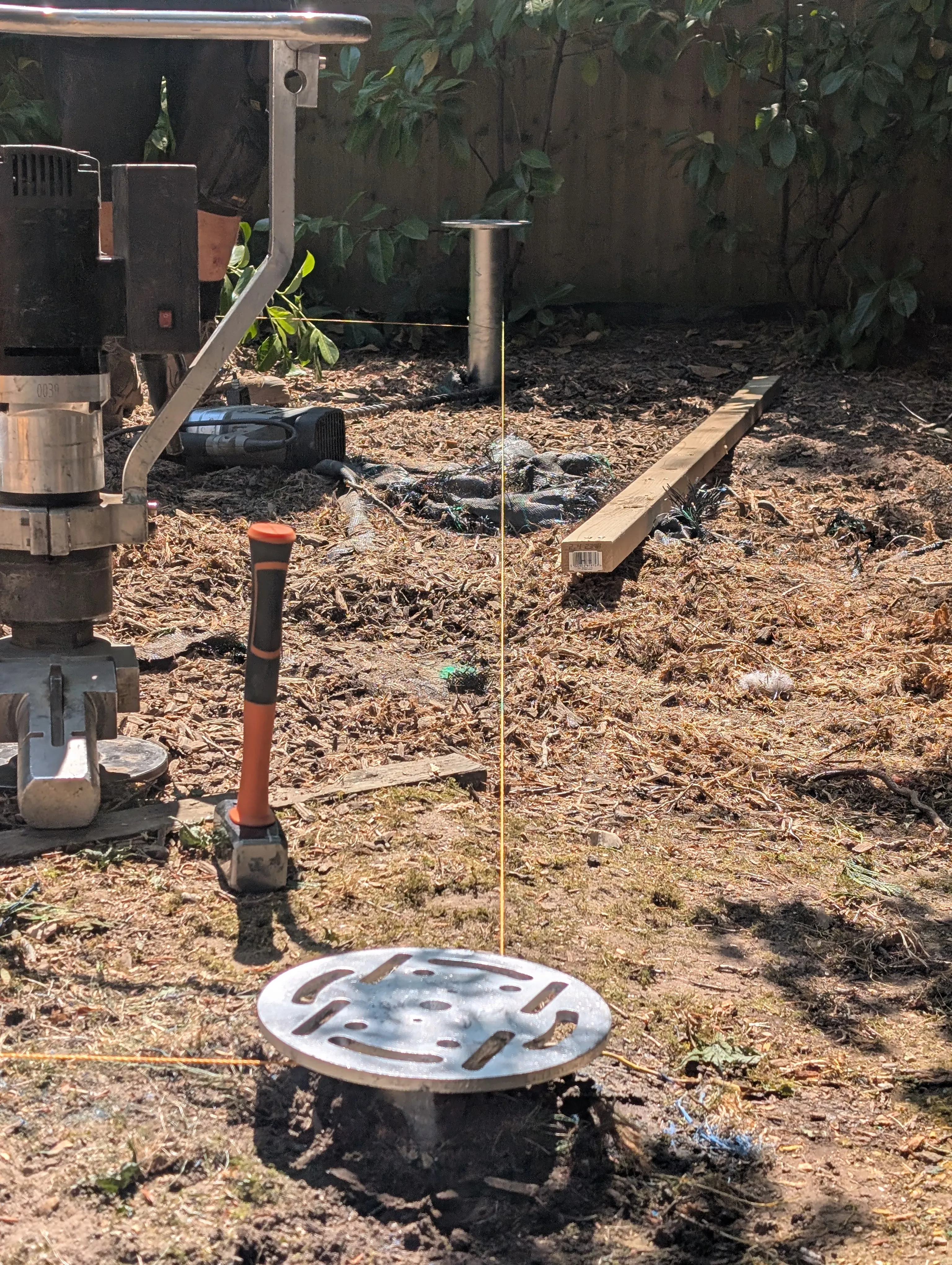
Ground screw testing in Swindon
Find out how a ground screw responds to the loads relevant to your project. JustBases offers standalone ground screw testing in Swindon, with pull, direct compression and lateral methods available. You can enquire about trial supports or suitable existing screws, including those supplied or fitted by another installer.
Testing the loads your screws need to resist
A useful test connects a defined load with a measured response at an identified screw. It can help a designer develop a proposed foundation, investigate an existing support or obtain evidence for a specified loading case. We establish the question first, then agree the method and records needed to answer it.
The direction of load matters. The methods below provide different information, and a project can require more than one of them. If your designer or building supplier has issued a test brief, share it with us so the quotation can reflect the requested work.
Pull testing
An upward force is applied to investigate resistance to uplift. The agreed load and movement records relate to the screw and position tested. This can provide evidence for the upward loading requirements identified for the foundation.
Learn more: Pull testingCompression testing
A direct compression test loads the screw downwards and records its response under the agreed procedure. It provides a physical downward test result. A compression assessment calculated from pull-test information is a separate calculation, with an agreed method and stated assumptions.
Learn more: Compression testingLateral testing
Sideways loading investigates the support's lateral response. The direction, connection height and test arrangement are agreed for the proposed loading case and available space. This is distinct from the vertical information obtained in pull and compression testing.
Learn more: Lateral testingTorque monitoring and torsional testing
Installation torque monitoring records turning resistance as the screw is driven. A specialist torsional test applies an agreed twisting load to investigate torsional response. Each has a separate purpose and scope, priced on application, and neither is described as a direct vertical load test.
Learn more: Torque monitoring and torsional testingGround screw testing guide prices
The starting rates below distinguish pull, compression and lateral tests. We quote for the agreed number and type of tests, setup, site access, reporting and travel. Installation torque monitoring and specialist torsional testing are separately priced on application; tell us which has been requested or what information you need.
Local guide prices start with our Ringwood prices, adding 0.1% for each one-way road mile to the town, then rounding up to a whole pound. Your written quotation confirms the price for your site and agreed work.
- Pull test (tensile or uplift test)
- From £519
- Load test (compression test)
- From £1,037
- Lateral test (sideways load)
- From £508
- Installation torque monitoring
- Price on application
- Specialist torsional load test
- Price on application
Each additional test
Each extra charge applies to an additional test of the same type, at the same location on the same day. The first test of each type is priced separately.
- Pull test (tensile or uplift test)
- £160 extra
- Load test (compression test)
- £320 extra
- Lateral test (sideways load)
- £155 extra
No VAT is added to the guide prices shown. Guide prices are subject to site conditions, access and the written quotation.
Discuss the tests you need
Give us the Swindon-area postcode and an outline of the project. Explain whether you have trial screws, an exposed foundation or supports beneath a frame or building. You can forward a test request, installation record or photo when available; a first enquiry does not require a completed test specification.
Request your free quote
Give us your contact details and a short description of the testing you need. You can ask before the technical requirements are complete.
Your enquiry
Ground screw testing in Swindon
Arranging a useful testing programme
We agree the technical purpose and practical setup before testing, including the load requirements, stopping criteria and reporting. This helps ensure the attendance produces information the project team can use.
Establish the purpose and loads
We identify the loading case being investigated, the available design requirements and who will assess the findings. The proposed test loads, procedure and acceptance criteria are agreed with the relevant customer or design team.
Agree the screws and method
The product information, test positions and available connections are reviewed with access and working space. We establish the required setup and any preparation needed, including how existing frames or buildings affect the arrangement.
Carry out and record the tests
Loads are applied through the agreed test arrangement and the specified response is recorded. The records identify the tested positions and relevant conditions, with the programme following the agreed limits and stopping criteria.
Provide the report and calculations
The agreed service includes recorded results, a written test report and project-specific load calculations. Direct measurements and calculated assessments are identified clearly, so the responsible designer can consider the evidence within the foundation design.
Trial screws and existing installations
Trial screws allow testing to be planned while the foundation arrangement is being developed. The proposed product and positions should relate to the building and the design questions. We can discuss the programme with you or your designer, including how the evidence will be used and whether further stages are required.
For an existing installation, send any product, installation and layout information you have. Tell us what is attached to the heads and whether the structure is already loaded. We review the available connection and working room for the requested method before confirming the practical test arrangement. Photos of safely visible details are useful; keep structural connections in place while advice is obtained.
Standalone testing can be requested for suitable screws supplied or installed by others. If you also need new supports, our Swindon installation service can be discussed alongside the testing. The quotation distinguishes the installation work from the test programme and its reporting.
The findings are reported for the agreed test scope. Your designer or other relevant assessor decides how they satisfy the project's requirements and whether more information is needed. An engineer's design sign-off or an approval body's acceptance is established separately from the test report.
Getting ready for the visit
Provide the full postcode, the working entrance and a site contact who can arrange access. Show the route to the test positions, including gates, steps and any restrictions on working space. Where screws sit beneath a frame, safely taken photographs can help us discuss how the connection might be reached and what preparation needs agreeing.
Applying test loads can move or affect a screw, especially when the programme investigates higher loads or ultimate behaviour. We discuss the purpose, intended loading, stopping criteria and how the tested support will be assessed for continued use. The agreed setup also addresses nearby people, structures and working areas so the test can be carried out safely.
If the testing is supporting a new building application or approval process, pass on the requirements from the responsible designer or building control team. For a Swindon Borough property, the council's building and permission guidance is a starting point for identifying the relevant checks. We agree the test information needed for that process before attendance.
Ground screw testing around Swindon
Ask about a testing visit for a Swindon or nearby site, including SN1–SN6, SN25 and SN26 addresses. Tell us the proposed method if known and whether a building or frame is already attached. We establish the test setup and confirm the attendance and travel scope in the written quotation.
Testing enquiries within Swindon
Town centre, Old Town, Railway Village, Broadgreen, Kingshill, Okus, Rodbourne, Rodbourne Cheney, Cheney Manor, Gorse Hill, Moredon, Penhill, Pinehurst, Stratton St Margaret, Upper Stratton, Lower Stratton, Covingham, Nythe, Dorcan, Eldene, Liden, Walcot, Park North, Park South, Lawn, Coate, Badbury Park and Wichelstowe.
Additional neighbourhoods
Haydon Wick, Greenmeadow, Haydon End, Abbey Meads, Taw Hill, Oakhurst, Redhouse, St Andrews Ridge, Tadpole Garden Village, Priory Vale, Freshbrook, Toothill, Westlea, Shaw, Eastleaze, Ramleaze, Middleleaze, Grange Park, Nine Elms, Sparcells and Peatmoor.
Villages and towns nearby
Wroughton, Chiseldon, Badbury, Hodson, Liddington, Wanborough, Hinton Parva, Bishopstone, South Marston, Stanton Fitzwarren, Blunsdon, Highworth, Hannington, Castle Eaton and Sevenhampton; Lydiard Millicent, Lydiard Tregoze, Common Platt, Lydiard Green, Greatfield, Greenhill, Holborn, Purton, Royal Wootton Bassett and Cricklade.
Feedback on Craig’s earlier work
Feedback on Craig’s earlier groundwork and customer service.
"Craig and the team are absolutely fantastic. From courtesy, to standard of work, to tidiness — everything exceeded expectations. The job was arranged, booked and done extremely quickly and we are very happy with the results. Nothing was too much trouble, and communication was easy."
"Craig and his crew were excellent from the first communication, quote, timing of work and quality of work. Highly recommended."
Swindon ground screw testing questions
Can you test screws that another company installed?
Yes, we consider suitable third-party installations as a standalone testing service. Send the available product and installation details, a layout if you have one and a description of any attached frame or building. We establish whether the connection and working space suit the requested method before agreeing the test scope.
What if I have only been told that a load test is needed?
Send us the request and explain what the foundation supports. We can discuss which direction of load is involved and what further detail is needed from the designer or person requesting the test. The method, required loading and assessment criteria are agreed before testing, so the visit has a defined purpose.
What does a pull test measure?
It applies upward force and records the screw's response under the agreed loading procedure. The result relates to uplift behaviour at that screw and position. Its use in the foundation assessment depends on the product, test arrangement and design requirements, all of which need to be identified with the recorded evidence.
How is a direct compression test different from a calculated assessment?
A direct test physically pushes down on the screw and measures its response. A calculated compression assessment uses an agreed method and relevant input information, which may include pull-test data where appropriate. The report distinguishes a measured downward result from a calculation and sets out the scope and assumptions of the assessment.
Can you test resistance to sideways loading?
Yes, lateral testing can be discussed for a specified sideways loading case. The load direction, connection point and available test arrangement matter, so share the designer's requirements and the screw layout. We establish the setup and recording needed for that lateral test separately from any upward or downward programme.
Does recording installation torque replace a pull or compression test?
Installation torque monitoring records resistance during the driving process. How that information is used depends on the product and the agreed design method. A pull or compression test directly applies load in its stated direction. We clarify which service has been requested and what evidence the project needs before quoting.
What is specialist torsional testing?
It investigates response to an agreed twisting load through a specifically arranged test. It is separate from monitoring the torque used to install a screw. The purpose, connection, loading procedure and reporting have to be established for the project; this specialist work is priced on application.
Can testing help before the full screw foundation is installed?
A trial programme can provide evidence while the support design is being developed. The screw product, test positions and loading requirements should be selected with the intended foundation in mind. We discuss that programme with the relevant project team, who determine how the findings inform the design and any further testing stages.
How many screws should be tested?
The number and locations follow the purpose of the programme, the foundation layout and the evidence required by the responsible designer or assessor. Share the available design and site information so those requirements can be agreed. The quotation identifies the test positions or attendance scope rather than assuming a single result covers the whole foundation.
Can you test supports beneath a completed frame?
We need to review the connections, available head access, applied loads and space around the supports. Some arrangements need preparation before a test can be carried out. Send photographs of what is safely visible and keep loaded structural fixings undisturbed while the method and any access work are assessed.
Will a tested screw always remain suitable for use?
That depends on the loading programme and the response during testing. A test can cause movement or affect the support, particularly where higher loads or ultimate behaviour are being investigated. We agree the purpose, loads and stopping criteria with you or your designer, including how continued use or any further work will be assessed afterwards.
What paperwork will I receive?
The agreed testing scope includes recorded results, a written test report and project-specific load calculations. The method, tested positions and relevant observations are identified for the assessment. Tell us about any required format or submission date when enquiring so the report can be scoped for its intended use.
Does the report include engineer or Building Control approval?
The report provides the agreed test evidence and calculations for the relevant project team to assess. Any engineer's design acceptance or Building Control approval has its own requirements and is arranged separately. Pass on those requirements before the programme is confirmed so the testing can supply the information requested.
What do you need to price the testing visit?
Start with the postcode, whether the screws are trial or existing supports and what you need to establish. Available product details, the proposed number of tests, a designer's brief and access photos help refine the quote. We confirm the test method, setup, reporting and travel arrangements in writing before attendance. At the same location on the same day, each additional compression test costs £320 extra, each additional pull, tensile or uplift test costs £160 extra, and each additional lateral test costs £155 extra. These fixed charges are for further tests of the same type; the first test of each type is priced separately.
Enquire about your testing visit
Send Craig the site location and the question you need testing to answer. We can discuss the practical options and provide a written quote for the agreed programme and report.