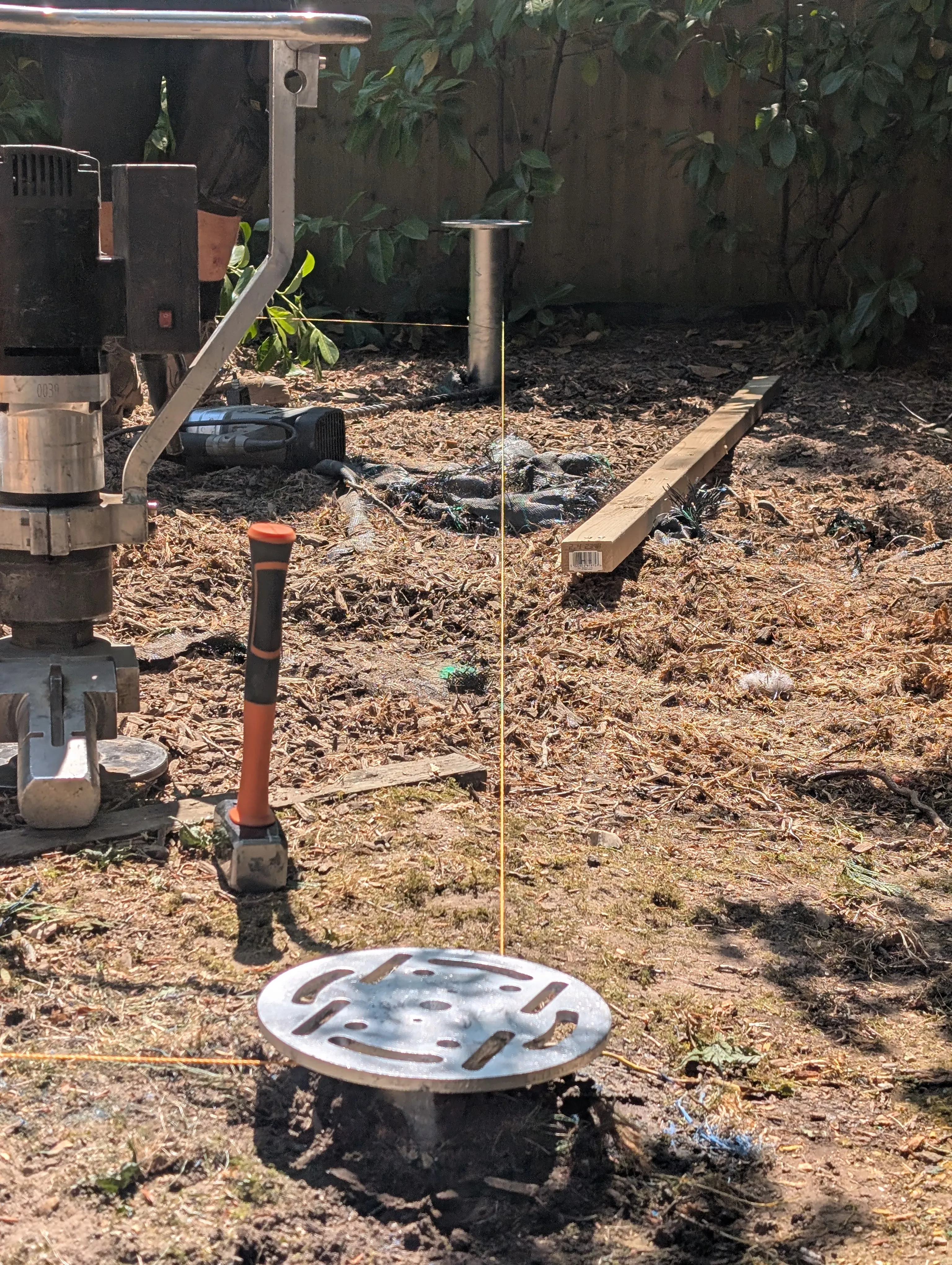
Ground screw testing in Tetbury
We offer standalone ground screw testing in Tetbury and nearby villages, including suitable screws supplied or installed by others. Pull-out, compression and lateral tests provide evidence of the screw's response under agreed loading. We agree the loading programme, practical arrangements and report needed for the project.
Ground screw tests we offer
Testing is useful when measured loading evidence is needed for a proposed foundation or an assessment of existing supports. The required force direction and programme are agreed with the person specifying the evidence. We can discuss a test on its own, at the trial stage or where a suitable foundation has already been installed.
Two other services concern torque. Installation monitoring records the turning resistance while the screw goes into the ground. Specialist torsional testing investigates response to an applied twisting load. They are distinct activities with separate requirements, and both are price on application.
Pull-out testing
The screw is loaded upwards to measure its response to uplift under the agreed programme. Results relate to the screw and position tested, with applied loads and movement recorded for the assessment. This is the relevant loading direction when the required evidence concerns lifting resistance.
Learn more: Pull-out testingCompression testing
Loading downwards provides direct evidence of compressive behaviour. We measure the response to the specified downward load. A compression calculation made from other results is separately identified and requires an applicable agreed method.
Learn more: Compression testingLateral testing
A lateral test applies sideways force in a specified direction. The application point, loading and movement measurements are planned to provide the sideways-loading evidence needed by the designer. We assess the connection and space needed to carry out that arrangement safely.
Learn more: Lateral testingGround screw testing prices in Tetbury
Use the testing prices as guidance, then ask for the programme required for your foundation. The quote considers the loading method, positions, screw and head information, safe access and report requirements. Tell us if a designer or supplier has specified a particular test.
We confirm the loading work and deliverables in writing, including results, a test report and the project-specific calculations in the agreed scope. Trial installations and any further attendance are identified where needed. Installation torque monitoring and specialist torsional testing are each quoted on application.
Local guide prices start with our Ringwood prices, adding 0.1% for each one-way road mile to the town, then rounding up to a whole pound. Your written quotation confirms the price for your site and agreed work.
- Pull test (tensile or uplift test)
- From £530
- Load test (compression test)
- From £1,059
- Lateral test (sideways load)
- From £519
- Installation torque monitoring
- Price on application
- Specialist torsional load test
- Price on application
Each additional test
Each extra charge applies to an additional test of the same type, at the same location on the same day. The first test of each type is priced separately.
- Pull test (tensile or uplift test)
- £160 extra
- Load test (compression test)
- £320 extra
- Lateral test (sideways load)
- £155 extra
No VAT is added to the guide prices shown. Guide prices are subject to site conditions, access and the written quotation.
Ask about a ground screw test
You can start by explaining who needs the results and what they are for. Add the postcode and say whether the screws are planned, exposed or connected to a building. We can help you understand the methods and establish what needs agreeing for a useful quote.
Installation records, a test brief and photos are welcome if available, but none is a condition of making contact. Describe the situation first and we will explain the next information needed. Call 01202 039753 or send Craig a WhatsApp message if that is easier.
Request your free quote
Give us your contact details and a short description of the testing you need. You can ask before the technical requirements are complete.
Your enquiry
Ground screw testing in Tetbury
How ground screw testing works
A planned test connects the information needed by the project with a safe way to obtain it. The loading programme and acceptance criteria are established with the responsible designer or person commissioning the assessment before the work is carried out.
Establish the question and loads
We discuss the intended structure or existing foundation and the evidence required. The agreed programme identifies the test direction, locations, loading and measurements, together with the report needed by the person using the results.
Confirm a safe loading arrangement
We assess the screw head, access and surrounding work area for the proposed test. Any attached frame or building is considered, and preparation or changes needed for safe testing are agreed with the appropriate people.
Complete the measurements and reporting
Loading is applied in accordance with the agreed programme and the response recorded. Results and the commissioned calculations are presented in a written report, with the test method, positions and relevant conditions clear.
Testing existing screws and trial installations
A trial can be useful before committing to the complete foundation. The designer can use relevant testing evidence when considering the proposed screw specification and support arrangement. Agree the trial type and positions so the resulting information serves that design decision.
Existing foundations call for information about the installed screw and how its head is connected. Send any records you have, and describe the frame or building already supported. We assess the practical loading arrangement before confirming the visit, including where another installer carried out the foundation work.
You can enquire while all structural connections remain in place. If preparation or a connection change is necessary, we agree the safe method and responsibilities first. For a foundation carrying a completed building, the person responsible for its structure needs to be involved in those arrangements.
What your test report tells you
Your report records what was tested, where it was tested and how it responded to the applied loads. The agreed reporting also sets out the relevant test conditions and project-specific calculations. Provide any designer or approval-body reporting requirements when the programme is being arranged.
Measurements and calculated assessments have different roles. A direct compression result comes from downward loading; compression assessed from pull-out or other information is reported as a calculation using an agreed applicable method. Keeping that distinction clear helps the project team interpret the evidence correctly.
The designer compares the results with the required loads and criteria, then decides any design or follow-up action. The report does not automatically certify the complete building, frame, connections or untested supports. Those wider responsibilities remain part of the overall design and approval process.
Arranging testing in Tetbury
Give us the complete site address and a contact who can arrange access. Information about the route to the screws and the space around them helps us establish a workable visit. Also identify who will receive and use the report so their requirements can be considered before testing.
For new work, coordinate the test with the foundation and frame programme so the necessary positions are accessible at the agreed stage. If installation is needed as well, see ground screw installation in Tetbury; it can be discussed separately from the testing commission.
Our Tetbury services include other base methods, and the Gloucestershire hub explains the Tetbury-centred service area. For a surrounding village or a site across the county boundary, send the postcode and testing purpose so we can confirm the proposed visit.
Areas we cover around Tetbury
Testing enquiries are welcome from the town and nearby communities below. We confirm attendance and the test arrangements for the full address, using the postcode, purpose and available access information when preparing the quotation.
- Tetbury town areas: town centre and Chipping, Northfield, Hampton Street, Cirencester Road, London Road, Charlton Road, Chavenage Lane, Quercus Road, The Berrells and Bath Road.
- Tetbury's immediate rural area: Tetbury Upton, Tetbury Common, Ilsom, Doughton, Chavenage, Beverston, Long Newnton and Shipton Moyne.
- Avening and Rodmarton area: Avening, Cherington, Ashley, Culkerton, Rodmarton and Tarlton.
- Westonbirt and Leighterton area: Westonbirt, Lasborough, Leighterton, Boxwell, Didmarton and Oldbury-on-the-Hill.
- Kingscote area: Kingscote, Bagpath, Newington Bagpath, Calcot and Ozleworth.
- Crudwell and neighbouring Wiltshire villages: Crudwell, West Crudwell, Chedglow, Chelworth, Eastcourt, Murcott, Brokenborough, Charlton and Hankerton.
- Sherston area: Sherston, Easton Grey, Sopworth, Pinkney and Willesley.
- Kemble, Ewen and Oaksey: enquiries welcome with the full site postcode.
- Postcode enquiries: GL8 and nearby village addresses in GL7, GL9, GL12 and SN16. We confirm the arrangements for the complete address in your quotation.
Feedback on Craig’s earlier work
Feedback on Craig’s earlier groundwork and customer service.
"Craig and the team are absolutely fantastic. From courtesy, to standard of work, to tidiness — everything exceeded expectations. The job was arranged, booked and done extremely quickly and we are very happy with the results. Nothing was too much trouble, and communication was easy."
"Craig and his crew were excellent from the first communication, quote, timing of work and quality of work. Highly recommended."
Frequently asked questions
These answers explain the choices and arrangements involved in a standalone foundation test.
Can you assess a foundation installed by someone else for testing?
Yes. We consider other installers' screws for a standalone test, looking at the known screw details, head connections and safe access. Tell us why results are required and whether the foundation is already carrying a building. The loading and report are agreed as their own service.
What is the difference between the three loading directions?
Pull-out applies force upwards, compression applies it downwards and lateral testing applies it sideways. Each examines the response relevant to that direction. The test programme should follow the information required for the structure, which may involve one method or several. We can discuss the options with the person specifying the evidence.
When is trial testing arranged?
It is arranged at the stage where its evidence can inform the proposed foundation. The screw type, locations and loading should be agreed with the designer before the trial. We identify any trial installation and test work in the quote, then coordinate the timing with the wider construction programme.
Can screws beneath a completed building be tested?
The existing support and connection arrangement needs assessment to establish what can be tested safely. Access to the heads and the effect of the proposed loading on the attached structure are important. Leave the connections in place while enquiring; any required preparation is agreed with the people responsible for the building.
What if I have little information about the screws or test?
Start by telling us what is installed or proposed and who has requested evidence. Any photographs or available records can help us identify what further information is needed. You can make the initial enquiry without a formal brief; the necessary screw information and test programme are settled before work is confirmed.
Who sets the loading programme and acceptance criteria?
The responsible designer or test specifier establishes the evidence and criteria needed for the assessment. We agree how the testing will obtain that information, including the method, positions, loading and measurements. This gives the person interpreting the report a programme aligned with the project's requirements.
What does an installation torque record provide?
It provides a record of turning resistance during screw installation. That installation information is different from the measured response to a direct physical load test. Any use in a capacity assessment needs an applicable agreed method for the screw and site evidence. Monitoring is a separate price-on-application service.
Is specialist torsional testing different from monitoring installation?
Yes. A torsional test examines behaviour under an applied twisting load, whereas monitoring records the turning resistance as the screw is installed. The specialist test has its own agreed loading, connection and reporting requirements. It is price on application and should be requested for the specific rotational evidence needed.
How are test locations and quantities agreed?
They are planned around the foundation and the purpose of the assessment, with relevant site differences and required evidence considered by the test specifier. The quote identifies the agreed positions and number of tests. Results describe the supports tested under their stated conditions and are used within that assessment scope.
What will I receive after the agreed test?
You receive the results and written report, including the project-specific calculations within the commissioned work. The report identifies the loading method, tested positions, measured response and relevant conditions. Let us know who needs it and any particular reporting requirements before the programme is agreed.
Can compression be assessed by calculation instead of a downward test?
That may be considered where an agreed calculation method is applicable to the screw and available site evidence. It is recorded as a calculated assessment. A direct compression test involves loading downwards and measuring the response. We keep those evidence types distinct in both the commissioned scope and reporting.
Does a test report replace the building's structural design?
No. It supplies the agreed foundation evidence for the designer to interpret alongside the structure's loads, frame and connections. The report does not automatically approve the whole building or untested screws. Any design decisions, approval requirements or further work are addressed by the people responsible for those parts of the project.
How should the site be prepared for testing?
We confirm the access, working space and connection arrangements after assessing the proposed test. Share known service information and identify a site contact who can coordinate preparation. Any required change to framing or the work area is agreed safely before attendance, including who carries it out.
How do I obtain a test quotation and arrange the visit?
Give us the full postcode, purpose and stage of the foundation. Add the method, number of positions and reporting brief if already known. We discuss any further information needed, agree the loading and practical arrangements in writing and then confirm attendance. Both torque-related services remain price on application.
What does each additional ground screw test cost?
At the same location on the same day, each additional compression test costs £320 extra, each additional pull, tensile or uplift test costs £160 extra, and each additional lateral test costs £155 extra. These fixed charges are for further tests of the same type. The first test of each type is priced separately, using the starting price for your location. The extra-test charges stay the same in every location.
What happens next
Use the Tetbury testing form, call 01202 039753 or message Craig on WhatsApp. Explain the location and purpose, and we will discuss the test, reporting and practical arrangements before confirming the written quotation and booking.