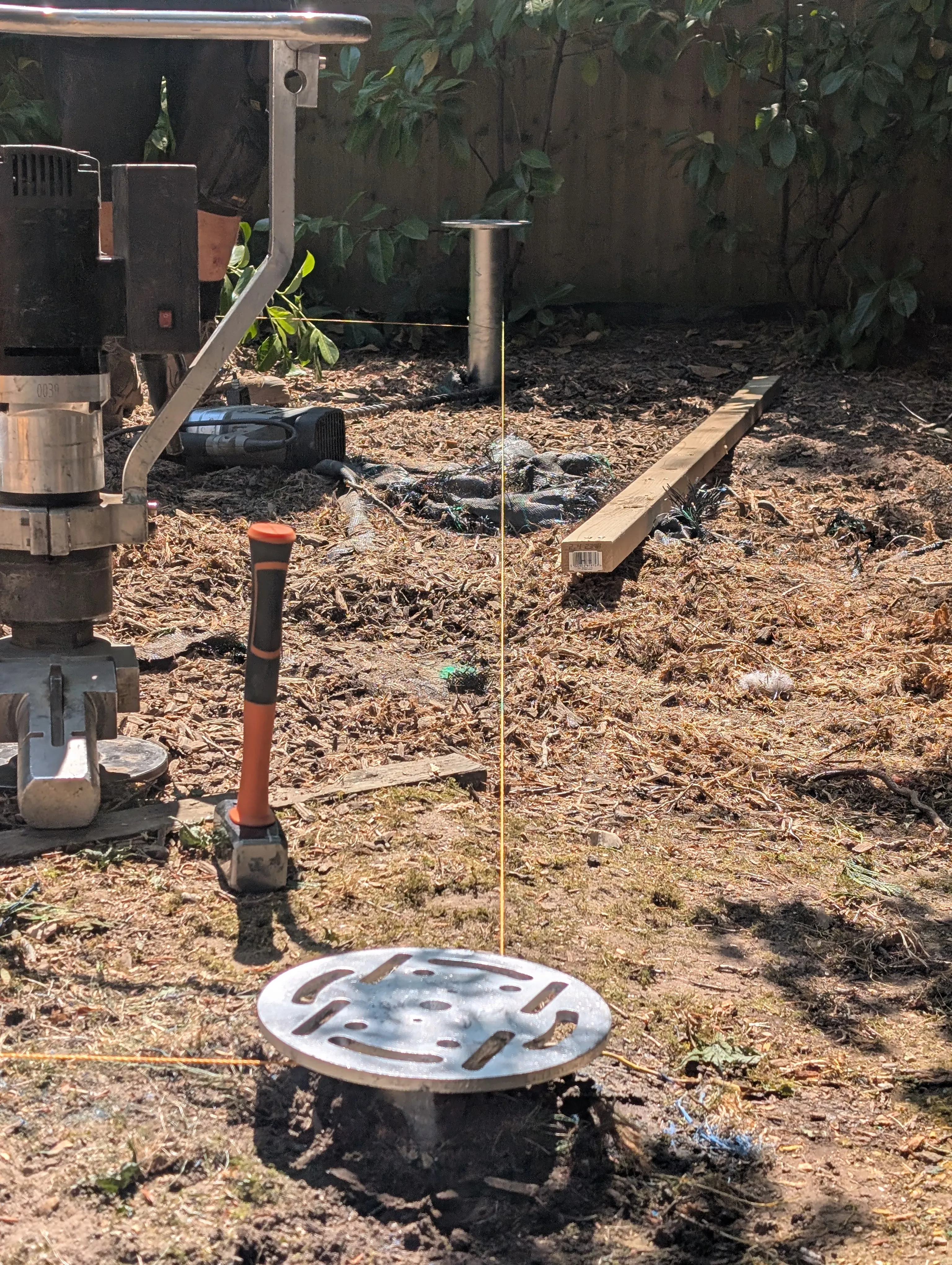
Ground screw testing in Verwood
Book ground screw testing in Verwood with JustBases. We offer upward pull, downward compression and sideways lateral tests, including suitable existing or third-party screws, as a standalone service or alongside agreed installation work.
Ground screw test methods available in Verwood
The value of testing is in obtaining evidence relevant to the foundation being considered. A designer or supplier may require particular load information, or a project team may need to investigate a proposed screw before choosing the final support arrangement. Tell us the purpose and we can discuss the work required.
Each physical method examines a particular direction of force. We agree the scope for the selected screws and intended assessment, with results and reporting made clear before attendance. You can commission testing even when another company supplies or installs the foundation.
Pull testing
The screw is loaded upwards to investigate uplift response. The test records its behaviour through the agreed procedure for the project team's assessment of the tested support.
Learn more: Pull testingCompression load testing
Downward loading provides a direct measurement of compressive response. The agreed programme establishes the loads to apply and the movement information required from the test.
Learn more: Compression load testingLateral testing
A lateral test examines response to a sideways force. Its direction, loading point and connection detail are considered together so the arrangement addresses the specified horizontal requirement.
Learn more: Lateral testingTesting guide prices and scope
The testing prices provide an introduction to the available services. For your quotation, we confirm the required tests, selected positions, visit arrangements, report and any calculation work. The actual address and practical site preparation are considered when agreeing that service.
Compression capacity may be calculated from pull-test results where the method is applicable and agreed. Identify whether your project requires that calculation or a physical compression test: the latter applies downward loading and directly measures the response.
Insertion torque monitoring and specialist torsional testing are separately quoted, both price on application. Monitoring records resistance to turning as screws are fitted. A torsional test applies a twisting action under an agreed testing procedure. Neither is an automatic part of the pull, compression or lateral service.
Local guide prices start with our Ringwood prices, adding 0.1% for each one-way road mile to the town, then rounding up to a whole pound. Your written quotation confirms the price for your site and agreed work.
- Pull test (tensile or uplift test)
- From £484
- Load test (compression test)
- From £967
- Lateral test (sideways load)
- From £474
- Installation torque monitoring
- Price on application
- Specialist torsional load test
- Price on application
Each additional test
Each extra charge applies to an additional test of the same type, at the same location on the same day. The first test of each type is priced separately.
- Pull test (tensile or uplift test)
- £160 extra
- Load test (compression test)
- £320 extra
- Lateral test (sideways load)
- £155 extra
No VAT is added to the guide prices shown. Guide prices are subject to site conditions, access and the written quotation.
Start a Verwood testing enquiry
Tell Craig what has prompted the test and the site postcode. Existing screw details, a supplier's message or a designer's instructions are useful if you hold them already. We can explain what further information is needed to confirm the work; you can contact us before gathering it.
Request your free quote
Start with the postcode and the reason you are looking for testing. Send any existing request or records when convenient.
Your enquiry
Ground screw testing in Verwood
From your testing request to site results
We establish a testing service around the assessment your project needs. The quotation sets out the agreed work and output, with preparation and access confirmed before the visit.
Set the loading and recording requirement
The responsible designer or test specifier defines the required evidence and criteria. We discuss the selected screw positions, load direction and procedure with the project team, including any calculations and particular written information to be supplied.
Confirm the site is ready
The screws and their connections need to be accessible for the proposed setup. We agree the working area, route in and tasks to be completed by others, including competent arrangements for any work affecting an existing structure's support.
Carry out the test and report
The agreed test applies loading and records the screw's response. The findings and written test report, with any commissioned calculations, are supplied for the responsible people to evaluate against the project's requirements.
Assessing screws that are already in place
Begin by explaining what you want to do with the existing foundation and why evidence is required. The work to be assessed might be awaiting a building, already supporting one or being considered for a different proposal. Knowing that stage helps us discuss the test that can be arranged and the information your assessor needs.
Photographs and available records can help identify the screw heads, product and connections. Show only what is visible safely. Keep flooring and structural fixings in place while we consider access; opening up or altering a loaded support needs a properly planned arrangement with the people responsible for the structure, including any temporary support and reinstatement.
If the foundation has not yet been fitted, ask about a trial commission. We can discuss testing before the main order or installation, with the proposed product and purpose established by the project team. Confirm who supplies and fits the trial screws and what happens to them after the test as part of those arrangements.
Understanding the written findings
Plan for the findings to be assessed before the next stage that depends on the foundation. The report gives the agreed written evidence for that review, identifying the work and results from the test. Your designer or other responsible assessor decides how the findings affect the complete support proposal and what should happen next.
Direct measurements
Read a recorded response with the loading method and tested location. Upward, downward and sideways results describe the work actually carried out at those positions, so their context matters when the evidence is assessed against the agreed criteria.
Calculated values
An agreed calculation is identified as such, with its relevant basis. In particular, compression derived from pull data is a different kind of evidence from movement measured under a downward test. The responsible designer considers whether the calculation method and findings are suitable for the proposed use.
Booking the visit and coordinating other work
When discussing dates, tell us what work is due around the foundation. Access for testing needs to remain available, and the project programme should allow the assessor to review the report before dependent installation or building work. Agreeing that sequence with your site team helps the visit serve its intended purpose.
We confirm the route and working area for the proposed test, along with a contact who can arrange entry and any preparatory tasks. Describe separate entrances, restricted openings or changes in level that affect reaching the screws. A photo or short video is useful if it helps show the arrangement.
For fitting new supports, use the Verwood ground screw installation page. The Verwood overview explains the other base methods, and our Dorset service areas show nearby listed towns. Testing can remain a separate commission while your project team decides the next foundation stage.
Verwood neighbourhoods and nearby communities
We welcome enquiries from Verwood town centre, Potters Wood, the Champtoceaux Avenue area, Dewlands Common and Ebblake, including residential properties near Ringwood Forest and Cranborne Common. Three Legged Cross, Edmondsham, Woodlands, Horton and Knowlton are also included in our local enquiry area.
Nearby places include Chalbury, Holt, Wimborne St Giles, Cranborne, Cripplestyle and Alderholt. We also discuss work in St Leonards, St Ives, Ashley Heath and Matchams, including Victory Oak at St Leonards, as well as West Moors and towards Ringwood and Ferndown.
BH31 is the main Verwood postcode district, with nearby addresses also using BH21, BH24 or BH22. Give us the actual site address and postcode so we can consider the work, access and travel. Your quotation confirms the agreed service for the project.
Feedback on Craig’s earlier work
Feedback on Craig’s earlier groundwork and customer service.
"Craig and the team are absolutely fantastic. From courtesy, to standard of work, to tidiness — everything exceeded expectations. The job was arranged, booked and done extremely quickly and we are very happy with the results. Nothing was too much trouble, and communication was easy."
"Craig and his crew were excellent from the first communication, quote, timing of work and quality of work. Highly recommended."
Verwood ground screw testing questions
How should I describe the testing I need?
Tell us what the foundation supports or is intended to support, and what you need to find out. A request from your engineer or supplier is useful, but you can enquire without one. We can discuss the available methods and clarify the information needed with the responsible project team.
Who can arrange the test for a project?
Homeowners, installers, suppliers and contractors can contact us. Identify who is commissioning the work and who will use the findings so the scope can address the right requirement. The person responsible for the foundation assessment should establish the loading and criteria needed before the test is confirmed.
Will you consider screws from a different supplier?
Yes, provided a suitable test arrangement can be agreed for them. Tell us what is proposed or installed and share any product identification you hold. We assess the relevant connection, access and loading requirements before quoting the agreed work; buying a JustBases installation is not a condition of testing.
What records help with an existing installation?
Information that identifies the screws, their positions and how they were fitted is useful. Send available supplier or installer records, along with safely taken photographs where helpful. If some details are missing, explain what is known so we can discuss the identification or assessment needed for the intended test.
Can testing be arranged before ordering the complete foundation?
Yes, a trial can be commissioned while the proposal is being assessed. The project team should establish which product and locations are relevant to that investigation. Supply and fitting of the trial, its test programme and the later treatment of the tested screws are agreed before attendance.
What is the difference between pull and compression testing?
Pull testing applies an upward force to investigate uplift response. Physical compression testing applies a downward force and records how the screw behaves under that load. The choice follows the evidence required for the design assessment; where both directions matter, their respective tests can be discussed in the scope.
Why does the connection matter in a lateral test?
The way a sideways force is applied affects the test arrangement and the response being investigated. The project requirement should identify the relevant direction and loading point. We consider those details with the connection and space available so the planned test addresses the intended horizontal loading question.
How is calculated compression shown in the results?
It is identified as a calculation based on the applicable agreed method, with the relevant inputs and basis made clear. That separates it from a direct compression test, where downward loading and movement are physically measured. Your assessor decides whether the calculation evidence is suitable for the project's requirement.
How are the test positions and target loads selected?
They are established for the assessment being commissioned. The designer or specifier identifies the foundation requirements and the evidence needed, then we agree the practical testing programme. The quotation should make the selected work clear before attendance, with findings related to the positions and loading tested.
Should I expose the screws beneath an existing building?
Show what is safely visible and discuss access with us before changing anything. A floor or frame may be performing an important support role. Any opening-up, disconnection, temporary support or reinstatement must be planned and authorised by competent people responsible for the structure so testing can take place safely.
What does recording insertion torque involve?
It records turning resistance during fitting and needs to be commissioned for that installation stage. The service is price on application and separately scoped. If the readings are to inform a capacity assessment, the relationship used must be appropriate and justified for the actual screw and conditions.
Can you quote for a test under a twisting action?
Ask us about specialist torsional testing and explain the rotational requirement. It has a separately agreed procedure and is price on application. It investigates applied twisting response, which is distinct from insertion torque monitoring and from the upward, downward or sideways loading methods.
What can the report help my designer decide?
It supplies the agreed findings for evaluating the tested support arrangement against the project criteria. The designer considers those results with the complete structure, foundation layout and connections. Acceptance of the overall design or by an approval body is a separate decision, so report requirements should be raised while the testing scope is being set.
How should the testing fit into the building programme?
Identify the decision that awaits the results, then allow for the test and the responsible person's review before the work that depends on it. Keep the selected positions accessible for the visit and tell us about other trades or deliveries due there. We can discuss practical dates once the scope and site arrangements are understood.
What does each additional ground screw test cost?
At the same location on the same day, each additional compression test costs £320 extra, each additional pull, tensile or uplift test costs £160 extra, and each additional lateral test costs £155 extra. These fixed charges are for further tests of the same type. The first test of each type is priced separately, using the starting price for your location. The extra-test charges stay the same in every location.
Contact Craig about the test
You can phone 01202 039753 or send a short enquiry through the form. Explain the project in the terms you know and we will discuss the testing scope with you.