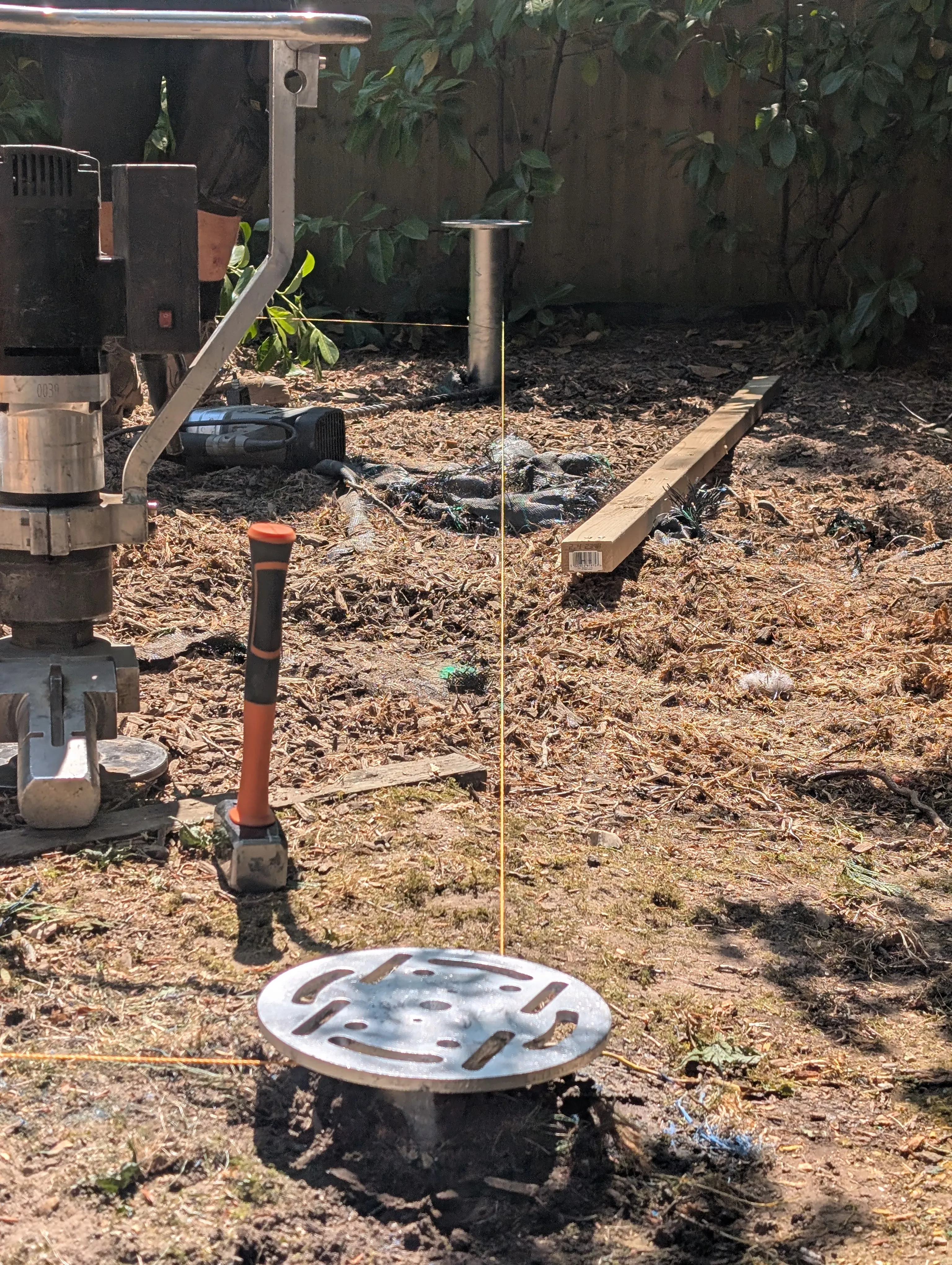
Ground screw testing in Waterlooville
JustBases offers standalone ground screw testing in Waterlooville for suitable trial installations and existing foundations, including other installers’ screws. We carry out pull-out, compression and lateral testing, with recorded results and a written report. Start by telling us the purpose and postcode; we will discuss the appropriate test and access.
Ground screw tests we offer
A test applies a defined load and records the foundation’s response. The direction needs to match the question being investigated: upward, downward and sideways loading are separate tests.
Pull-out testing
An upward load investigates the screw’s resistance to being pulled out. The agreed loading programme and recorded response provide evidence for the particular uplift question.
Learn more: Pull-out testingCompression testing
A downward load investigates the screw under compression. This is direct physical evidence of its response to downward loading at the tested position.
Learn more: Compression testingLateral testing
A sideways load investigates horizontal response. It addresses a different direction from the vertical tests and is also distinct from applying a twisting load.
Learn more: Lateral testingGround screw testing prices in Waterlooville
Use the guide below as the starting point for an agreed testing programme. The number of positions, loading requirements, access and the practical arrangements for the test affect the quotation. Project-specific calculation work and any additional professional requirements are identified within that scope.
Installation torque monitoring and specialist torsional testing are each price on application. Monitoring records turning resistance during driving; torsional testing applies a twisting load. Ask for either service expressly so the appropriate arrangements can be quoted. Neither is an automatic addition to the three physical load tests.
Local guide prices start with our Ringwood prices, adding 0.1% for each one-way road mile to the town, then rounding up to a whole pound. Your written quotation confirms the price for your site and agreed work.
- Pull test (tensile or uplift test)
- From £502
- Load test (compression test)
- From £1,003
- Lateral test (sideways load)
- From £491
- Installation torque monitoring
- Price on application
- Specialist torsional load test
- Price on application
Each additional test
Each extra charge applies to an additional test of the same type, at the same location on the same day. The first test of each type is priced separately.
- Pull test (tensile or uplift test)
- £160 extra
- Load test (compression test)
- £320 extra
- Lateral test (sideways load)
- £155 extra
No VAT is added to the guide prices shown. Guide prices are subject to site conditions, access and the written quotation.
Ask about a ground screw test
Tell us why the test is needed and where the foundation is. Use the form, call 01202 039753, or contact us through WhatsApp. A designer’s request or existing installation information is helpful if available; you can make the first enquiry without a technical pack.
Request your free quote
Give us your contact details and a short description of the testing you need. You can ask before the technical requirements are complete.
Your enquiry
Ground screw testing in Waterlooville
How ground screw testing works
We establish what evidence is needed before arranging the loading. That makes the proposed test, the site preparations and the interpretation responsibilities clear.
Agree the evidence and test programme
We discuss the foundation and intended use of the findings, and identify who sets the required loads and acceptance criteria. The agreed scope names the method, positions and loading programme, together with any calculation requirements.
Confirm safe arrangements and apply the loading
We assess the working access and how the test can be carried out safely. At the agreed positions, loading is applied under the specified programme and the relevant response is recorded. Existing connected structures need an appropriate safe arrangement before testing.
Provide results and the written report
You receive the recorded results and a written report describing the commissioned testing. Project-specific load calculations are supplied as agreed in the quotation, using a method applicable to the evidence and proposed use.
Testing existing screws and trial installations
A trial installation can be tested before the wider foundation work is committed. The trial needs a defined purpose: the relevant product, installation arrangement and proposed conditions determine what the findings can inform. Agree how that evidence will be used with the person responsible for the foundation requirements.
An existing foundation starts with a different practical question: can the required loading be applied safely at the relevant screws? Tell us whether a building is already supported and what is visible without alteration. We can discuss feasibility from the information available and identify any further assessment needed.
Leave floor panels, screw heads and structural connections as they are for the enquiry. Any necessary opening-up, temporary support or other preparatory work must be planned by the responsible people before the test. You do not need to release a connection to obtain a quotation.
What your test report tells you
The report explains the work carried out and presents the recorded findings for the tested positions. The required loads and acceptance criteria provide the context for assessing those findings.
Where compression evidence is calculated from pull-test findings using an applicable method, it must be identified as calculated evidence. It is not a direct downward test or a universal conversion between force directions. We agree the calculation requirements and their basis within the quotation.
The foundation designer assesses the evidence for the project. Testing selected screws does not automatically approve the complete building or replace the required structural design.
Arranging testing in Waterlooville
Tell us who is coordinating the test and whether its findings are needed before a particular stage of the work. We can then discuss the proposed visit and the preparations it requires with the site contact. The postcode and purpose are enough to start.
Ground screw installation in Waterlooville · Waterlooville base services · Hampshire service area
Areas we cover around Waterlooville
Send the full site postcode with your enquiry so we can confirm arrangements for your address. We welcome enquiries from Waterlooville and the surrounding communities below. PO7, PO8, PO9 and PO17 are useful district examples across this area; the individual address matters when agreeing the work.
Waterlooville neighbourhoods
Town centre, Cowplain, Hart Plain, Wecock (Wecock Farm), Stakes, Crookhorn, Purbrook, Widley and the Purbrook Heath area.
West Waterlooville developments
Berewood, Wellington Park and the Newlands area, including development and phase names Elm Green, Oak Vale and Linnet Rise.
Horndean and northern communities
Horndean, Lovedean, Catherington, Blendworth, Clanfield and Chalton, with enquiries also welcome from the Hazleton housing-estate area.
Denmead and its locality names
Denmead, including the recognised locality names Worlds End, Anmore, Kidmore, Furzeley Corner, Anthill and Barn Green.
Hambledon surroundings
Hambledon, Chidden, Glidden, Hoe and the Rushmere locality.
Western communities
Southwick, Boarhunt and North Boarhunt, Hundred Acres, Newtown in the Soberton and Boarhunt area, Soberton, Soberton Heath and Wickham.
Havant-side enquiries
Havant, Bedhampton and Leigh Park.
Rowlands Castle surroundings
Rowlands Castle, Finchdean, Old Idsworth and New Idsworth.
Feedback on Craig’s earlier work
Feedback on Craig’s earlier groundwork and customer service.
"Craig and the team are absolutely fantastic. From courtesy, to standard of work, to tidiness — everything exceeded expectations. The job was arranged, booked and done extremely quickly and we are very happy with the results. Nothing was too much trouble, and communication was easy."
"Craig and his crew were excellent from the first communication, quote, timing of work and quality of work. Highly recommended."
Frequently asked questions
Can I enquire before a designer has written a test request?
Yes. Explain what you need to establish and the stage your project has reached. We can discuss the available tests and what further instruction is needed. The actual loading and acceptance requirements must be agreed with the responsible person before testing, but that need not prevent an initial conversation.
Can an owner or another installer book the testing?
Yes. Testing can be commissioned separately from installation, including for suitable screws fitted by someone else. Tell us your role and who will use the results so the scope can be discussed with the appropriate people. We assess the proposed foundation and test arrangements before confirming the work.
Why are pull-out and compression separate tests?
Pull-out applies an upward force; compression applies a downward force. They investigate different responses, so a direct test in one direction is not a direct measurement in the other. The requested evidence should identify which loading question needs to be addressed.
What does lateral testing investigate?
It applies a horizontal load and records the relevant sideways response. That can be useful where horizontal performance needs investigating. Lateral testing is neither a vertical test nor a torsional test, which applies a twisting load; the method must match the required evidence.
What can a trial screw tell us before the full installation?
A properly scoped trial can provide evidence relevant to the proposed foundation decision. Its usefulness depends on the product, installation and conditions represented, as well as the load programme. Agree the trial’s purpose and how its findings will inform the wider work before it is carried out.
Can screws beneath an occupied or finished building be tested?
Possibly, subject to assessing the loaded structure, connections and safe test arrangements. Describe what is already built and send photographs taken without disturbing it. Any opening-up or temporary support needs appropriate planning; keep existing structural connections intact while we assess the enquiry.
Who decides how much load to apply?
The required loading programme and acceptance criteria need to come from the person responsible for the foundation requirements, usually the designer or their appointed representative. We agree how that instruction will be delivered through the test.
How many positions should be tested?
The test programme must identify positions and a number suitable for its purpose. That decision considers what the results need to demonstrate and the foundation being assessed. Tell us if positions have already been requested; otherwise we can explain what needs to be established before the programme is confirmed.
What will I receive after the test?
You receive recorded results and a written report of the commissioned work. The quotation also sets out the project-specific load calculations agreed for the job. Any particular calculation method, additional professional assessment or recipient requirement should be raised when the scope is discussed.
Can pull-test results be used in compression calculations?
An applicable calculation method may use pull-test findings to derive compression evidence for an agreed purpose. The basis and limits must be clear, and the result must be labelled as calculated rather than measured by a direct compression test. We confirm that calculation scope; there is no general interchangeable value for all screws or projects.
When should installation torque monitoring be requested?
Request it before the relevant screws are driven so the monitoring can be arranged during insertion. It records turning resistance during that operation. It is separately scoped and price on application, and is not a promise that the original insertion record can be recreated on an existing screw.
How is a torsional test different from that monitoring?
A specialist torsional test applies a twisting load as a test and investigates the response under the agreed arrangement. It is not the observation of resistance during normal installation. The feasibility, instruction and price are agreed separately; this service is price on application.
What information is useful for arranging a visit?
Start with the postcode, the reason for testing and a way to contact you. Then share any information already available about the screws and the proposed test. Tell us who can arrange site access and any relevant project date; we will identify further details needed for the particular visit.
Does a successful test approve the complete building?
No. The test provides evidence for the specified positions, loading and purpose. The responsible designer considers that evidence alongside the rest of the foundation and structure. Whole-building approval, design responsibility or a certificate from another authority does not follow automatically from a test report.
What does each additional ground screw test cost?
At the same location on the same day, each additional compression test costs £320 extra, each additional pull, tensile or uplift test costs £160 extra, and each additional lateral test costs £155 extra. These fixed charges are for further tests of the same type. The first test of each type is priced separately, using the starting price for your location. The extra-test charges stay the same in every location.
What happens next
Send the purpose and postcode through the testing enquiry form, or call 01202 039753. We will discuss the foundation, clarify the required evidence and confirm the test and written price before agreeing arrangements.