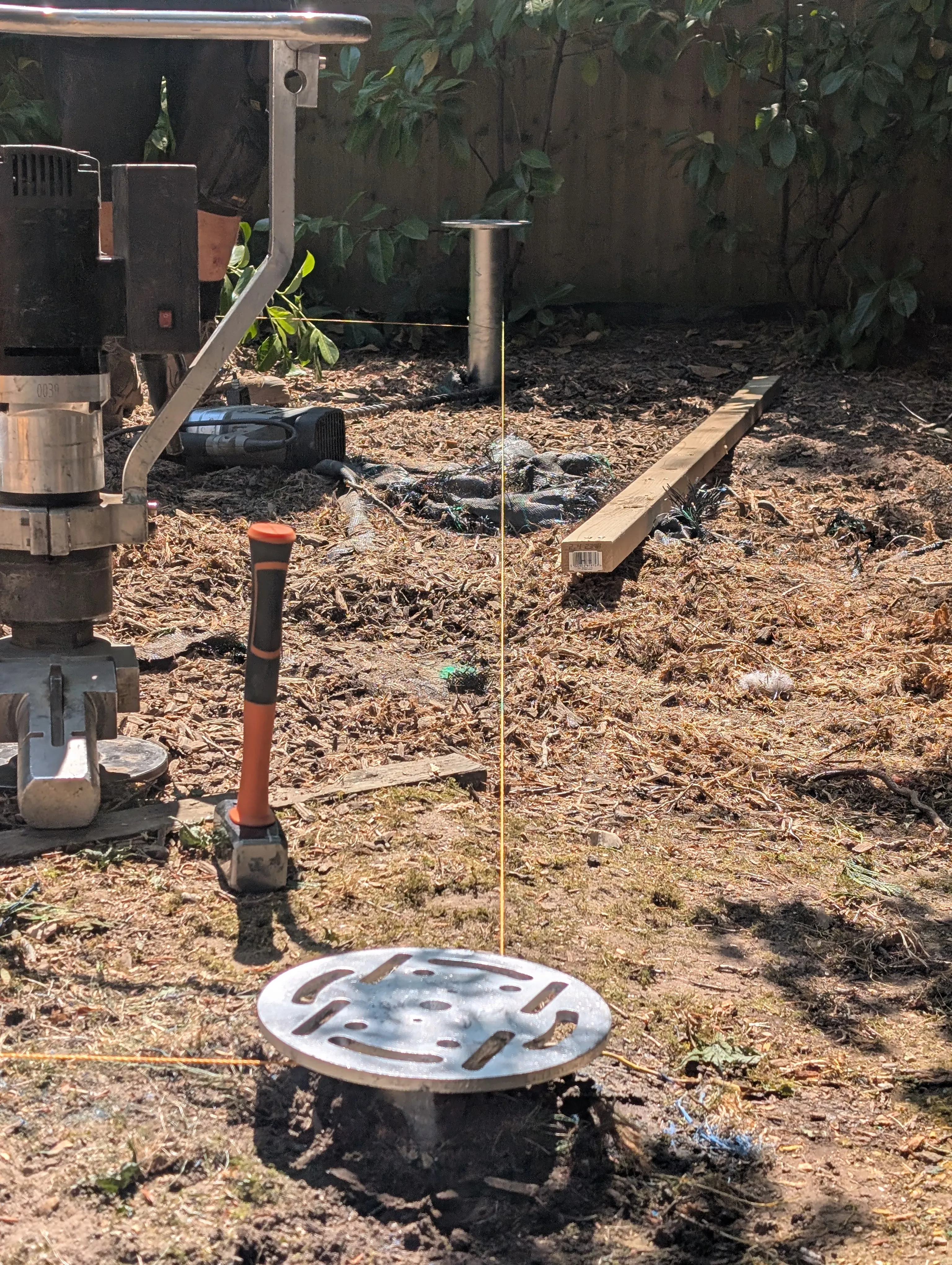
Ground screw testing in Wimborne
JustBases offers ground screw testing in Wimborne Minster and surrounding villages. Book a separate testing visit for suitable existing or trial supports, including another installer's screws, with the methods and written reporting agreed for your project.
Ground screw tests and the evidence they provide
A load test helps establish how a selected screw behaves when force is applied in a specified direction. The recorded response can inform a foundation design or a review of existing supports. We discuss the intended decision and the evidence needed so the test schedule serves the project.
Suitable screws from other suppliers or installers can be considered, as well as tests coordinated with new installation. The requirements are agreed before attendance, including the test arrangement, load levels and how the results will be assessed. You can contact us while those details are still being developed.
Pull-out testing
Pull-out testing loads a screw upwards to examine its uplift response. The applied load and resulting movement are recorded for the chosen position, providing evidence for the upward force that the agreed test is intended to assess.
Learn more: Pull-out testingCompression load testing
Compression loading pushes the screw down and records how it responds. A direct downward test is one route; compression calculated from appropriate pull results is another, where a suitable method is agreed. The evidence identifies which route produced the reported value.
Learn more: Compression load testingLateral load testing
Lateral testing examines the screw under a sideways force. It is arranged for a defined direction and connection position, with loading and movement measurements interpreted for that horizontal test and its agreed requirements.
Learn more: Lateral load testingTesting guide prices and quotation scope
Compare the test-method guides below, then ask for a quotation covering the evidence required at your site. The price depends on the selected methods and positions, practical access and the agreed report and calculations. Any enabling work or extra visits are addressed when the scope is confirmed.
Installation torque monitoring and specialist torsional testing are each price on application. Monitoring concerns turning resistance during driving; a torsional test examines an applied twisting load. Both need their own explicit arrangements and are not automatically supplied with installation or other tests.
Local guide prices start with our Ringwood prices, adding 0.1% for each one-way road mile to the town, then rounding up to a whole pound. Your written quotation confirms the price for your site and agreed work.
- Pull test (tensile or uplift test)
- From £486
- Load test (compression test)
- From £971
- Lateral test (sideways load)
- From £476
- Installation torque monitoring
- Price on application
- Specialist torsional load test
- Price on application
Each additional test
Each extra charge applies to an additional test of the same type, at the same location on the same day. The first test of each type is priced separately.
- Pull test (tensile or uplift test)
- £160 extra
- Load test (compression test)
- £320 extra
- Lateral test (sideways load)
- £155 extra
No VAT is added to the guide prices shown. Guide prices are subject to site conditions, access and the written quotation.
Ask Craig about your testing requirement
Explain what you want to establish and give the site postcode. If you have received a testing request, you can send it as it stands. Drawings, product records and technical instructions are useful when available, but you can enquire before assembling them.
Call 01202 039753, message Craig on WhatsApp or use the form. We can discuss the planned or existing foundation and what needs confirming for the testing quotation, then agree the visit, results and written test report.
Request your free quote
A testing purpose and postcode will start the discussion. Tell us what you know and we can explain what follows.
Your enquiry
Ground screw testing in Wimborne
Planning the tests and carrying out the visit
A defined test schedule makes the work easier to arrange and the report easier to use. We establish the required assessment with you and the relevant project team, then confirm the practical arrangements and price.
Define the test schedule with your project team
The purpose, screw details, test directions and selected positions are brought together with the loads and acceptance requirements. The responsible designer or decision-maker specifies the criteria. Reporting, calculations and any witnessing or sign-off requirements are discussed before the work is booked.
Check the positions and access arrangements
We need safe access to the agreed heads or connections and room for the relevant test setup. Tell us about the working area, any structure already attached and the route into the site. Responsibilities for access preparation and any enabling works are confirmed in advance.
Measure the response and prepare the report
At the agreed positions, loading and movement are recorded through the specified test arrangement. The service provides results, a written test report and project-specific load calculations. The evidence is identified for the tested supports so it can be reviewed alongside the foundation requirements.
Trials and checks on existing screw foundations
If you have a support plan, mark the screws the project team wants assessed and tell us which can already be reached. A shared reference helps us discuss the proposed tests with you and the person specifying them. We can consider another installer's system; any product or installation records you have can help establish what is present.
Before the frame covers the supports
Include the required tests in the building programme so their evidence is available when the foundation decision is made. A trial can be planned before the larger installation, with its supply and later use agreed. Where testing follows installation, coordinate it before the frame restricts the selected connections.
Where the screws carry an existing floor
Explain the accessible working space and the connections that are already carrying the structure. Keep the floor and fixings in place while we assess the proposed visit. If the work needs exposed heads or temporary support, preparation and reinstatement responsibilities must be settled with a safe method before testing.
Reading the results alongside your foundation design
Before commissioning the report, establish who will use it and what they need to decide. Send us the recipient's request when available so the quotation can address the required evidence and any formal reporting requirements. The agreed service includes the results, written test report and project-specific load calculations.
Relating the results to the support plan
Position references allow the reader to find the tested supports on the plan and follow their loading and movement records. The designer assesses that response against the agreed criteria and the proposed foundation. The report is evidence for this review; approval of the complete building and its connections remains a separate responsibility.
Identifying how compression was established
A direct compression test produces readings from downward loading. A compression calculation instead uses pull-test evidence through a method agreed for the screw and site. The report identifies the input evidence, method and assumptions with the calculated result, so the recipient can see how the value was obtained.
Arranging testing in and around Wimborne
When discussing dates, tell us which part of the build depends on the testing. A trial result may be needed before the foundation is finalised, or an installed support may need checking before the next construction stage. We can discuss the visit around that requirement and the time needed for the project team to use the report.
Before confirming attendance, agree the preparation with everyone involved. The selected connections need to be accessible and the planned test area available. We clarify what you or another contractor will have ready and who will attend, including anyone required to witness the work. The written scope records the agreed tests and reporting.
For the arrival arrangements, provide the complete site address and directions to the actual working entrance. Gates, steps or a separate route to the foundation are useful details at this stage. A purpose and postcode are still enough for the first enquiry; we can work through the booking information with you.
Areas near Wimborne for testing enquiries
Enquiries are welcome from Wimborne Minster town centre, Crown Mead, Leigh, Leigh Park, St John's Hill, Colehill and Middlehill; Merley, Oakley, Canford Magna and Corfe Mullen; and Canford Bottom, Little Canford, Stapehill and Uddens.
Nearby villages and areas include Pamphill, Little Pamphill, Cowgrove, Hillbutts, Tadden and Kingston Lacy; Furzehill, Dogdean, Bothenwood, Holt, Holtwood, Gaunts Common, Pig Oak, Broomhill, Whitemoor, Mannington, Higher Row and Lower Row.
We also welcome enquiries from Witchampton, Hinton Martell, Hinton Parva, Chalbury, Chalbury Common, Horton, Woodlands, Shapwick and Sturminster Marshall, and from Ferndown, West Moors and Three Legged Cross.
BH21, adjoining BH22 and nearby DT11 addresses are useful postcode examples. Send the complete address and postcode so the visit and work can be confirmed for your site. For other towns, explore our Dorset service areas.
Feedback on Craig’s earlier work
Feedback on Craig’s earlier groundwork and customer service.
"Craig and the team are absolutely fantastic. From courtesy, to standard of work, to tidiness — everything exceeded expectations. The job was arranged, booked and done extremely quickly and we are very happy with the results. Nothing was too much trouble, and communication was easy."
"Craig and his crew were excellent from the first communication, quote, timing of work and quality of work. Highly recommended."
Your testing questions
Who can enquire about testing in Wimborne?
Homeowners, building suppliers, installers and other project teams can ask about a testing visit. Explain what the foundation needs to support and why evidence is required. We can discuss suitable trial or existing screws, with the test and reporting requirements established before the work is confirmed.
Will you consider screws supplied and fitted by another company?
Yes. We assess whether the system and accessible connections are suitable for the proposed test. Product and installation records help identify it, so send anything already available. You can buy testing as a separate service, with any additional information or preparation addressed in the agreed scope.
Who agrees the loads and acceptance criteria?
The responsible designer or other project decision-maker establishes what the test needs to demonstrate, including the relevant loads and movement criteria. We discuss the test method and practical arrangement against those requirements. They are confirmed before attendance so the resulting evidence can be interpreted for the intended decision.
What does an upward pull-out test establish?
The design may include upward reactions as well as weight pressing down. A pull-out test addresses that uplift requirement at the chosen support. Agree the evidence the designer needs before the visit, so the response to the applied pull can be assessed for the proposed structure using the specified load and movement criteria.
How is downward load response tested?
A direct compression test pushes down on the screw through the agreed arrangement and records its movement under loading. The required test loads and assessment criteria are settled with the project requirements. The report then identifies the support, setup and observed downward response.
How is calculated compression identified in the report?
Look for the pull-test readings used as inputs and the calculation producing the compression value. Its assumptions are stated alongside the method, whose suitability for the screw and site is agreed when scoping the work. The report separates this derived value from any direct downward measurements, allowing the reader to understand the evidence supplied.
What is different about a lateral load test?
A foundation may need to resist movement across the ground as well as lifting or downward loading. Lateral testing addresses that horizontal behaviour. Tell us the connection detail specified for the structure: where the force enters the screw and its direction affect the test arrangement needed for the assessment.
Can a trial screw be kept for the finished building?
That needs to be agreed as part of the foundation design, including its position, specification and what the test involves. Make the intended use clear when the trial is arranged, so supply, testing and any work afterwards are accounted for. The designer can then use the results when confirming the final foundation.
What should a test schedule identify?
Give each selected support a reference on the drawing or description, with the required test direction and loading. This helps us price the intended work and agree where access is needed. The person responsible for the foundation determines the selection and criteria; the completed report records which of those tests were carried out.
What if a floor already covers the screw heads?
The testing appointment needs to be priced with its access arrangements understood. Tell us which screws are enclosed so we can discuss enabling work with the person responsible for the structure. Who opens and reinstates access, and any temporary support, must be agreed before attendance. Leave the existing floor and fixings in place during that discussion.
What report and calculations are included?
The agreed package is the written test report, results and project-specific load calculations. The readings belong to identified tests, and the calculations explain how those inputs have been used for the project. Give these documents to the designer for their foundation review. Any additional approval or certification is agreed separately from the testing service.
Can you record torque during a new installation?
Ask about installation torque monitoring when arranging the project. It records the turning resistance as a screw is driven and has a separate price-on-application scope. It is not automatically included with installation and is distinct from testing an installed screw under a specified direct load.
Can I request a test under twisting load?
A specialist torsional test can be discussed where the project specifies a twisting requirement. Share the intended scope as it becomes available so suitability and arrangements can be considered. Torsional testing is price on application and separately agreed, rather than included automatically in monitoring or other load tests.
What if I only have a message asking for testing?
Send that message as it stands, with the site postcode. We can discuss what the sender needs the test to establish and which details must be settled before booking. You can start with this conversation instead of preparing a technical brief yourself; existing drawings and records are helpful if available.
What does each additional ground screw test cost?
At the same location on the same day, each additional compression test costs £320 extra, each additional pull, tensile or uplift test costs £160 extra, and each additional lateral test costs £155 extra. These fixed charges are for further tests of the same type. The first test of each type is priced separately, using the starting price for your location. The extra-test charges stay the same in every location.
Agree the visit and the written testing scope
Get in touch with the testing purpose and postcode. Craig can explain the next steps, help clarify the scope and quote the agreed tests and reporting. Ask about a testing visit, call 01202 039753 or contact us through WhatsApp.