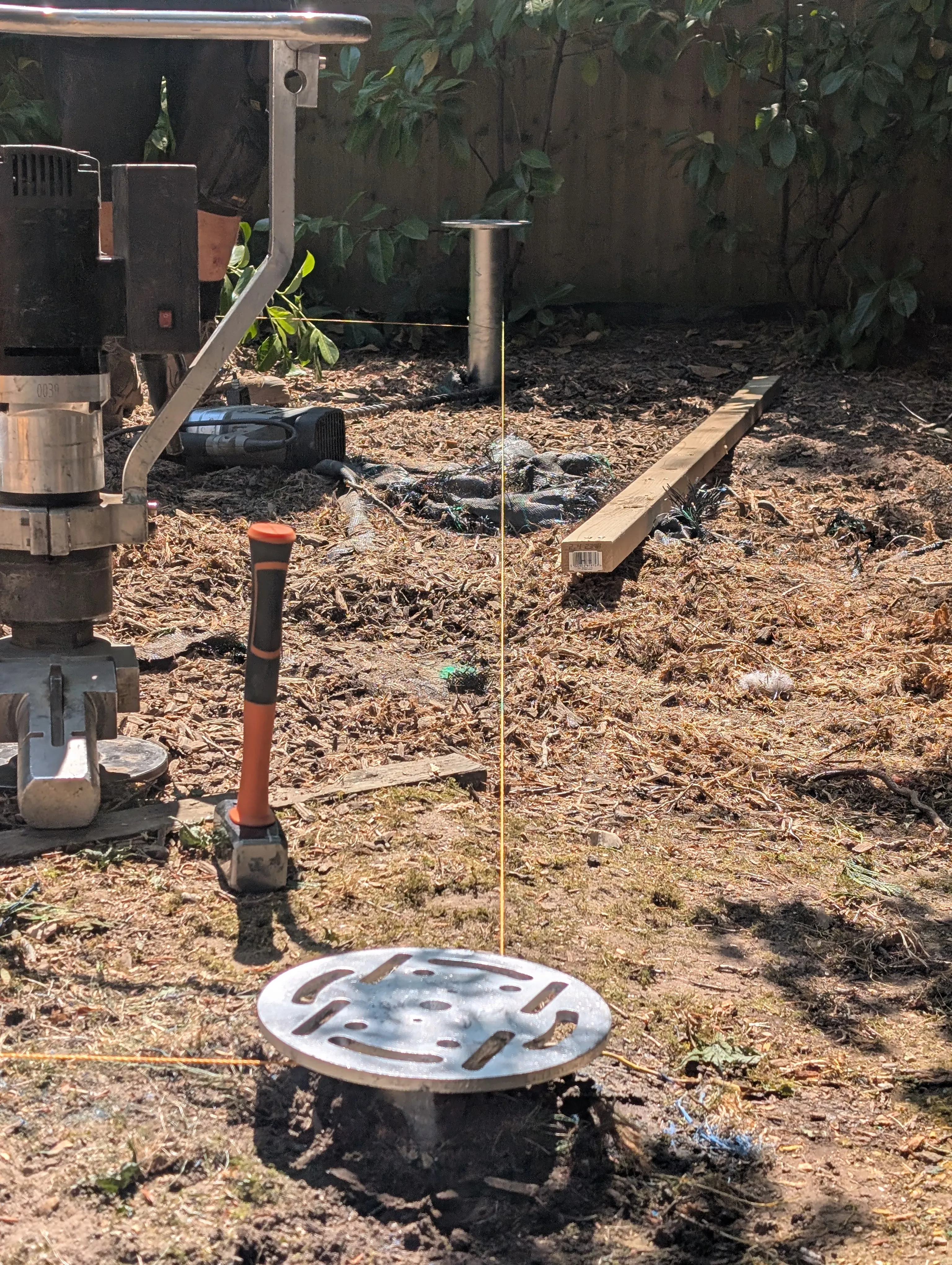
Ground screw testing in Broadstone
JustBases offers standalone ground screw testing in Broadstone, including suitable trial supports and screws fitted by another installer. We agree the loading direction, safe testing arrangements and reporting needed for your project.
Ground screw tests we offer
A physical test shows the selected screw's response under an agreed applied load. The useful method depends on the force your foundation has to resist and the information the designer needs. We can discuss a single direction or a programme covering several requirements.
The scope identifies the supports, loading and measurements to record. Homeowners, building suppliers and project teams can enquire whether the foundation is proposed or already installed.
Pull-out testing
An upward force examines resistance to uplift at the selected test position. The applied loading and resulting movement provide evidence for the agreed uplift requirement, with the tested screw and setup identified in the record.
Learn more: Pull-out testingCompression testing
A direct compression test loads the screw downwards and records its response. If the project instead requires compression calculations from applicable pull evidence, we agree that method and clearly distinguish the calculation from a direct downward test.
Learn more: Compression testingLateral testing
A sideways load measures horizontal response for a specified requirement. The direction, connection and loading arrangement are agreed so the test addresses the force being considered in the foundation design.
Learn more: Lateral testingGround screw testing prices in Broadstone
The starting fees below help you budget for the principal test methods. A written quotation sets out the proposed programme: how many positions, which loading directions, the preparation and access arrangements, and the report and calculations being supplied.
Recorded installation torque measures turning resistance while a screw is being installed. Specialist torsional testing applies an agreed twisting load as a separate test. These answer different questions from pull, compression and lateral tests; both torque services are price on application and must be requested and scoped separately.
Local guide prices start with our Ringwood prices, adding 0.1% for each one-way road mile to the town, then rounding up to a whole pound. Your written quotation confirms the price for your site and agreed work.
- Pull test (tensile or uplift test)
- From £487
- Load test (compression test)
- From £974
- Lateral test (sideways load)
- From £477
- Installation torque monitoring
- Price on application
- Specialist torsional load test
- Price on application
Each additional test
Each extra charge applies to an additional test of the same type, at the same location on the same day. The first test of each type is priced separately.
- Pull test (tensile or uplift test)
- £160 extra
- Load test (compression test)
- £320 extra
- Lateral test (sideways load)
- £155 extra
No VAT is added to the guide prices shown. Guide prices are subject to site conditions, access and the written quotation.
Ask about a ground screw test
Tell us the site postcode and the reason for testing. A designer's request, screw records or photos are welcome if you have them, but you can enquire before a technical brief is ready. Call 01202 039753, message Craig on WhatsApp or use the form to start the discussion.
Request your free quote
Explain what you need to find out and give the site postcode. We can discuss the testing requirement from there.
Your enquiry
Ground screw testing in Broadstone
How ground screw testing works
Clear preparation helps the visit produce evidence that your project team can use. We establish the testing and reporting responsibilities before attendance.
Establish the required evidence
We discuss the structure, available screw information and the question the test should answer. The responsible designer establishes the required loads and acceptance criteria. The selected positions, methods, records and any calculations are agreed as part of the programme.
Plan safe access and connections
We review how the testing equipment can reach the supports and how loads can be applied safely. The head, connections and space around each point matter, particularly where a building is already supported. Any preparation or temporary support needs to be arranged with the responsible project team.
Carry out the agreed test and report
The test applies the agreed loading and records the response at the identified points. Results are supplied in a written report, with project-specific load calculations within the agreed scope. The designer can then assess that evidence against the requirements of the foundation.
Testing existing screws and trial installations
Trial testing can provide information while the foundation arrangement is still being developed. Discuss it early enough for the product, trial positions and subsequent work to be coordinated with the designer. We agree what happens to the tested supports as part of the preparation and follow-on arrangements.
For an existing grid, product details, installation notes and a plan identifying the screws are useful. Where those records are incomplete, explain what is known and show what can be seen safely. We assess whether the proposed connections and access allow the required test to be carried out.
A screw beneath a loaded frame needs a safe work arrangement. Leave structural fixings in place when asking for a quote. If access to the head or a connection must change, that work and any temporary support should be planned by the responsible people before the testing visit.
Testing is available without purchasing an installation. If new supports are also needed, the Broadstone installation service describes that separate work. The test programme and installation responsibilities are agreed together where appropriate.
What your test report tells you
The report identifies the test points and methods, with the recorded loading and response from the agreed work. Available screw and installation information helps connect the results to the foundation proposal. Tell us who will use the report so its required content can be discussed before booking.
A measured downward test and a compression value calculated from pull results are different forms of evidence. A calculation needs a method applicable to the product, site and project. Where commissioned, it is labelled as a calculation with its basis made clear, allowing the designer to understand how the value was obtained.
Results relate to the tested screw, location and arrangement. The responsible designer considers their relevance to the other supports, connections and structure, and compares them with the required criteria. That wider assessment remains part of the foundation design.
Ask about particular calculation, format, recipient or signing requirements before the visit. The quotation confirms the reporting scope. Testing supplies evidence for a project decision; whole-structure certification, design approval and acceptance by another party require their own review.
Arranging testing in Broadstone
Give the actual site entrance as well as the full postcode, and identify where the supports are within the property. If access is through a side gate, shared drive or another occupied work area, explain the route and who can authorise entry. Photographs can help us discuss any further assessment needed.
The working space around the test points is important alongside the route in. Let us know about fixed structures, stored materials or planned building work that affects it. We agree the necessary clearance, site contact and preparation before arranging attendance.
Tell us when the evidence is needed and who should receive it. That helps coordinate the test with the designer's review and the next stage of construction. Enquiries from neighbouring villages are welcome too; the property and programme are confirmed individually.
See Broadstone base services, concrete base installation and the Dorset town guide for related work. Our ground screw installation page remains the route for a new foundation enquiry.
Areas we cover around Broadstone
Enquiries are welcome from central Broadstone, Pine Springs, the Clarendon Road, Springdale Road and Dunyeats Road areas, streets near Broadstone Heath and the Wentworth Drive area near Broadstone Golf Club. Nearby places include Poole, Hillbourne, Waterloo, Creekmoor, Canford Heath, Oakdale, Parkstone, Hamworthy and Ferndown.
We also discuss projects in Oakley, Merley, Canford Magna, Bearwood and Knighton Heath; Corfe Mullen, Beacon Hill, Henbury, Ashington, Lambs' Green, Happy Bottom and East End; Wimborne Minster, Colehill, Furzehill, Sturminster Marshall and Shapwick; Upton, Lytchett Minster, Lytchett Matravers and Organford.
BH18 is the main Broadstone postcode context, with nearby BH17, BH21, BH16 and BH11 addresses also welcome. Give the full postcode and actual entrance so we can confirm the site, service and access arrangements. Ask about an unlisted nearby village too.
Feedback on Craig’s earlier work
Feedback on Craig’s earlier groundwork and customer service.
"Craig and the team are absolutely fantastic. From courtesy, to standard of work, to tidiness — everything exceeded expectations. The job was arranged, booked and done extremely quickly and we are very happy with the results. Nothing was too much trouble, and communication was easy."
"Craig and his crew were excellent from the first communication, quote, timing of work and quality of work. Highly recommended."
Frequently asked questions
Practical information about commissioning and using ground screw tests.
Can I book a test on another installer's screws?
Yes, we consider suitable existing foundations independently of who supplied or fitted them. Share any product and installation records, together with the reason evidence is needed. The connection, access and loading requirements are assessed before we confirm the test scope and price.
Which direction of testing should I ask for?
Explain the force or design question your project needs to address. Pull-out testing applies an upward load, compression a downward load and lateral testing a sideways load. Your designer identifies the required evidence, and we agree the appropriate method or combination before attendance.
Who decides what counts as an acceptable result?
The responsible designer establishes the loads and acceptance criteria for the foundation. We agree how the test will apply and record the required loading. The recorded response can then be assessed against those criteria and considered with the rest of the design.
Can I enquire without an engineer's brief?
You can. Tell us what will be supported or what is already installed, where it is and why you are considering testing. We discuss the next step and the technical decisions needed before a visit. Any drawings, photographs or correspondence already available can be added when useful.
When is trial testing useful?
It can help gather evidence while a proposed foundation is being specified. Arrange the discussion before the full installation is committed, so the designer can establish the product and positions to investigate. The loading, reporting and treatment of tested trial supports are agreed for that programme.
Can a test cover a grid beneath an existing building?
We first need to assess access to the selected screws and how their connections can be tested safely. A loaded structure may require an agreed preparation and temporary-support plan. Describe the building and show safely visible details; leave structural fixings in place until the responsible team has established the work arrangement.
What screw information is helpful?
A product reference, dimensions, installed depth if recorded, head detail and an identified layout can all help. Installation notes and previous reports are useful too. Send what you have rather than delaying the first enquiry, and we establish any missing information needed to agree a suitable test.
How much space does testing need?
The space depends on the loading direction and proposed arrangement. We review the access route, connection and working area around the test point before booking. Tell us about nearby structures and obstructions so the required clearance and any preparation can be agreed safely.
What does installation torque monitoring record?
It records the turning resistance as the screw enters the ground during installation. This can contribute installation information to the agreed project records. It is distinct from applying a direct load to a completed screw. Monitoring is separately scoped, price on application and not automatically included in a testing visit.
How is specialist torsional testing different?
A torsional test examines response to an applied twisting load under a specified arrangement. It is a separate requirement from recording turning resistance during installation and from sideways testing. Share the designer's request when available so the specialist scope can be discussed; this service is price on application.
Can compression capacity be calculated from pull results?
That may be supplied where an agreed calculation method is applicable to the particular screw, site and project. The report identifies the calculation and its basis. A direct compression test instead measures response to downward loading, so we confirm which evidence is required before pricing the work.
What will the written report include?
The agreed report records the identified test positions, method, applied loading and measured response. Relevant product and setup information provides context, with project-specific calculations where commissioned. Mention the intended recipient and any required format or signing arrangements before the quotation is finalised.
Can the report be used for a building-control submission?
Discuss the receiving party's requirements with your designer and share them before booking. We can agree the relevant test and reporting scope. The evidence is considered with the full design and other required information; acceptance and whole-structure approval remain decisions for the responsible parties.
How do you price and arrange a visit?
We develop the quotation from the test programme, number of points, loading directions, access, preparation and reporting requirements. Start with the purpose and postcode, and tell us about any deadline. Once the written scope and safe arrangements are agreed, the visit can be scheduled with the site contact.
What does each additional ground screw test cost?
At the same location on the same day, each additional compression test costs £320 extra, each additional pull, tensile or uplift test costs £160 extra, and each additional lateral test costs £155 extra. These fixed charges are for further tests of the same type. The first test of each type is priced separately, using the starting price for your location. The extra-test charges stay the same in every location.
What happens next
Describe the testing you need, call 01202 039753 or message Craig on WhatsApp. We establish the programme and safe arrangements, confirm the written price and agree a visit. You receive the results and reporting commissioned for the project.