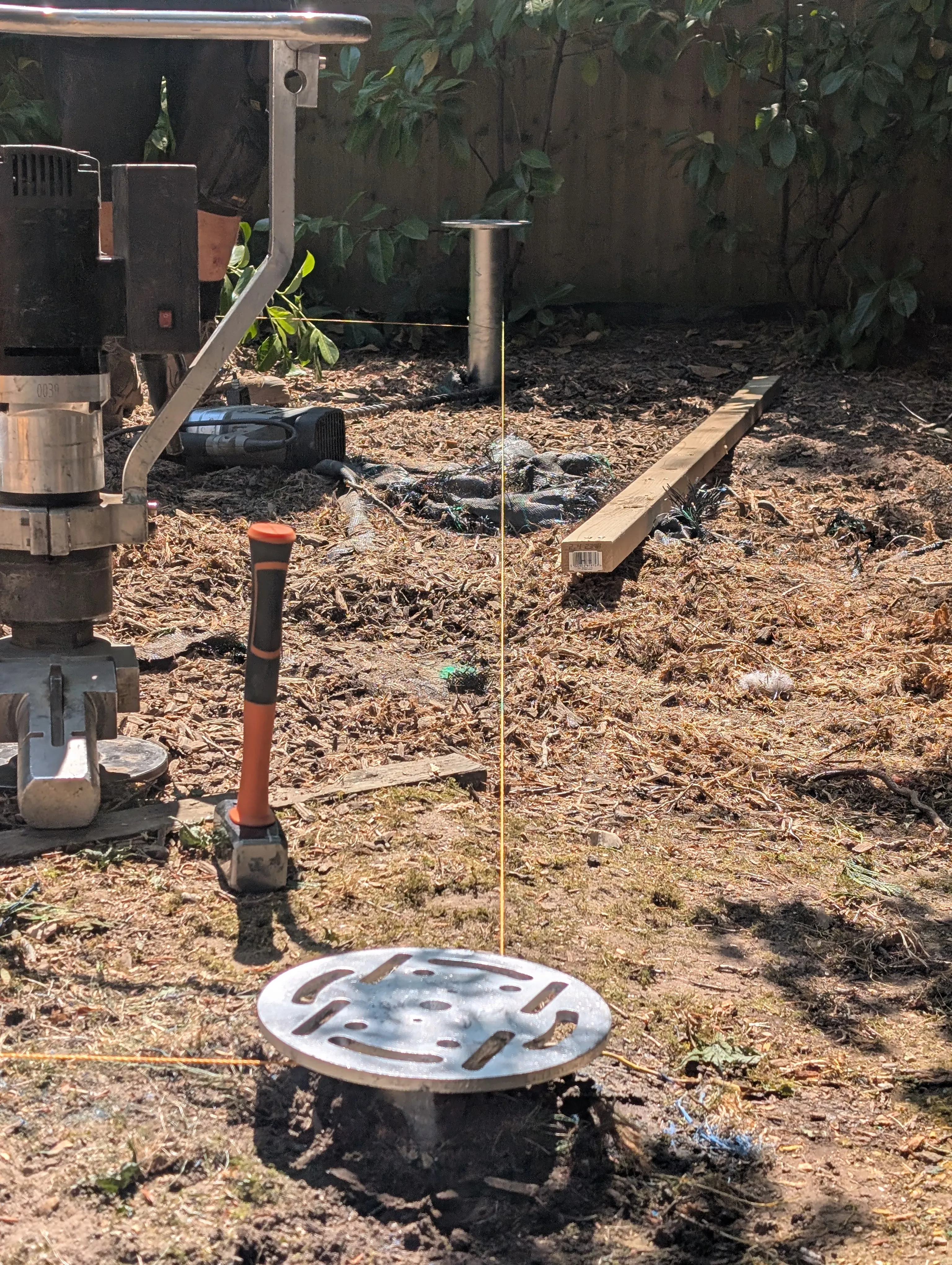
Ground screw testing in New Milton
JustBases offers standalone ground screw testing in New Milton, including suitable screws supplied or installed by other companies. Ask us about upward pull, downward compression and sideways lateral testing for your project.
Testing for upward, downward and sideways forces
Testing gives your project team evidence about how a screw responds when loaded at the site. The direction of that load is an important starting point. We discuss the structure and the decision the results need to support, then agree the relevant method and test arrangement.
Homeowners, building suppliers, installers and project teams can enquire. Testing may take place before a foundation order, on trial screws or on suitable installed screws. A separate installation purchase from JustBases is not required.
Upward pull testing
A pull test loads the screw upwards and records its response. It supplies evidence for questions about uplift resistance, using the load stages and recording requirements agreed for the test.
Learn more: Upward pull testingDownward compression testing
A physical compression test pushes down on the screw and measures the response under that loading. Ask about it when the project needs direct evidence of downward behaviour at the tested position.
Learn more: Downward compression testingSideways lateral testing
A lateral test applies a horizontal force. The loading direction, connection and point of application are agreed so the result relates to the particular sideways response being investigated.
Learn more: Sideways lateral testingGround screw testing guide prices
The guide prices help you compare the available testing services. Your quotation confirms the selected methods, attendance, test positions, reporting and any agreed calculations. Suitable access and the arrangement needed to apply the load are considered when the visit is scoped.
Compression capacity calculations from pull-test results are available where the method is applicable and agreed. These are calculated findings; a direct compression test is a separate physical test.
Installation torque monitoring is price on application. It records turning resistance as screws are installed. Specialist torsional testing is also price on application and investigates response to an applied twisting action. These are separate services, each agreed expressly, and neither is automatically added to a pull, compression or lateral test.
Local guide prices start with our Ringwood prices, adding 0.1% for each one-way road mile to the town, then rounding up to a whole pound. Your written quotation confirms the price for your site and agreed work.
- Pull test (tensile or uplift test)
- From £486
- Load test (compression test)
- From £972
- Lateral test (sideways load)
- From £476
- Installation torque monitoring
- Price on application
- Specialist torsional load test
- Price on application
Each additional test
Each extra charge applies to an additional test of the same type, at the same location on the same day. The first test of each type is priced separately.
- Pull test (tensile or uplift test)
- £160 extra
- Load test (compression test)
- £320 extra
- Lateral test (sideways load)
- £155 extra
No VAT is added to the guide prices shown. Guide prices are subject to site conditions, access and the written quotation.
Discuss a New Milton testing visit
Start with the location and the reason for testing, such as choosing a foundation or responding to a designer's request. You can contact Craig before the technical details are settled. If records are already available, attach them or send them during the follow-up discussion.
Request your free quote
Tell us the site postcode and why you are considering testing. Existing records or an engineer's request can follow later.
Your enquiry
Ground screw testing in New Milton
Agree the evidence before work starts
Let us know when the information is needed in your programme. Evidence intended to help select a screw product may be required before the main order, while an installed foundation may need assessment before the next building stage. That timing helps us plan the work with you.
The person responsible for the foundation design should identify the loading requirements and the criteria by which the results will be assessed. We can discuss these with the project team, including suitable positions and the information needed to identify the screws. The agreed scope establishes the test method, loads, recording and reporting before attendance.
On site, the selected screw is tested using the agreed arrangement and its response is recorded. The written results then support the decision for which the work was commissioned. Any subsequent change to the product, layout or installation proposal should be referred back to the responsible designer for consideration.
Testing another company's installed screws
If you have been asked to obtain evidence for an existing installation, share the request with us. We can discuss whether the required loading can be applied to the screws that are there and what preparation would be involved. Identifying the product and understanding how it has been fitted are part of establishing a suitable investigation; you can enquire while that information is being gathered.
Keep a fitted floor or building safely supported throughout the assessment. Leave fixings and screws undisturbed, and show us only what you can photograph safely. A need to expose a connection, isolate a support or provide temporary support must be referred to competent people responsible for the structure. The resulting safe work arrangement is agreed before testing takes place.
Keeping useful evidence with your foundation records
Keep the written test report with the product information and the foundation layout used for the assessment. Together, those records help your designer or building supplier identify the supports to which the findings relate. The report records the agreed testing work, with any commissioned load calculations identified as calculations.
When passing the findings to the person assessing the foundation, include any relevant revisions to the proposal. They can consider the evidence alongside the intended building loads and connections and confirm what happens next. If further investigation is requested, send us that requirement so additional work can be scoped clearly.
If an engineer, supplier or approval body requires a particular report format or procedure, raise it before the visit. We can consider that requirement when agreeing the service, including the evidence and written information to be supplied. The complete foundation design and its acceptance remain with the responsible designer and relevant approval parties.
Organising access and the next stage
Give us a clear route to the test area, including the entrance to use and any restricted gates or steps. Let us know whether the site is occupied and who can authorise entry. If other work is due around the screws, coordinate the visit while the agreed test positions remain accessible.
We discuss any preparation the site team needs to complete before attendance and confirm the arrangements in advance. If you also require a foundation to be installed, the New Milton ground screw installation page explains that service. Installation and testing can be considered together with their respective scopes made clear.
New Milton and nearby communities
We welcome enquiries from New Milton town centre, Old Milton, Barton-on-Sea, Ashley, Bashley and Wootton, including Ballard, Becton, Fernhill, Ashley Arnewood and Ossemsley. Nearby addresses in Highcliffe, Walkford, Hinton Admiral and residential streets around Chewton Bunny are welcome too.
Surrounding communities include Hordle, Everton, Downton, Tiptoe and Sway, with enquiries also welcome from Holmsley, Burley, Brockenhurst and Milford on Sea. We also discuss projects towards Christchurch and Lymington. Give us the full site address so the practical work and travel can be included in your quotation.
BH25 is a useful starting point for New Milton enquiries, with BH23 and SO41 among the neighbouring districts. Some nearby Forest addresses use BH24 or SO42. These district examples help locate a project; availability, access and the agreed service are checked for the particular address.
Feedback on Craig’s earlier work
Feedback on Craig’s earlier groundwork and customer service.
"Craig and the team are absolutely fantastic. From courtesy, to standard of work, to tidiness — everything exceeded expectations. The job was arranged, booked and done extremely quickly and we are very happy with the results. Nothing was too much trouble, and communication was easy."
"Craig and his crew were excellent from the first communication, quote, timing of work and quality of work. Highly recommended."
Questions about testing in New Milton
At what point should I ask about testing?
Enquire when you know the decision you need help with, even if the test brief is unfinished. It could be before choosing a foundation product, during preparation for installation or while reviewing screws already on site. Early discussion gives time to involve the designer and keep suitable test positions accessible.
Can JustBases test a different installer's screws?
Yes, we consider standalone testing of suitable third-party screws. Tell us what has been installed and whether a building is attached. Product details and installation records help us assess the proposed work; we agree compatibility, access and a safe test arrangement before confirming attendance.
What will an upward pull test tell my project team?
It records the tested screw's response to the agreed upward loading. The project team can use that evidence when considering uplift resistance for the foundation. The report relates the result to the tested arrangement, so the person assessing it can compare the recorded behaviour with the project's requirements.
When would I request a direct compression test?
Request it when the project needs a measured response to downward loading. We apply the agreed compressive load and record the screw's movement through the test. Your designer can specify the required procedure and assessment criteria so the evidence addresses the intended foundation use.
How are compression calculations different from a compression test?
A calculation uses an agreed applicable method to derive compression capacity from pull-test evidence. It does not involve measuring the screw during a downward test. Ask your designer whether that calculation route is suitable for the project; the quotation and report distinguish it from physical compression testing.
What details matter for a lateral test?
The sideways force needs to be applied in the direction and at the connection position relevant to the investigation. Your project team should explain the horizontal loading requirement and acceptable response. We use that information to agree the setup and the records required from the test.
Who decides the test loads and locations?
The responsible designer establishes what the foundation must resist and the evidence needed to assess it. We discuss the proposed positions and practical test arrangement with the project team. Before the visit, the agreed scope should identify the loading procedure, selected locations and criteria for assessing the results.
Can I arrange trial screws before buying the full foundation?
Yes, ask about a trial while the product or foundation proposal is being considered. The scope needs to identify what is being trialled and how the findings will inform the next decision. Supply, fitting and the eventual treatment of the trial screws are agreed along with the testing work.
Can testing take place after the building has been fitted?
Sometimes, depending on access and whether the relevant screws can be tested safely. A structure resting on them changes the preparation that may be needed. Leave all supports and connections in place while the arrangement is assessed; any temporary support or authorised disconnection must be planned by competent people.
Can installation torque be recorded as screws are fitted?
Ask us to quote for installation torque monitoring before the installation takes place. It records resistance to turning during insertion and is price on application. Where a designer uses those records, their interpretation must be appropriate to the product and site; a physical load test measures a different response.
What is specialist torsional testing?
It examines the response to an applied twisting action where a project has a rotational testing requirement. The procedure and connections need to suit that purpose. It is a separately arranged, price-on-application service, distinct from monitoring the torque used to insert the screws.
Does the report approve the complete foundation?
The report supplies the agreed test findings for assessment. The foundation designer remains responsible for using them with the building loads, support layout and connections. If a supplier or approval body needs particular evidence, tell us before booking so the reporting requirement can be considered in the scope.
What happens if the results raise a concern?
The responsible project team should review the findings before proceeding with the affected work. A change to the screw proposal, support arrangement or further investigation may be considered by the designer. We can discuss any additional agreed testing once that next requirement is understood.
What do I need for the first enquiry?
Your postcode and a plain explanation of why you are considering testing are enough. Tell us whether the screws are proposed or already installed if you know. You do not need to assemble a technical pack first; Craig can explain what further information is useful for agreeing the visit.
What does each additional ground screw test cost?
At the same location on the same day, each additional compression test costs £320 extra, each additional pull, tensile or uplift test costs £160 extra, and each additional lateral test costs £155 extra. These fixed charges are for further tests of the same type. The first test of each type is priced separately, using the starting price for your location. The extra-test charges stay the same in every location.
Talk to Craig about testing
Call 01202 039753 to discuss the site and what the test needs to establish. The links below explain local installation, alternative bases and the testing methods in more detail.