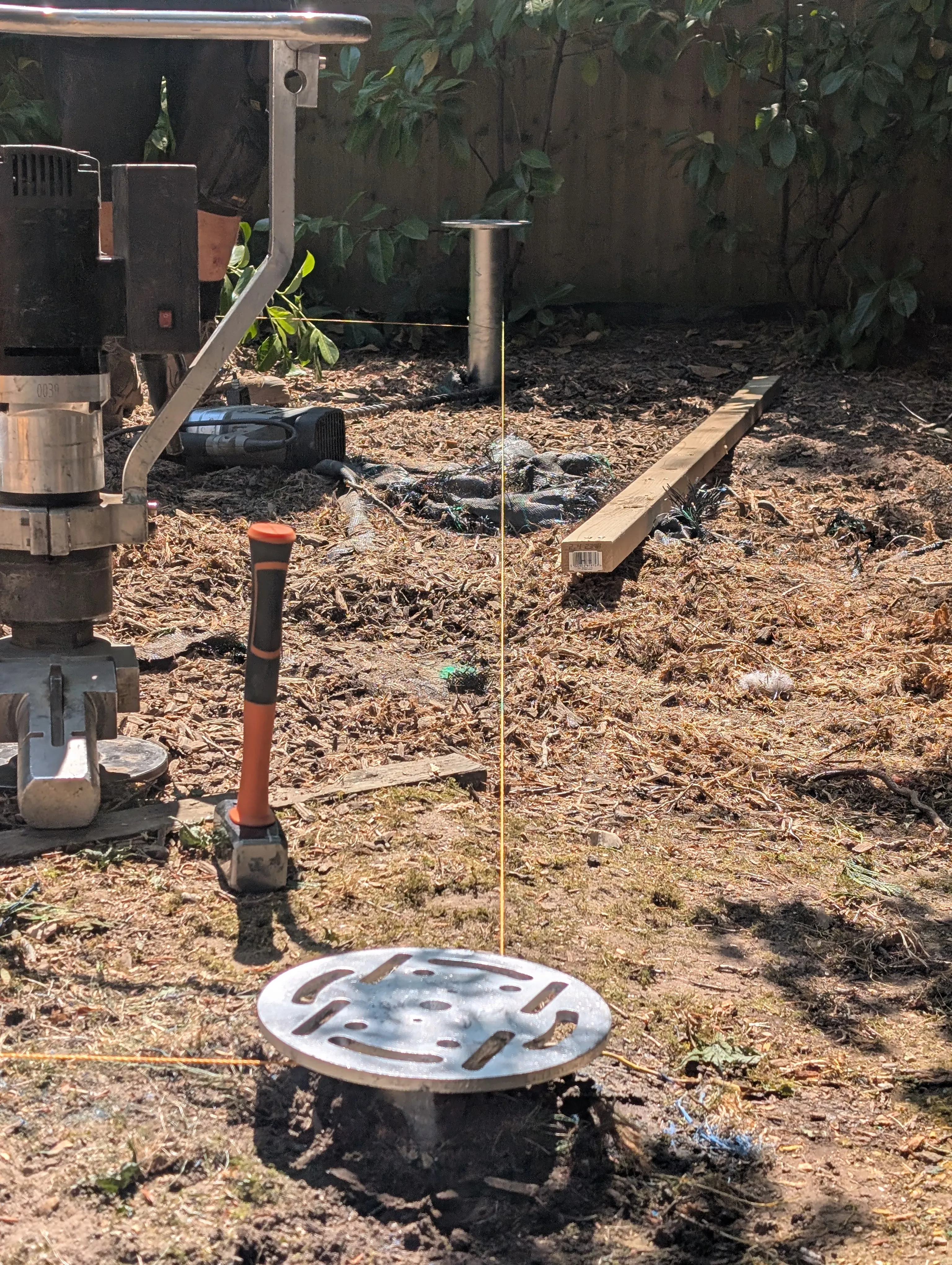
Ground screw testing in Yeovil
JustBases offers ground screw testing in Yeovil to record how selected screws respond to an agreed load. We provide pull-out, compression and lateral tests for trial foundations and suitable existing installations, including screws fitted by another installer, with a written report for the project.
Pull-out, compression and lateral testing
A useful test answers a defined question about the foundation. That might be evidence for a proposed design, a check on selected installed screws or information needed before a frame is fitted. We agree the loading direction, positions and reporting with the appropriate project input before carrying out the work.
You can book testing without commissioning installation from us. Tell us whether you are the owner, installer, building supplier or designer, and who needs to review the findings. We can help establish the practical test scope while the project requirements are being developed.
Pull-out tests
Pull-out testing applies an upward force and records the response. It provides evidence about uplift behaviour at the tested position, using the agreed load stages and movement measurements.
Learn more: Pull-out testsCompression tests
Direct compression testing loads the screw downwards. Where a compression assessment is instead derived through an applicable method, its calculation basis and assumptions are made clear; it is not described as a directly applied downward test.
Learn more: Compression testsLateral tests
Lateral testing applies a sideways force in an agreed direction. The connection height, loading arrangement and recorded movement form part of the test information needed to interpret that response.
Learn more: Lateral testsGround screw testing prices
The guide prices relate to stated testing scopes. A quotation for your programme accounts for the methods, number of positions, required load stages, access, setup and report. An existing building or connected frame may need additional arrangements so the agreed loading can be applied safely.
Installation torque monitoring measures turning resistance as a screw is driven into the ground. Specialist torsional testing investigates a separately applied twisting load. These are distinct services, both price on application. We agree the purpose and interpretation of either rather than treating a torque reading as a direct substitute for every directional test.
Local guide prices start with our Ringwood prices, adding 0.1% for each one-way road mile to the town, then rounding up to a whole pound. Your written quotation confirms the price for your site and agreed work.
- Pull test (tensile or uplift test)
- From £507
- Load test (compression test)
- From £1,013
- Lateral test (sideways load)
- From £496
- Installation torque monitoring
- Price on application
- Specialist torsional load test
- Price on application
Each additional test
Each extra charge applies to an additional test of the same type, at the same location on the same day. The first test of each type is priced separately.
- Pull test (tensile or uplift test)
- £160 extra
- Load test (compression test)
- £320 extra
- Lateral test (sideways load)
- £155 extra
No VAT is added to the guide prices shown. Guide prices are subject to site conditions, access and the written quotation.
Discuss the test you need
Begin with the reason for testing and the full postcode. Say whether the screws are planned, installed and exposed, or beneath a building. If an engineer or supplier has asked for evidence, you can share their request when available.
You do not need a completed technical brief to make contact. We will identify the loading, access and reporting details needed before a test can be confirmed. Use the form, call 01202 039753 or message Craig on WhatsApp for a written quotation.
Request your free quote
Give us your contact details and a short description of the testing you need. You can ask before the technical requirements are complete.
Your enquiry
Ground screw testing in Yeovil
Planning and carrying out the tests
The programme links the purpose of the test to a controlled method and a usable record. We establish the safe arrangements and what will be measured before loading starts, including any requirements for the condition of a screw after testing.
Agree the question and criteria
We clarify the foundation information required and the proposed directions of loading. The responsible designer sets the relevant acceptance criteria and required loads; the selected positions, stages, holds and reporting are then defined in the test scope.
Arrange the loading positions
The screw head, connection and surrounding working space are assessed for a suitable setup. Reaction arrangements and measurement positions must suit the agreed method. Any temporary support or work on a connected structure is planned with the appropriate responsible person.
Apply loads and record results
Testing follows the agreed loading sequence, recording the applied load and relevant movement or response. The results are assembled into the report, with the method and any limitations stated so the project designer can interpret the evidence.
Trial screws and existing foundations
Trial testing can inform a proposed foundation before the full installation is committed. The screw specification, installation conditions and selected locations should relate to the design question. Agree with the designer how the trial evidence will be used and which parts of the site it is intended to represent.
For existing screws, useful records include their type, positions, installation date and any previous tests or driving records. Share what is available, even if the records are incomplete. We can discuss what can be identified and what further information is needed for a meaningful test.
A connected frame or finished building needs careful consideration of the load path during testing. Safe access to the screw and the effect of applying load must be established before work. Send photographs of what can already be seen; any disconnection, exposure or temporary support is agreed as part of the work plan.
Understanding the test report
The report identifies the test positions and the method used, the loading programme, recorded response and relevant setup details. It also states limitations that affect the use of the results. Clear identification helps the reader connect the figures to the screws and foundation arrangement actually tested.
Applied loads and observed movements are test evidence. Any derived figure, including a compression assessment obtained through another applicable method, needs its basis and assumptions identified separately. Installation torque records likewise need an appropriate interpretation for the screw system and ground; there is no universal conversion that establishes all load capacities.
The responsible designer reviews the findings against the project's criteria and decides how they inform the foundation design or next action. Testing selected screws does not itself certify the complete building, its frame, connections or untested supports. Those elements remain part of the wider design and construction responsibilities.
Arranging a test in the Yeovil area
Show where the screws are in relation to the access route and any standing building. The space beside a screw can be as important as the route to it, particularly when arranging a reaction system for the chosen loading direction. Identify gate widths, steps and any shared working area when discussing a visit.
If several parties are involved, tell us who will supply the test requirements and who will receive the report. This helps coordinate the evidence with the next decision, such as finalising a frame or reviewing an existing foundation.
For a new foundation as well as testing, see ground screw installation in Yeovil. You can also view all Yeovil base services and our Somerset service area. A standalone test enquiry can proceed directly without a base installation order.
Testing enquiries around Yeovil
Enquiries are welcome from Yeovil's BA20 and BA21 addresses, the surrounding BA22 villages and nearby parts of TA14, TA15, TA18, DT9 and DT2. Send the full postcode and location of the work so we can confirm the quotation and visit arrangements.
- Yeovil neighbourhoods: town centre, Hendford, West Hendford, Penn Hill, Huish, Reckleford, Pen Mill, Newtown, Goar Knap, Milford Dip, Larkhill, St Michael's Avenue, Westfield, Summerlands, Westlands, Abbey Manor, Preston Plucknett, Houndstone, Lufton, Alvington, Brimsmore, Great Lyde, Wyndham Park, Yeovil Marsh, Combe Street Lane, Coppitts Hill and Johnson Park.
- Nearby parish areas: Brympton d'Evercy, Chilthorne Domer, Mudford, Up Mudford, Mudford Sock, West Mudford, Hinton, Ashington, Chilton Cantelo, Marston Magna and Rimpton.
- The Cokers and neighbouring villages: East Coker, North Coker, Burton, Holywell, Keyford, Naish, West Coker, Hardington Mandeville, Hardington Moor, Pendomer, Barwick, Stoford, Closworth and Sutton Bingham.
- Montacute and Ham Hill villages: Higher Odcombe, Lower Odcombe, Montacute, Tintinhull, Stoke sub Hamdon, Norton sub Hamdon, Chiselborough, East Chinnock, West Chinnock and Middle Chinnock.
- Ilchester and other nearby villages: Ilchester, Northover, Sock Dennis, Limington, Yeovilton, Podimore, Bridgehampton, Speckington, West Camel, Urgashay, Queen Camel and Corton Denham.
- Dorset fringe enquiries: Bradford Abbas, Clifton Maybank, Over Compton, Nether Compton, Trent, Adber, Hummer, Sandford Orcas, Thornford, Beer Hackett, Knighton, Yetminster, Ryme Intrinseca, Chetnole, Leigh, Halstock, Halstock Leigh, Adams Green, Corscombe, East Chelborough and West Chelborough.
Feedback on Craig’s earlier work
Feedback on Craig’s earlier groundwork and customer service.
"Craig and the team are absolutely fantastic. From courtesy, to standard of work, to tidiness — everything exceeded expectations. The job was arranged, booked and done extremely quickly and we are very happy with the results. Nothing was too much trouble, and communication was easy."
"Craig and his crew were excellent from the first communication, quote, timing of work and quality of work. Highly recommended."
Frequently asked questions
These answers explain the scope, preparation and use of testing, including the information that can be supplied after your initial enquiry.
Can an owner or another installer arrange testing with you?
Yes. We take standalone enquiries from owners, installers, suppliers and designers, including for screws installed by others. Tell us your role and who will specify or review the test. We can then establish the relevant requirements and safe arrangements for a quotation.
How do I know which loading direction needs testing?
The proposed foundation loads and the evidence requested by the designer guide that choice. Pull-out, compression and lateral testing concern uplift, downward and sideways forces. Describe why the test is wanted if you are unsure; we can help clarify the information to obtain before the programme is agreed.
At what stage is a trial screw test useful?
It can be useful while developing a foundation design, before all supports are installed. The chosen screw and test positions need to relate to the intended foundation and ground assessment. Agree the purpose with the designer early so the findings can inform the specification and next installation stage.
Who decides how many screws are tested and to what load?
The programme follows the project's design requirements and relevant criteria. The responsible designer identifies the evidence and required loads, with the positions and loading sequence agreed for the test method. The quotation then describes that programme, including any staged loading, holds and report requirements.
Can screws beneath an occupied garden room be tested?
We can consider the request, starting with how the screws and connections can be accessed and how loading would affect the structure. The building may require an agreed temporary support or other preparation by the appropriate parties. A safe, meaningful setup must be established before a test is confirmed.
What if I have no installation records?
Start by describing what you know and sending accessible photographs. Identifying the screws, their positions and the structure they support may require further checks. We will discuss the information needed and any limits it places on the proposed test, rather than asking you to assemble a complete history before making contact.
How much working space is needed at the test position?
It depends on the loading direction and suitable reaction and measurement arrangements. Show the screw head, nearby frame or walls and the route into the site. We assess the required working area for the agreed method and explain any clearance or access preparation before the visit.
What does a lateral test tell the project team?
It records the screw's response to a sideways load applied in the specified arrangement. The direction, connection height and measured movement are relevant to interpreting the result. The designer considers that evidence against the foundation's lateral requirements; it is a different loading case from pull-out or compression.
Is a derived compression assessment the same as a downward load test?
No. A direct compression test applies downward force and measures the response. A derived assessment obtains a compression figure through an applicable alternative method or relationship. If used, the method, assumptions and acceptance by the relevant designer must be clear, and the report distinguishes it from direct compression testing.
Can installation torque readings replace load testing?
Torque monitoring records the resistance as the screw is driven. Its usefulness for assessing capacity depends on a suitable method, the screw system and ground, and the project's design requirements. It is not an automatic replacement for the specified directional tests. Monitoring is separately agreed and price on application.
What is specialist torsional testing?
It examines response to a separately applied twisting load. That is different from monitoring turning resistance during installation and from applying an upward, downward or lateral force. Explain why torsional evidence is requested so the specialist method and reporting can be considered. This service is price on application.
Does the report approve the entire foundation or building?
The report records the agreed tests and results at the identified positions, with relevant limitations. The responsible designer decides how those findings meet the project's criteria and inform the design. The report is not automatic certification of every support, the frame and connections, or the complete building.
What happens if the response differs from the expected result?
The finding is recorded and referred for the appropriate project review. The designer may need further evidence, a revised design or a change to the installation before the next stage proceeds. The response depends on the agreed criteria and the actual result; a test booking does not promise a particular outcome.
What can I send before a detailed test brief exists?
Send the postcode, the reason you want evidence and whether the screws are proposed or already in place. A photo and the name of the person requesting the test can help. We can then explain which design, loading or access details need to be agreed before confirming the work.
What does each additional ground screw test cost?
At the same location on the same day, each additional compression test costs £320 extra, each additional pull, tensile or uplift test costs £160 extra, and each additional lateral test costs £155 extra. These fixed charges are for further tests of the same type. The first test of each type is priced separately, using the starting price for your location. The extra-test charges stay the same in every location.
Request a testing quotation
Give us the Yeovil-area postcode and the question you need the test to answer. We will discuss the practical arrangements, identify the requirements still to be agreed and provide a written quotation for the programme.