The JustBases advice journal
What type of base is best for a caravan hardstanding?
Compare gravel, reinforced grids, concrete and vehicle-rated paving for a touring caravan pitch, including jockey-wheel support, manoeuvring and drainage.
By JustBases 10 min read
Explore the installation service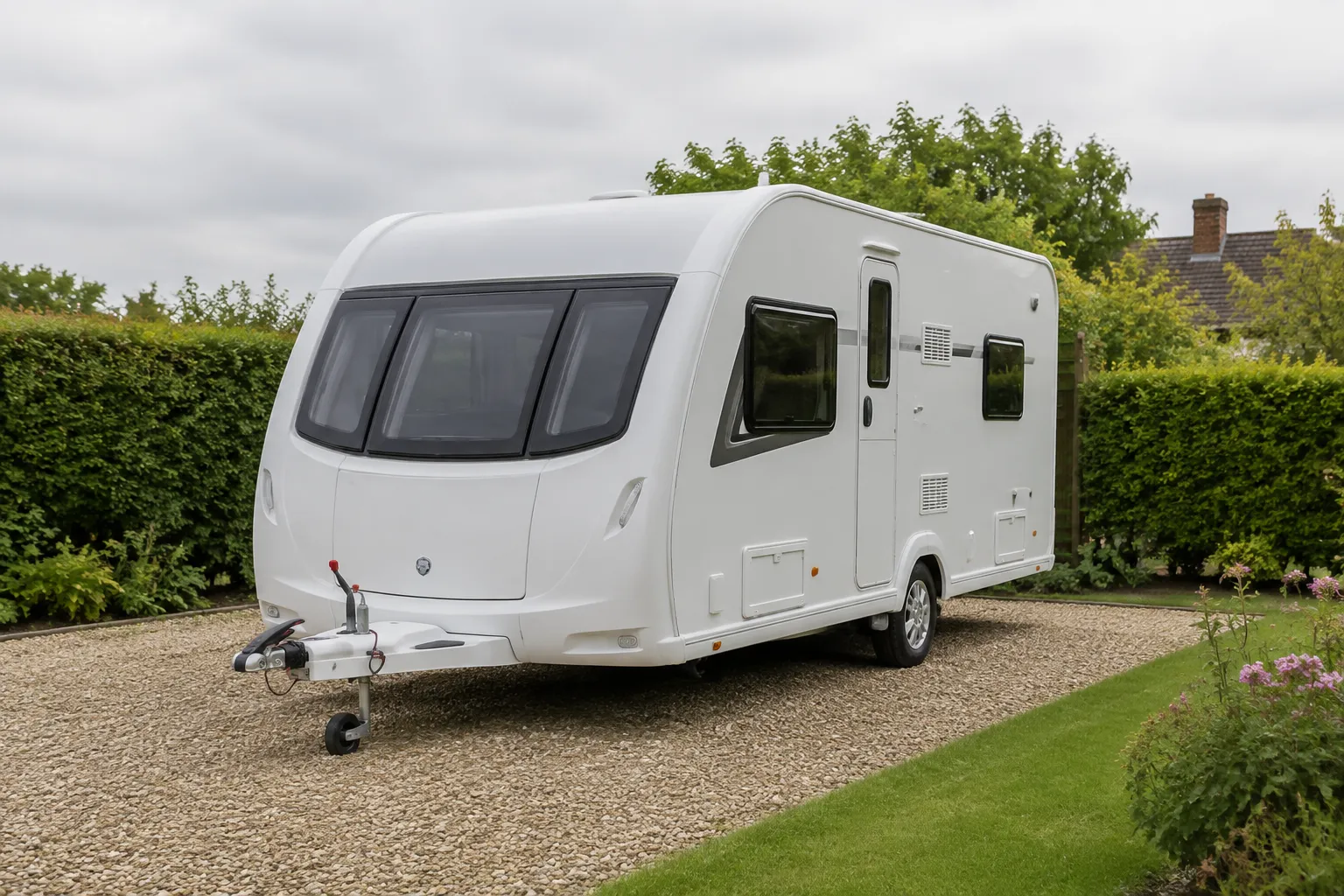
In this article
A good caravan hardstanding makes leaving and returning from a trip easier. The wheels stay on dependable ground, the jockey wheel does not disappear into soft gravel, and you can get to the hitch without walking through a puddle. Those practical details matter more than choosing the surface that looks strongest in a photograph.
For many touring-caravan parking areas, a properly constructed permeable gravel or reinforced-grid surface is worth considering first. Vehicle-rated paving can provide a tidier, more defined finish, while concrete offers a durable permanent surface where its drainage and construction suit the site.
Ground screws are a preferred foundation option for many suitable buildings, but a caravan hardstanding is a traffic surface. Ordinary screws and a timber frame are not the normal answer for the caravan’s wheels. Our caravan hardstanding service compares the options that genuinely fit the vehicle and the way you use it.
A touring caravan is not a static lodge
This guide is about a wheeled touring caravan parked or stored on a prepared surface. A static caravan, park home or lodge can have a different chassis-support arrangement and manufacturer siting requirements. For those, use our park-home base service rather than transferring advice from a touring pitch.
A touring caravan concentrates load through its road wheels and jockey wheel, with steadies used as instructed by the chassis maker. The pitch also has to cope with movement: turning, hitching, unhitching and the tow car’s approach can ask different things of the surface from simply standing still.
For clarity, AL-KO’s support-system guidance states that mechanical and electromechanical corner steadies are not substitutes for a jack. Foundation advice should respect that distinction rather than treating every point under the caravan as an interchangeable lifting support.
Start with the actual caravan’s overall length, wheel positions and normal manoeuvre into the space. If you use a motor mover, tell us. The surface should make that real routine practical, not merely accommodate a parked rectangle.
Compare the main surface options
| Option | What it does well | What to watch |
|---|---|---|
| Prepared gravel hardstanding | Can be permeable and visually unobtrusive | Loose surface movement and jockey-wheel use need attention |
| Reinforced gravel grid | Helps retain aggregate and form a more stable surface | Correct sub-base, fill and load suitability remain essential |
| Vehicle-rated paving | Defined, usable finish with potential repair access | Correct products, edge restraints and bedding are important |
| Concrete | Durable continuous standing and manoeuvring surface | Drainage, joints, curing and permanence need planning |
| Designed wheel strips | Can limit the area of hard material | Must fit the actual wheel paths and other support positions |
Gravel: the work below it matters most
Gravel can be an appealing finish for a caravan pitch. It often looks less formal than a large concrete area, and a properly designed permeable construction can manage rainfall within the site. It can also be relatively straightforward to repair or refresh when the layout changes.
The important word is construction. Tipping loose stone over lawn does not create a dependable all-season hardstanding. The prepared ground, suitable sub-base, separation where required and edge details all influence whether the caravan remains supported without rutting.
The surface aggregate needs to suit the intended use. A deep layer of rounded decorative stone may be attractive but frustrating beneath a small jockey wheel. Think about the contact points and manoeuvring process rather than selecting gravel by colour alone.
Maintenance is part of the bargain. Loose material can migrate, weeds can establish and repeated traffic can reveal weak spots. If ruts appear, adding another bag of gravel may hide the problem briefly without addressing inadequate support below.
The Caravan and Motorhome Club’s guidance for potential small sites includes hardstanding surfaces among its site-planning considerations. The useful takeaway is to treat the pitch and access as planned infrastructure, not just a decorative finish beneath the caravan.
Reinforced grids: helpful, but not a substitute for preparation
Gravel grids contain the aggregate in cells, helping the surface stay where it belongs. That can be useful for a parking area used repeatedly and for reducing the loose-stone effect at its edges. Some grid systems also accommodate grass, although grass performance depends on use and site conditions.
GCL’s campsite information describes gravel retention as one of the purposes of its grid system. Treat such product guidance as information about that particular construction, not a promise that every grid can simply be placed over soft ground.
The base below still carries the traffic. The product’s fill, installation detail and intended loads need to suit the caravan and tow vehicle. A compression rating printed on the grid packaging cannot tell you whether the completed pitch will resist rutting on your soil.
Consider the jockey wheel and any instructed support pads in the detail. Small contact areas can behave differently from tyres. Edges and changes to adjoining paths also need a tidy, stable transition so the mover or tow car does not have to drag the caravan over an awkward lip.
Grids may be particularly attractive when you want a permeable pitch with a less urban appearance. They still involve materials, groundwork and maintenance, so compare a complete installed system rather than assuming plastic cells are automatically the cheapest or greenest option.
Vehicle-rated paving: a more defined parking area
A paved hardstanding can be a good choice beside a house where appearance and everyday access matter. The important qualification is vehicle-rated: ordinary patio slabs and an ordinary patio build-up should not be assumed suitable for a caravan and tow vehicle.
The product, bedding, sub-base and edge restraint work together. A strong paving unit on inadequate preparation can still move, and a well-prepared area with an unsuitable surface can still perform poorly. The quotation should describe the intended construction, not simply name the paving colour.
Paving can make hitching and moving a jockey wheel more convenient than loose gravel. It can also provide a stable place to walk alongside the caravan when loading belongings. Consider joints, falls and drainage routes when planning those uses.
Permeable block paving is a distinct system rather than ordinary paving with a few wider gaps. If permeability is part of the plan, the layers beneath and the drainage arrangement must support it. Sealing or filling the surface in a way that defeats the intended water path can undermine that benefit.
Individual units may be lifted for repair or service access, which is useful around an existing property. Keep a record of any buried routes so later work can be planned without guessing beneath the parking area.
Concrete: durable and straightforward in use
A correctly designed concrete hardstanding offers a continuous surface for tyres, jockey wheel and access around the caravan. It can be particularly practical where the pitch sees regular manoeuvring or where a permanent, easy-to-clear standing area is wanted.
Its disadvantages are the excavation and material handling, curing time and greater permanence. A full slab can also be visually dominant beside a garden. It is worth deciding how much hard surface the actual manoeuvre and storage routine need before drawing a large rectangle by default.
Water management is essential. The surface needs appropriate falls and a suitable destination for runoff. A strong slab that sends water towards a neighbour or the highway has not solved the whole project.
Joints, edges and transitions need to be part of the agreed detail. The caravan should not repeatedly cross a weak edge when entering the pitch, and the jockey wheel should not have to negotiate an unnecessary step between surfaces.
Allow the concrete to become ready for the intended traffic before using it. The installation programme should identify that point. A surface that looks dry or accepts foot traffic is not automatically ready for the caravan and tow car.
Could wheel strips be enough?
Designed strips can reduce the amount of hard material compared with a full slab. They may work well where the wheel paths are predictable and the remainder of the pitch has an appropriate finish.
The limitation is flexibility. A different caravan, a changed parking angle or an altered manoeuvre can put wheels outside the strips. The jockey wheel, instructed steady contacts and the tow car’s turning path also need support; two strips beneath the final tyre positions do not cover every part of the routine.
Measure the complete vehicle arrangement and think about a likely future replacement. You do not necessarily need to build for the largest caravan imaginable, but it is useful to avoid a layout that only works within a few centimetres of one precise position.
If strips are proposed, ask how the ground between and beside them will be finished. Soft muddy edges can make loading and hitching unpleasant even when the tyres remain supported. The design should work for people as well as the vehicle.
Make room for the hitch and the approach
The body length is not the parking length. Allow for the A-frame, hitch access and the space needed to approach safely with the tow vehicle or mover. A pitch can be long enough for storage yet still be awkward to use.
Side access matters too. Doors, lockers and the route for carrying luggage should remain usable. A narrow strip of hardstanding may keep the wheels dry while forcing you to stand in a flower bed whenever you open a locker.
Look at the entry angle and surrounding obstacles. Gate posts, walls and garden edges can restrict the manoeuvre even when the final parking area is generous. A basic sketch of the route often reveals more than another measurement of the empty pitch.
For a new or altered vehicle access, confirm any relevant highway or property requirements before construction. The hardstanding surface and the right to create or change an access are separate matters.
Drainage and front-garden considerations
In England, the government’s front-garden surfacing guidance explains how permeability and runoff arrangements affect the planning position for front-garden hard surfaces. Check the applicable details for your proposal rather than assuming every parking extension is treated alike.
Permeable does not mean water disappears regardless of the soil below. The system needs to work with the ground and any designed drainage. A shallow grid above poorly draining ground is not, by itself, a complete water-management strategy.
Existing drains and service covers need attention before the pitch is extended over them. Their position, access and suitability for vehicle loading should be considered by the appropriate installer. A decorative cover that was acceptable in a path may need a different detail in the wheel route.
The objective is a pitch that remains usable after rain without exporting the problem elsewhere. That benefits the caravan, the garden and the people living around it.
Cost and the most sensible use of materials
A caravan pitch needs a site-specific price. The JustBases guides provide general context, but the final quotation should describe the vehicle-rated preparation, surface, edges, drainage and any removal of existing material.
For sustainability, a proportionate permeable construction may be a better starting point than a full concrete slab. Retaining sound existing hardstanding can also avoid new material. The right answer depends on the ground, loading and maintenance needs rather than a universal ranking of surfaces.
Our preference for ground screws remains useful for compatible structures beside the pitch, such as an independently designed deck or shelter. It does not mean we recommend putting a touring caravan on an ordinary screw-supported timber platform. Choose the foundation system that suits the actual job.
Frequently asked questions
Is gravel enough for a touring caravan?
It can be when it forms part of a properly prepared and specified hardstanding. Loose gravel spread over soil is not the same construction. Include the jockey wheel, access and manoeuvring needs when choosing the finish.
Can I use spare patio slabs beneath the wheels?
Do not assume they are suitable for the loads or ground. A designed paved support may be appropriate, but the paving units, preparation and positions need to work together. Loose or poorly bedded slabs are a poor basis for long-term parking.
Are corner steadies used to lift the caravan level?
Follow the caravan and chassis instructions. Corner steadies are not interchangeable with jacks. The hardstanding should support the intended parking and levelling routine without encouraging improvised lifting arrangements.
Do I need a full site plan before requesting a quote?
No. Start with your caravan’s size, the parking location and photographs of the access. We can discuss the surface options and identify what further details are needed before agreeing the work.
Make the pitch easy to use
Send your details through our quote form and we can discuss the caravan hardstanding options. The goal is a dependable place to park that also makes hitching, loading and returning home straightforward.
More advice for your project
What Is the Best Base for a Park Home, Static Caravan or Lodge?
Compare concrete rafts, strips, engineered ground screws and chassis supports for park homes, static caravans and lodges, including siting, services and warranties.
What type of base is best for a shepherd hut?
Compare ground screws, concrete pads, paving and hardstandings for shepherd huts, with clear advice on wheels, chassis supports, slopes and practical access.
What type of base is best for parking a motorhome?
Compare concrete, vehicle-rated paving, gravel and reinforced grids for motorhome parking, including axle loads, turning, rear overhang and drainage.