The JustBases advice journal
What is the best foundation for an LPG tank?
Understand LPG tank concrete bases, supplier-approved supports and underground arrangements, including access, drainage and replacement planning.
By JustBases 9 min read
Explore the installation service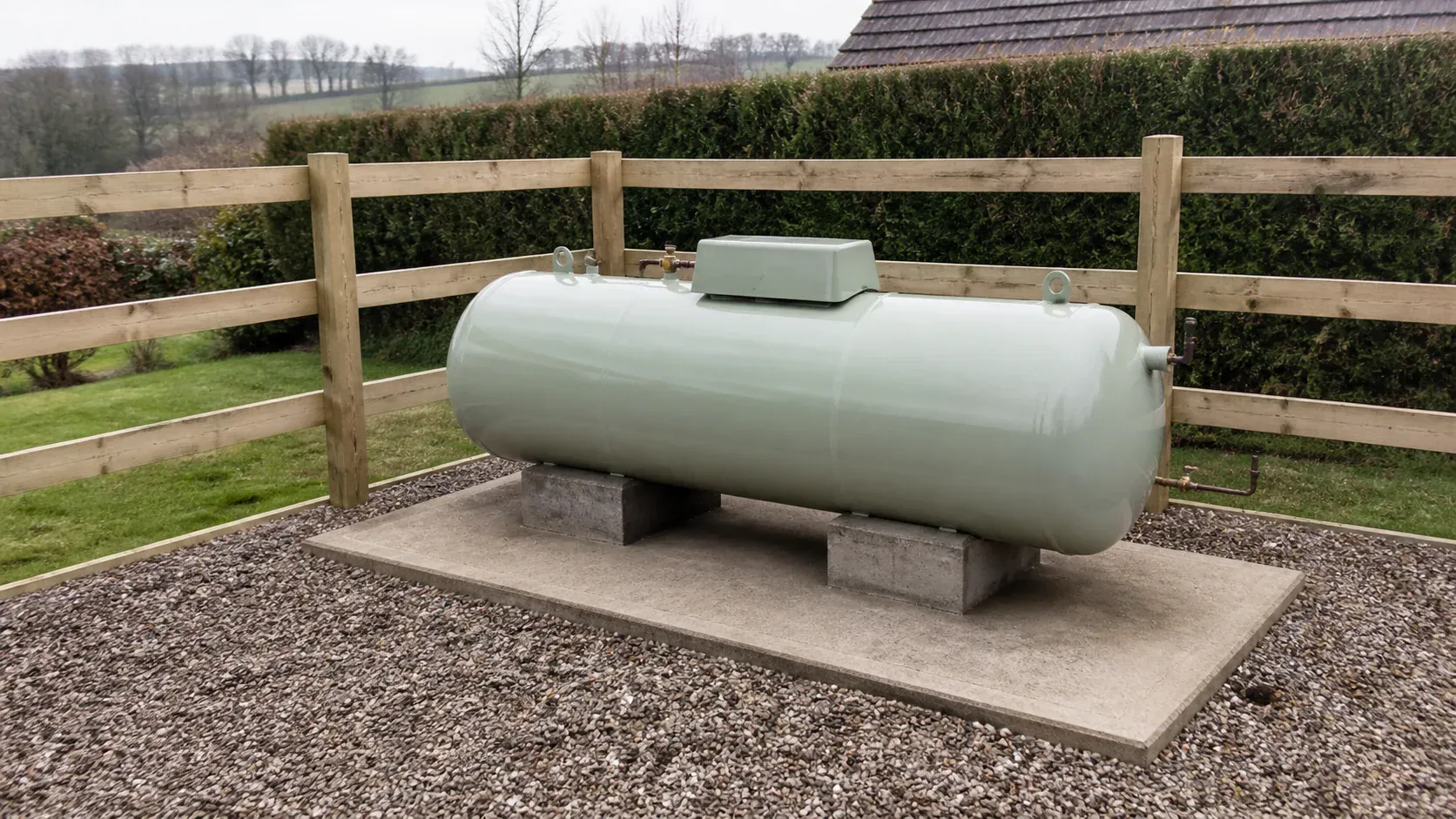
In this article
For a typical permanent above-ground LPG tank, the best foundation is the concrete base or other complete support arrangement approved by the gas supplier for the selected vessel and site. Start with the supplier’s survey and drawing. An LPG tank is not a garden building, and a ground-screw frame should not be offered as an interchangeable replacement for the tank’s specified foundation.
That does not make the decision complicated for the homeowner. It gives you a clear sequence: agree the tank location and model with the LPG supplier, have the approved groundwork priced, then coordinate delivery and connection. Our LPG tank foundation service focuses on constructing that agreed ground support.
Why the gas supplier should lead the layout
There is much more to siting a tank than finding a patch of level ground. The installation has to work for delivery, inspection, ventilation and the surrounding property.
HSE’s bulk LPG storage guidance identifies tank siting, ventilation, tanker access, security and impact protection as relevant considerations. It also explains that separation from buildings, boundaries and ignition sources should be checked with the supplier. Its guidance is a reason to agree the whole location before constructing the base, rather than trying to fit a tank around a finished slab.
The supplier may own the tank and have particular arrangements for installation and maintenance. Ask who provides the foundation drawing and who accepts the completed base. Even if you appoint an independent groundworker, the support should remain aligned with the supplier’s requirements.
Keep the agreed drawing with the written quote, including its revision date. If the tank size or supplier changes, compare the revised support and location before continuing. This simple document check prevents the groundworker building yesterday’s proposal while the delivery team prepares for a different vessel. It also makes the handover easier because everyone can refer to the same arrangement.
If the project replaces an existing vessel, do not assume the old location and foundation are automatically acceptable. The new tank may differ, the property may have changed and the supplier needs to assess the current proposal.
The base types compared
| Option | Potential advantages | Limitations |
|---|---|---|
| Supplier-specified concrete pad | Clear continuous platform and an established delivery interface | Requires preparation, concrete handling and curing |
| Approved precast or modular concrete support | Controlled component manufacture and potentially simpler site sequencing | Must be accepted for the exact tank; lifting and bedding need planning |
| Designed concrete plinths or supports | Can suit a vessel’s defined support positions | Cannot be improvised from loose blocks or another tank’s detail |
| Assessed existing foundation | Avoids unnecessary demolition and material | Needs supplier acceptance and condition/capacity checks |
| Underground tank arrangement | Reduces the visible tank presence | A separate supplier-designed excavation, support and restraint project |
Ground screws, timber frames and ordinary patio construction are not equivalent options unless the tank supplier and engineer explicitly approve a complete specialist system. For most domestic enquiries, they should not be the starting recommendation.
Concrete pads: what makes them useful
A concrete base provides a stable, defined surface for the approved vessel support arrangement. The size, level and construction can be coordinated with the tank before delivery, giving the supplier a clear foundation to inspect.
Flogas’ above-ground tank information describes a concrete base as part of its installation approach. The practical lesson is to obtain the supplier’s detail for your actual tank; a general web page is not a construction drawing.
Concrete is also a durable surface around the support points, helping the installation remain inspectable. However, it does not excuse inadequate ground preparation. The foundation must be constructed for the ground and the loaded tank, not simply the empty vessel being delivered.
The disadvantages are material use, spoil, access and programme. If the base is at the far end of a garden, consider how excavated material will be removed and concrete brought in. A quotation that assumes easy machine access may not describe your site.
Agree the completion and acceptance dates with the supplier. Tank delivery should follow the relevant foundation readiness requirements. The fact that a pad can be walked on does not mean it is ready for every load or fixing operation.
Precast supports and separate plinths
A supplier may offer or accept a proprietary precast arrangement. This can reduce some wet work on site and gives defined components with known geometry. It may also simplify scheduling where a small component can be delivered and installed efficiently.
Precast does not mean preparation-free. The support beneath the component still needs to be right, the finished levels need to match and lifting access must be available. A heavy precast piece delivered to the front of a property may be awkward to move to the intended tank location.
Separate plinths can be appropriate where they are part of the vessel’s approved support system. Their spacing and bearing surfaces must correspond with that system. Do not infer them from the positions of the visible tank legs and assume any blocks beneath those legs will do.
Loose masonry, uneven slabs or improvised packing should not be used to correct a mismatch. If a support detail needs changing because of site conditions, return to the supplier or designer before constructing it. That is far easier than discovering the problem while a tank is waiting to be placed.
Can the old base be reused?
Reusing a sound approved base can save disruption and avoid additional concrete. It is a sensible question to ask during a replacement project, especially where the tank has occupied the same position for years.
The assessment should consider the new vessel, the condition of the concrete, any settlement and the ground around it. Look for cracking, unsupported edges, erosion or evidence that the tank has been packed up unevenly. These observations help the supplier decide what inspection is needed; they do not replace its acceptance.
The surrounding site matters as much as the slab. A fence, shed, extension or vehicle route may have appeared since the original installation. An old base might still be physically sound while its position is no longer the approved choice.
Plan replacement sequencing with the gas specialist. Removing, emptying, moving or reconnecting a tank is specialist work. A foundation contractor should not begin disturbing a live tank installation on the assumption that it can be shifted out of the way later.
Above ground and underground are different projects
An underground tank can reduce the visible impact in a garden, but its foundation is not simply an above-ground pad installed deeper. Excavation, ground conditions, groundwater, support and any restraint must follow the supplier’s underground installation detail.
The chamber or access area also needs to remain accessible. Landscaping should be designed around the operating installation, with the supplier confirming what can be placed nearby or above it. Avoid choosing the buried option on appearance alone without discussing future access and maintenance.
Compare the complete installed arrangements. Underground work may involve more excavation and reinstatement, while above-ground work may require a more visible clear area. The best choice depends on the site and supplier approval, not a generic rule that one always costs less or is easier.
If a project changes from above ground to underground during planning, obtain a revised groundwork scope. The original base quotation is unlikely to describe the new project adequately.
Drainage, vegetation and nearby construction
An LPG base should be considered within its surroundings. Water should not undermine the support or leave the working area persistently muddy, but drainage changes need to be coordinated with the supplier.
HSE specifically highlights the relevance of drains and gullies near LPG storage because gas can accumulate in unsuitable low points. It also stresses keeping the area ventilated and clear of obstructing vegetation and combustible rubbish. Use the HSE guidance and supplier advice when planning landscaping around the installation.
The practical implication is simple: do not add a decorative enclosure, raised bed or drainage channel after installation without checking its effect. A base contractor can make an area look tidy while unintentionally changing the conditions the supplier approved.
Leave inspection space visible and easy to maintain. Keep future garden projects in mind too. The tank’s clear area should not become the obvious place for spare timber, bins or a new barbecue simply because the concrete is convenient.
Where sustainability fits honestly
We normally prefer ground screw foundations for suitable framed structures because they can reduce concrete, excavation and permanent disturbance. An LPG tank is a case where the approved equipment foundation takes priority.
Screws are not automatically suitable beneath a tank, and a generic steel or timber frame is not a substitute for its required support. If a specialist alternative is proposed, it needs explicit supplier and engineering acceptance for the complete installation.
There are still useful ways to reduce unnecessary impact. Reuse an adequate foundation when approved, avoid oversizing new concrete, coordinate deliveries and prevent remedial work by getting the layout right first. Compare the full project rather than assuming that the presence or absence of concrete tells the whole environmental story.
The installation’s purpose and long-term maintenance matter as well. A foundation that has to be rebuilt because it did not suit the vessel wastes material and creates further disruption. Durable, correctly specified support is part of a responsible material decision.
Getting a clear groundwork quotation
Ask for the price to refer to the supplier’s current foundation drawing. Confirm site preparation, excavation, material removal, concrete or precast support, finished levels and reinstatement. If the supplier provides components, state who receives, stores and positions them.
Clarify who checks the base before delivery and what happens if unexpected ground conditions require a revised detail. Also establish the handover boundary: tank supply, gas work, testing and commissioning should remain with the appointed specialists.
You do not need to organise every technical detail before speaking to us. Tell us whether the tank is new or being replaced, your location and which LPG supplier is involved. Site photos and any drawing already supplied will help. We can explain what is needed for a firm price while the supplier completes its assessment. Ask JustBases about your LPG tank base to begin.
Frequently asked questions
Can an LPG tank stand on ordinary paving slabs?
Do not assume so. The supplier must approve the complete foundation for the vessel and site. Loose or domestic patio slabs are not interchangeable with a specified concrete pad or proprietary support system.
Can ground screws replace the tank’s concrete base?
Only if the tank supplier and engineer explicitly approve a complete specialist design. They should not be recommended as a routine substitution for the required tank foundation.
Who decides the tank location?
The LPG supplier should assess and approve the location as part of the installation design, including access and surrounding conditions. The foundation is then constructed to that agreed layout.
Will JustBases move or connect the LPG tank?
Our standard scope is the approved groundwork and foundation. Tank handling, gas connections and commissioning are the responsibility of the appointed LPG specialists, with the work coordinated before construction starts.
More advice for your project
What is the best base for a heating oil tank?
Compare concrete and properly constructed paved oil-tank bases, with advice on continuous support, replacement access and avoiding unsuitable frames.
What is the best base for an air source heat pump?
Compare concrete, paving and approved ground-screw frames for heat pumps, with practical advice on vibration, airflow, defrost water and installation.
What is the best base for an outdoor air conditioning unit?
Compare concrete pads, prepared slabs, brackets and approved screw-supported frames for air conditioning condensers, including noise and access.