The JustBases advice journal
What type of base is best for an outdoor pizza oven?
Find the right foundation for a pizza oven: compare concrete, paving and raised platforms, and understand the difference between an oven stand and its ground support.
By JustBases 11 min read
Explore the installation service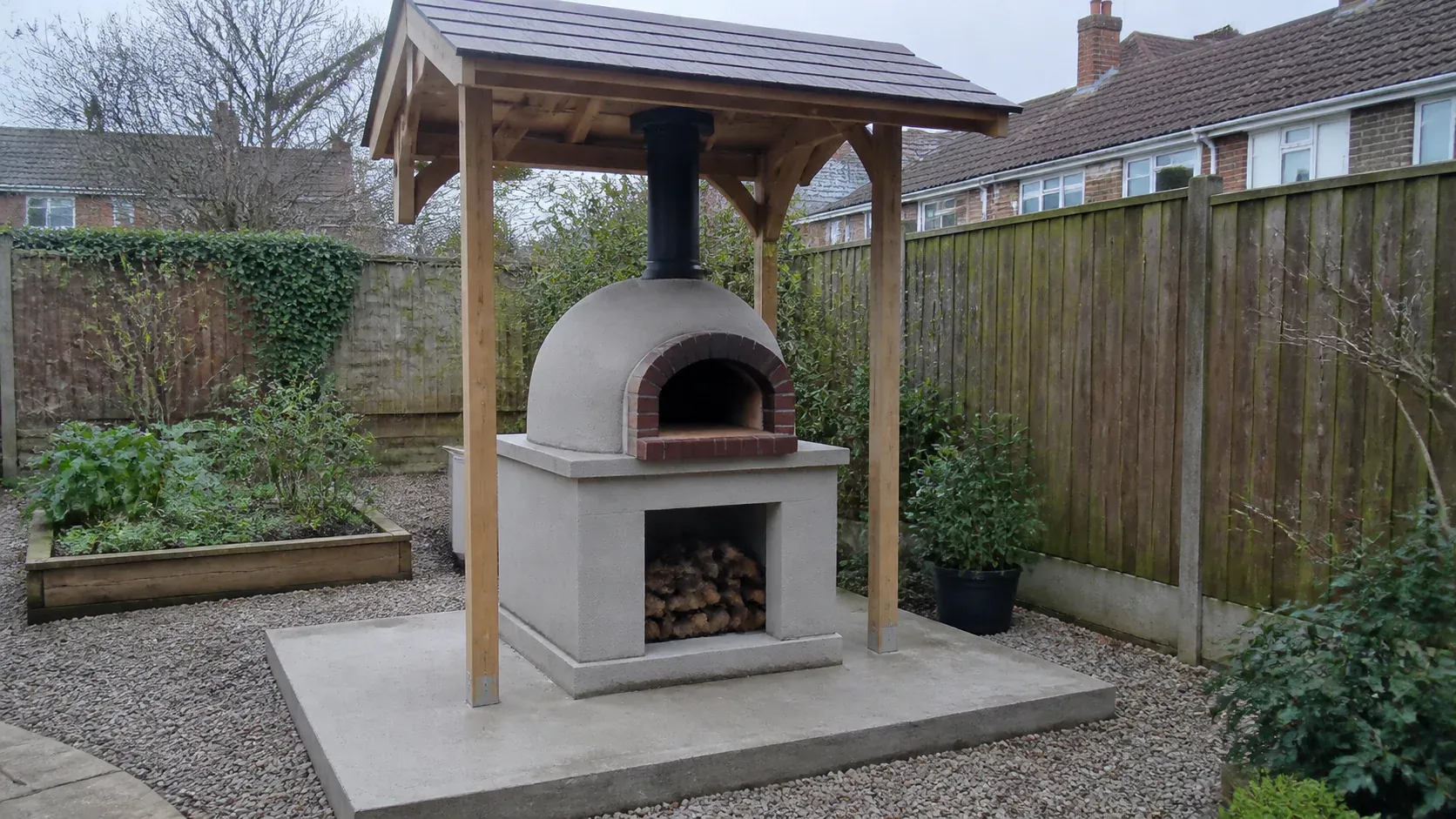
In this article
Search for a pizza-oven base and you will find two different things: the stand that raises the oven to cooking height, and the foundation that supports the whole installation on the ground. Getting those mixed up is an easy way to buy a perfectly good stand and still end up with an unsuitable place to put it.
For a heavy permanent masonry oven, a designed concrete foundation is generally the sensible starting point. For a smaller oven on an approved stand, sound paving may be sufficient if it supports the actual load and the appliance’s installation requirements are met. Ground screws can be useful beneath a designed raised cooking platform, but they do not replace the oven’s heat-resistant support detail.
Our outdoor pizza-oven foundation service starts with the oven you are considering. You can send a product link before buying, and we will help you understand what the ground-level work needs to achieve.
Three layers to think about
First comes the ground and foundation. This supports the installation without unsuitable settlement or movement. Next comes the stand, cabinet or masonry structure that brings the oven to the intended height. Finally, there is the oven’s own support and heat-protection arrangement.
These layers have different jobs. A stable concrete slab does not make an unsuitable tabletop safe for a hot appliance. Equally, a manufacturer’s oven stand does not turn soft soil into a reliable foundation. The complete route from oven to ground needs to make sense.
Alfa’s model-specific support bases are a useful example of purpose-made stands. Their dimensions and arrangement vary with the oven. That is why the actual stand information is more useful for planning than the oven’s headline cooking capacity.
The same distinction helps with a masonry oven. Its foundation, supporting walls and heated oven construction should follow the applicable design. The Tierra Firme owner’s manual is an example of product-specific installation guidance; use the current instructions for your chosen oven rather than blending details from different products.
Start with how permanent the oven will be
A portable oven that is stored indoors between uses may not justify a new dedicated foundation at all. If a suitable existing terrace and approved stand meet its requirements, retaining them could be the simplest answer.
A larger oven on a wheeled stand raises a different question. The base must work where the oven will cook and along any intended movement route. Small wheels, paving joints, abrupt edges and loose gravel can make a seemingly convenient arrangement frustrating to use.
A masonry oven is a permanent structure. Its weight and supporting walls deserve a designed foundation, and its location needs choosing with care. Moving it later is a very different proposition from rolling a portable oven into a shed.
Decide which situation describes your project before comparing prices. A quote for a little paved standing area and one for a masonry foundation are solving different problems, even when both are described as a pizza-oven base.
Compare the main base types
| Base | Useful strengths | Limitations to understand |
|---|---|---|
| Designed concrete | Continuous, rigid support for permanent heavy construction | Needs preparation, curing and a fixed layout |
| Properly prepared paving | Finished cooking area and potential reuse of existing space | Foot loads, joints and sub-base condition matter |
| Ground screws with designed frame | Can create a raised area with less wet concrete | Requires compatible load distribution and heat-safe detailing |
| Timber-supported deck | Can connect cooking and seating at one level | Ordinary decking should not be assumed suitable for every oven |
| Gravel standing area | Can be simple for some outdoor uses | Often awkward for small wheels, narrow legs and food preparation |
Concrete for heavy permanent ovens
A concrete base is usually worth considering first where the oven sits on masonry or another heavy permanent structure. It can provide the continuous support that walls and concentrated loads require, with the footprint and levels set from the actual plan.
The appeal is that the support is deliberate. Rather than placing masonry on whatever patio exists, the foundation is designed around the weight and load paths. The surrounding working area can then be planned as a separate surface with appropriate drainage.
The downside is commitment. Ground preparation and material access take work, the concrete needs time before loading, and the finished position is difficult to change casually. Settle the cooking orientation and worktop arrangement before construction, especially if services or adjacent kitchen units are involved.
Do not confuse a broad slab with a properly specified slab. More visible concrete is not automatically a better foundation. Ground conditions, bearing arrangement and the design of the structure above all matter. A generic thickness copied from an online project may be unsuitable for your oven or site.
Our role is to build the agreed foundation detail, with the quotation identifying its scope. The oven builder or supplier remains responsible for the appropriate oven and stand construction. Clear responsibilities make it easier to resolve details before they become hidden beneath masonry.
Paving for stand-mounted ovens
A paved base can be a practical answer for many smaller stand-mounted installations. It gives the cook a usable surface and may integrate with a terrace you already enjoy. If the existing paving is appropriate, there may be no reason to replace it simply because you have bought a new oven.
Look at where the stand actually touches the ground. Narrow legs and small wheels concentrate load differently from a broad cabinet base. A paving unit that is stable under a person’s shoe may behave differently when a leg sits close to an unsupported edge.
The underlying construction matters as much as the chosen finish. Rocking slabs, settlement, broken corners or poorly supported edges should be dealt with before the oven is positioned. Covering an uneven area with another decorative layer does not remove the cause of movement below it.
Paving also has a practical advantage if your layout changes. It can sometimes be extended or repaired one area at a time. Keep suitable access to services and drainage if the oven is part of a larger outdoor kitchen.
Choose the walking finish thoughtfully. Flour, food, grease and wet weather all affect the area around an oven. You want a surface that suits outdoor use and can be maintained sensibly. The paving supplier can advise on the finish; the oven supplier determines the appliance-related requirements.
Ground screws and raised cooking areas
For a garden that slopes away from the house, a raised platform may make the cooking area much more usable. Ground-screw foundations can be a good option for that platform where the ground and complete structure suit them.
This is where our preference for screws can provide a real benefit: potentially less excavation, less wet concrete and a level structure above changing ground. The screws need a suitable frame above them, and that frame must account for the oven, stand, worktops and people using the area.
Heat introduces a separate requirement. A structurally adequate timber platform is not automatically an approved location for a particular oven. Follow the appliance instructions for support materials, clearances and any protective construction. Decorative paving laid over a deck should not be assumed to solve every heat issue.
For a very heavy masonry oven, the complete raised system may become more involved than a ground-level concrete foundation. That does not mean engineered screw support is impossible; it means the design should be justified by the actual project rather than selected purely for the material preference.
Sometimes the best combination is an independently founded oven beside a raised deck. The cook gets a comfortable working area while the oven retains the support its construction requires. The interface between the two needs planning, particularly where movement, drainage and finished levels differ.
Timber frames, blocks and improvised supports
A timber-frame base can be part of an approved cooking platform, but an ordinary shed frame is not a ready-made answer for every oven. The materials and connections need to suit both the loads and the exposure conditions.
Similarly, a few loose concrete blocks are not equivalent to a designed masonry support. Each block needs reliable bearing, the arrangement needs stability and the oven needs its specified support surface. Building height makes improvised packing and rocking supports particularly undesirable.
Adjustable feet supplied with a stand have a defined purpose. Use them within the manufacturer’s arrangement; do not treat them as permission to place the oven on a fundamentally unsuitable base. The foundation should do its job before the stand is adjusted.
If you want the easiest installation, simplification is often better than improvisation. A suitable existing patio, a compatible factory stand and a sensible location may achieve more than an elaborate homemade platform built from unrelated parts.
Why gravel is rarely the first choice for a small wheeled stand
Gravel can be useful around many garden structures, particularly as part of a properly designed drained surface. It is less convenient where small castors or narrow stand legs need predictable, stable contact with the ground.
A wheeled oven may be difficult to move through loose stone. A leg can settle locally, and dropped utensils are less pleasant to retrieve. Those practical drawbacks matter even if the overall area is quite firm underfoot.
If gravel is part of the landscape design, consider whether a defined paved or concrete standing area would work within it. The oven can have its suitable base while the wider garden retains a lighter appearance. The transition should be comfortable for the cook and any intended movement of the stand.
The right choice depends on the equipment, so gravel is not automatically forbidden. It simply needs a stronger reason than being the easiest material to spread on the day the oven arrives.
Set out the cooking space before fixing the footprint
Stand where you expect to cook and imagine handling the peel, opening storage and putting food down. An oven needs working space in front of it as well as structural support below. A narrow ledge at the front of a raised base is unlikely to feel comfortable in use.
Consider where other people will walk. The main garden path should not force guests through the cook’s immediate working area. Space for a preparation table can make the whole installation more useful without requiring a larger oven.
Appliance siting, overhead structures and nearby materials must follow the oven maker’s instructions. If a pergola, roof or enclosure is proposed, settle that combination with the relevant supplier before building foundations. The cooking appliance and shelter should not be designed in isolation and brought together at the end.
If the oven will join a sink, grill and cabinet run, our outdoor-kitchen foundation service can help coordinate the ground-level work. One agreed layout reduces the chance of mismatched levels or service routes appearing in the wrong place.
Cost, maintenance and using materials sensibly
For simple work, the base price guides offer a useful starting comparison. A heavy oven foundation or raised platform needs its own written quotation based on the actual design. Access, excavation, disposal, support details and the finished surface all affect the scope.
Ask what future maintenance will involve. Paving joints may need care, timber structures need appropriate inspection, and access beneath an enclosed stand can become awkward. The foundation should help you look after the oven rather than make routine tasks harder.
On sustainability, we prefer ground screws when a suitable raised structure benefits from them. They may reduce concrete and excavation, but the full frame and finishes still count. A modest approved base or reuse of sound existing paving may be more proportionate for a portable oven.
The aim is a durable installation with no unnecessary material or avoidable rebuilding. Choosing a foundation that matches the oven is a more useful environmental decision than automatically choosing the same base for every style of outdoor cooking.
Frequently asked questions
Is the oven stand the same thing as the foundation?
No. The stand raises and supports the oven above the ground; the foundation supports the stand or masonry construction. Both must be suitable. Buying the correct stand does not remove the need for a stable surface beneath it.
Does a portable pizza oven need new concrete?
Not necessarily. A suitable existing patio and the approved stand may meet its needs. Check the actual appliance instructions, stand contact points and surface condition before deciding that a new foundation is required.
Can I put a masonry oven on ordinary patio slabs?
Do not assume that a domestic patio was built for that weight and support arrangement. A masonry oven should have a foundation suited to its design and ground. Decorative paving can be part of the finished area without being the structural foundation.
Can ground screws support a pizza-oven deck?
They can be considered for a properly designed platform on suitable ground. The frame must carry the full installation and the oven’s heat and clearance requirements must be met. An ordinary deck should not be treated as automatically compatible.
Make the foundation match the oven
Send us the oven and stand information, your postcode and a few photos of the proposed spot. We can discuss the pizza-oven foundation options and prepare a written quote for the agreed groundwork, so the cooking area starts on a dependable base.
More advice for your project
What Is the Best Base for a Hot Tub? Concrete, Decking and Ground Screws
Compare hot tub concrete slabs, paving, engineered decks and ground screws, with practical advice on filled loads, continuous support, drainage and service access.
What type of base is best for a swim spa?
Compare concrete, paving and framed foundations for a swim spa, including filled weight, service access, drainage and where ground screws can fit the project.
What type of base is best for an ice bath or cold plunge?
Compare paving, concrete, timber decks and ground-screw platforms for an ice bath, with practical advice on filled loads, chiller space and wet-foot access.