The JustBases advice journal
What is the best foundation for a weather station?
Compare tripod anchors, concrete pads and approved screw foundations for weather stations, with advice on siting, sensor stability and maintenance.
By JustBases 9 min read
Explore the installation service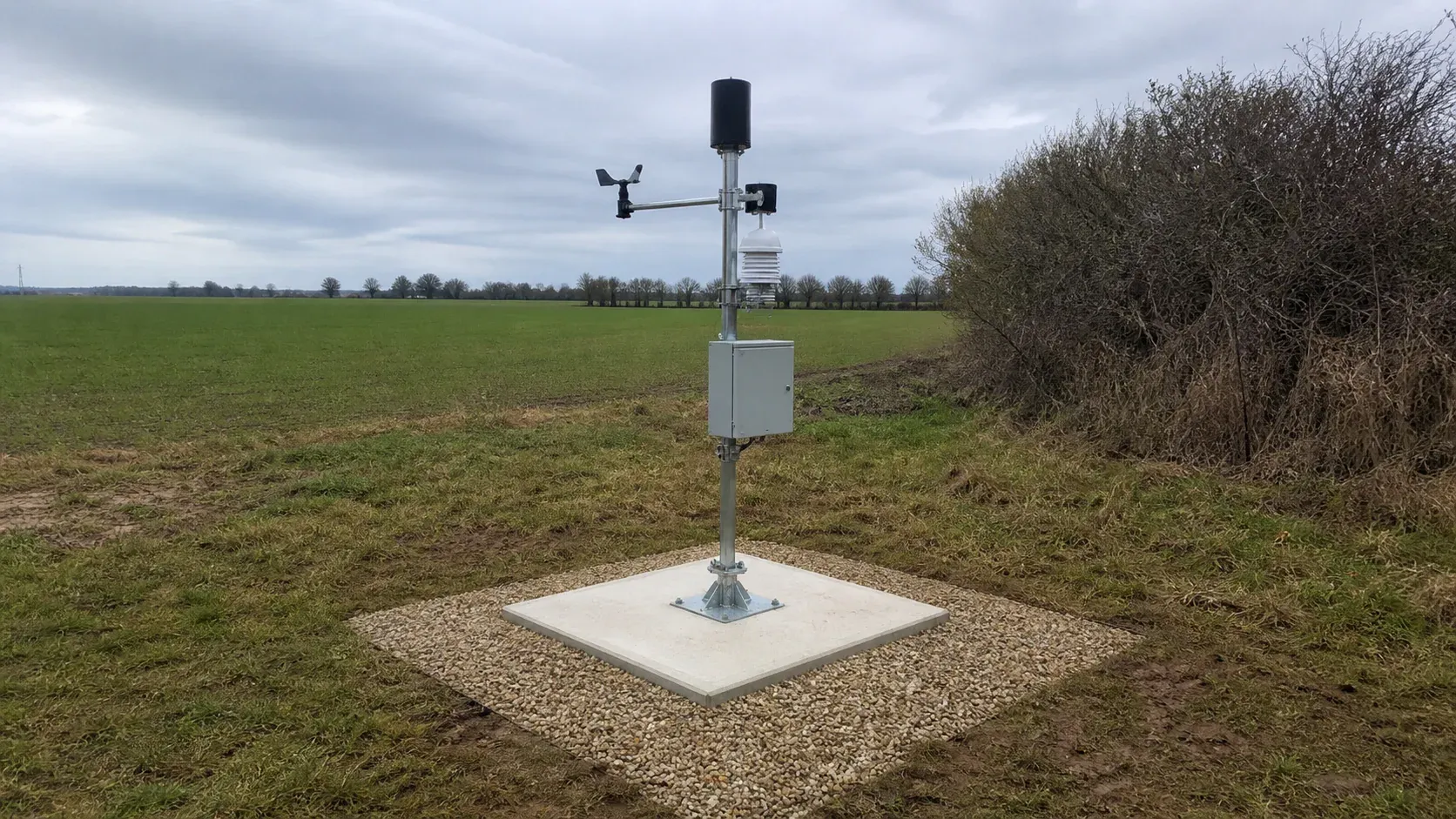
In this article
The best weather-station foundation is the least disruptive approved support that keeps the instruments stable in a suitable measurement location. A manufacturer’s anchored tripod may be ideal for a compact or relocatable station. A permanent tower may need a concrete foundation. An engineered screw or ground-anchor system can be a useful alternative where the mast supplier accepts it and the ground is suitable.
For weather stations, a stronger-looking base is not automatically a better installation. A large concrete pad can alter the surface around sensors, while a convenient sheltered corner may produce unrepresentative readings. Our weather station foundation service coordinates the support with the instrument supplier’s siting and mounting requirements.
Choose the measurement location first
Think about what you want to measure. A garden enthusiast may want consistent local observations; a research or operational project may need a defined measurement standard. The equipment supplier should help establish the siting requirements for that purpose.
A flat patch beside the house may be easy to build on but influenced by the building, nearby paving or vegetation. Wind instruments, rainfall collectors and temperature sensors can have different placement considerations. Do not assume one convenient post position is automatically suitable for every measurement.
Campbell Scientific’s automated-station guidance discusses mounting height, stability, soil and terrain, with towers and tripods using different support arrangements. It provides a useful framework for discussing the installation without pretending that all stations need identical foundations.
Once the location is agreed, identify the actual tripod or tower and its equipment load. Include solar panels, enclosures and accessories. A later addition can affect both the support and the measurement environment.
The foundation options compared
| Support | Advantages | Limitations |
|---|---|---|
| Manufacturer-approved anchored tripod | Small ground intervention and possible relocation | Requires suitable anchors, ground and maintenance |
| Concrete pad or tower base | Defined permanent support and anchoring | Excavation and permanence; surface changes need consideration |
| Engineered ground screws or helical anchors | Can reduce concrete and support removable systems | Supplier approval, ground suitability and load verification needed |
| Approved ballasted support | May avoid penetrating a particular surface | Ballast and sliding/overturning design are essential |
| Existing structural mounting point | Avoids a new foundation | Building influence and structural suitability may limit measurements |
Tripods: often the right answer for a compact station
A properly specified tripod can be a practical support because it spreads the mounting arrangement and may adapt to uneven ground. It can also suit projects where the station needs to be relocated.
Campbell Scientific’s CM10/2 tripod is an example designed to be staked into suitable soft ground or bolted to a solid surface. That is a product-specific arrangement, not permission to use any stake with any mast.
The benefit is avoiding a large foundation where one is unnecessary. The limitation is that the anchors and tripod remain part of an exposed installation that needs inspection. A relocatable station is not a set-and-forget object.
Think about the working space around the legs. They should not become a hidden trip hazard in long grass or conflict with mowing and maintenance. If additional guys are required by the supplier, their footprint belongs in the site plan from the beginning.
The tripod should be assembled, oriented and levelled according to its instructions. The groundworker’s role is to provide the accepted support conditions, while the instrument specialist sets up and verifies the measurement system.
Concrete foundations for permanent towers
A concrete foundation can be the appropriate choice for a permanent tower or a mounting system that requires a defined base and anchor arrangement. It provides a durable interface and can coordinate ducts or earthing components specified by the equipment team.
The foundation must be matched to the mast, instruments and site exposure. A tower’s self-weight is not the only relevant load; wind acting on the mast and attached equipment can govern its support requirements.
Concrete has practical disadvantages. It requires excavation and material handling, and is less convenient to remove if the station later moves. Its footprint may also change the immediate surface environment, which the measurement designer should consider.
Avoid a large generic slab simply because it looks robust. The agreed foundation should do the structural job without unnecessarily changing the measurement area. A separate access path or small working surface can be considered independently where appropriate.
The bolt template and finished level need checking before pouring. Mast orientation, hinge direction or service access can be affected by small setting-out decisions. Confirm them with the instrument team rather than relying on an installation photograph.
Ground screws and engineered anchors
We favour ground screw foundations where they provide suitable support with less concrete and excavation. Weather stations can be a good application for carefully selected removable or low-disturbance supports.
The mast or tripod supplier must accept the system. A helical anchor used for a guy wire is not the same as a screw supporting a vertical frame, and neither should be selected by appearance. The required load direction, capacity and connection must match the design.
Ground conditions matter. Soft, disturbed, stony or aggressive ground can affect the choice and installation. Buried services should be identified before any anchor is placed, even for a small domestic station.
The environmental case is strongest when the complete system genuinely avoids unnecessary concrete and can be removed or adapted appropriately. Steel manufacture and installation still have impacts. We do not describe every screw installation as automatically the lowest-carbon option.
For temporary projects, ask how removal and reinstatement will work. A foundation that is easy to install but difficult to recover may not meet the project’s objectives. Include that end stage in the comparison from the outset.
Ballasted bases and existing surfaces
Some instruments can use an approved ballasted support where penetration is restricted. The appeal is obvious: avoid digging or drilling into the surface. The design still has to resist the relevant forces, including sliding and overturning.
Loose paving stones piled around a mast do not establish a safe ballast system. The supplier should state the required arrangement and limitations. The supporting surface beneath the ballast must also be suitable.
An existing structural mounting point may save new material, but it can introduce other problems. Buildings and roofs can influence weather readings, and the structure must be suitable for the loads and fixings. A convenient wall bracket should not be selected before the measurement implications are understood.
Paving-slab bases may create a practical access surface around equipment, but should not be assumed to provide tower anchorage. Keep the walking surface and structural support distinct unless the approved design deliberately combines them.
Stability is also about measurement quality
A weather station can remain standing while its instruments move enough to affect useful observations. The support should meet the equipment supplier’s stability requirements, including any restrictions on mast movement or vibration.
Avoid attaching unrelated objects later. A bird feeder, decorative flag or extra panel may seem harmless but changes the installation. Additional cables can also pull on a mast if their routing is poorly planned.
The rain collector and other instruments need to remain in their intended orientation and level. The equipment specialist should verify them after installation and include checks in the maintenance routine.
If the station is intended to provide comparable readings over time, record changes around it. New trees, fencing, paving or buildings can matter even when the foundation itself remains unchanged. A stable base supports good data, but it cannot compensate for a changing measurement environment.
A simple site record is useful: photographs in several directions, the sensor positions and a note of nearby surfaces. Repeat the photographs after significant landscaping changes. For a hobby station, that helps explain unexpected shifts in your observations. For a more formal project, the instrument specialist can advise what additional records the chosen measurement programme requires.
Vegetation, drainage and maintenance
The area should be manageable without repeatedly disturbing the support. Think about mowing, trimming vegetation and reaching sensors for cleaning or calibration.
Campbell’s tripod installation guidance advises preparing the area while disturbing the ground and natural vegetation as little as possible, and highlights buried utilities and overhead-line hazards. Follow the actual equipment’s safety and siting instructions when planning the work.
Drainage should prevent erosion or persistent ponding around support points without unnecessarily altering the measurement area. A broad gravel bed may be tidy, but ask the instrument designer whether it is appropriate near the sensors.
For remote sites, maintenance access can decide the foundation choice. A support that requires frequent specialised adjustment may be less practical than a more permanent arrangement. Balance removability with the inspection resources genuinely available.
Cables, power and earthing
Agree cable routes, solar-panel positions and any earthing or lightning-protection details before construction. These are part of the equipment installation and should be specified by the competent specialist.
Do not assume a steel screw or concrete reinforcement automatically provides the required electrical function. Structural support and electrical protection need their own coordinated design.
Ducts should emerge where they can be connected without pulling on sensors or obstructing maintenance. Leave the equipment team enough flexibility for its approved cable routing, and record concealed routes before they are covered.
If mains power is involved, the electrical work belongs with the appropriate installer. Foundation construction should make the planned installation possible without introducing unapproved changes to the electrical system.
Comparing quotes for a station that will remain useful
A useful quote names the mast or tripod, equipment configuration and approved support detail. It should include ground preparation, anchors or concrete, ducts, reinstatement and any agreed verification of installed support.
For screw or anchor systems, clarify the ground assumptions and what happens if the planned positions are unsuitable. For concrete, establish the template, orientation and readiness for mast installation. For temporary stations, include eventual removal if that is part of the project.
Also define who installs the mast, positions the sensors and commissions the data system. JustBases’ normal scope is the foundation; instrument setup and data verification belong to the weather-station specialist.
You can start with the proposed equipment link, site photos and what you want to measure. Request a weather-station foundation quotation and we can discuss a suitable support while the instrument team confirms the detail.
Frequently asked questions
Does a weather station need a concrete base?
Not always. Some approved tripods use ground anchors, while permanent towers may require concrete. The mounting system, ground and measurement purpose should determine the foundation.
Are ground screws a good environmental option?
They can be where an approved design reduces concrete and disturbance while providing adequate support. The complete system, including steel, installation and removal, should be compared with the realistic alternatives.
Can I mount the station beside the house?
Possibly, but the building may influence the readings and the mounting structure must be suitable. Ask the instrument supplier to assess the location for the measurements you want before choosing the foundation.
Will JustBases calibrate the instruments?
Our standard role is constructing the agreed foundation and associated groundwork. Sensor installation, orientation, calibration and data commissioning remain with the equipment specialist or station operator.
More advice for your project
What is the best base for a heating oil tank?
Compare concrete and properly constructed paved oil-tank bases, with advice on continuous support, replacement access and avoiding unsuitable frames.
What is the best base for an air source heat pump?
Compare concrete, paving and approved ground-screw frames for heat pumps, with practical advice on vibration, airflow, defrost water and installation.
What is the best base for an outdoor air conditioning unit?
Compare concrete pads, prepared slabs, brackets and approved screw-supported frames for air conditioning condensers, including noise and access.